Showing posts with label automobile reviews. Show all posts

Top 10 favorite indian cars to buy this diwali.


                    Buying a car is a dream of every indian in some corner of heart and hence today we will see India’s Top 10 all time Affordable and Effective Cars, which is at the top of the market demand and customer satisfaction. If you do not know anything about Cars, then also this blog will help you with your smart choice. Cars can be used for many things, but here we basis this cars on having good affordability, highest performance and Satisfaction.


 10. Maruti Alto 800

For 15 years all the people know Alto running on the Indian roads. In less money, the pleasure of a good car can only give the Alto Maruti Suzuki’s price of this car starts at 2.5 lakh (Aprox EX. showroom) and is increased according to the model. This low budget car comes in both AC and non-AC models. If you talk about mileage, Alto is one of India’s most affordable cars. It is an average 24 kmpl and in CNG it gives average 33 kms per kilo average.


9. Renault KWID

In the car market, the Renault Company is Famous for its SUV but its first and only Affordable Car is KWID. This car is not less than any  luxury in its price range because every kind of convenience has been taken care of in KWID. Which starts from 2.6 lakh (Aprox EX. showroom) .  Keeping in mind the safety, it also has a special seat belt and a rear parking mirror. The car is strong in texture and its design is also very good according to the price With this car, many accessories are also given along with tires and in the internal facilities. This car is new in the market segment and therefore, all offers are given on this.


8. Hyundai Elite I20

If you prefer a sporty look car, you can buy Hyundai’s i 20 because fully loaded with high tech features this car is a great option for the middle class segment. In this car, many accessories are provided such as a comfortable armrest, bottle and sun-glass holder.  Safety is also taken care of Steering wheel  Remote controls and mobile connectivity makes this car is made user friendly. The car is the smartest decade for a middle class small family. The price of this car starts at 5.5 lakh(Aprox EX. showroom).


7. Swift

For a long time, Maruti Swift, which retains its dominance in the market, still remains in the top choice  of buyers. Launched in 2005, this model of Maruti has made many  changes so far. The new Swift has many features like automatic gear smart key, automatic climate control.  If you want, you can also use push start without key. This car is not only a technology driven but also affordable in mileage. According to the company, it gives an average of 22 kmpl. Maruti Suzuki has sold around 10 lakh models of this car worldwide and its price starts at 5.4 lakh(Aprox EX. showroom).


 6. Maruti Suzuki Baleno

Baleno with a showroom price of 5.5 lakh(Aprox EX. showroom)  is a great option. Its pickup and output is the best in this segment. It is a good choice not only for buying but its average is also 28 kilometers per liter. The interior of this car and the look of the dashboard is really awesome. These 5-seater vehicle is suitable for both manual and automatic gear segments The 1200 cc engine gives it a high speed This is the only car to offer driver airbag in basic models of this car. Its EMI only starts at 9000 rupees and is fully loaded air condition and automatic.

 5. Dezire

If Dezire is called India’s favorite sedan, it will not be wrong.  More than 1 lakh cars of design have been sold and these numbers are increasing . Since this car was launched, so many changes have been made in today, in which is the automatic gear transmission, now along with the manual system there is also automatic system The average length of this car is 22 kilometer per liter, which is the highest in any compact sedan range Keeping Safety in mind, 2 airbags have been given in it. The price of desire models starts from 5.6 lakh and goes up to 9.5 lakh rupees(Aprox EX. showroom), which is because it has many variants in it. Desire is an Affordable Luxury car.


4. VITARA Brezza

When Brezza was launched in March 2016, its 6 months pre-booking was already going on. You can only guess about the popularity of this car among the customers The car, which ranges from 7.6 million to 10.5 lakh(Aprox EX. showroom), is a best-buy in every way because its 1200 cc engine gives it good power and pickup and its efficacy fuel conception makes it a low maintenance According to the company, this car gives average 24 kilometer per liter. It has a manual and automatic gear system and is only applicable to the diseal models. Because this car is worth a big price range, the customer can choose from variants according to his Comfort and Budget.


 3. Honda Amaze

Honda’s Amaze Compact Sedan category is a car that makes its affordable. This car is a great option with full automatic gear transmissions and great looks Combination of Honda’s Powerful Engine and Diesel model does not have anyone in this segment. This car gives average about 20 in petrol and 18 in manual Keeping the safety in mind, the rear view camera, 2 airbags and standard body structure have been kept in it There are 4 variants in the Amaze, which have specifications and features too. Its price starts from 5.6 lakh(Aprox EX. showroom)  which increases with different variants.


2. Hyundai Creta

The company is ready to capture the target compact SUV market after launching  Creta.  Creta is a complimentary SUV in affordable prices, which is a luxury offer for carrying a small and big family Coming in 7 colors, the price of Creta is between 9.5 lakh(Aprox EX. showroom)  and 1.5 million. Its mileage comes between 14 to 22 kilometers per liter, which is good according to an SUV There are many variants in this and therefore there is a difference in price as per luxury And it has the specialty that these two come in transmissions. It is a fully automatic and gives luxury drive.


1. Mahindra Scorpio

All records of the SUV segment have no need for any introduction to Scorpio, which has its name. Mahindra’s star performer car Scorpio Sales and Performance is at the forefront of both. Its pickup and performance is very good due to the 2500 cc Powerful  engine. It only comes in manual transmission and with many variants, customers have lots of choice in this car It is an Affordable Luxury SUV in the range from 9.5 to 15.5 lakh(Aprox EX. showroom) . Its EMIs start at Rs.19000 and is the best in all segments in safety and and other specializations. By the way, it has made competitions from Innova  and other cars in the market, but still, this market is the most sophisticated and most sold and loved SUV of the lion.


 So which of these cars would you like to take? Do not forget to tell us your comments and forget to check new posts. Let us wind up for today and do not forget to share and subscribe.    


Manual vs Automatic Transmission : which is better.


Today I am gonna clear your confusion in choosing between automatic & manual while buying car. So, which is better manual or automatic transmission lets see!

Manual or Automatic transmission?

Which is better?

That's a pretty interesting question . This debate has been present for the last seven decades  in automotive circle and starts rising few years back in indian market.Manual and automatic transmissions are completely different technologies .Which use different configurations and principles one is based on a simple grear pair while the other is based on a planetary gear set one uses a torque converter while the other uses a clutch pack we will do a logical comparison of these technologies .we will score which is better manual or automatic transmisson lets get started.!


Without getting too technical, the main difference is that automatic cars don’t have a clutch pedal.

You also have a simplified gearbox. Manual transmission cars have five or six gears, plus reverse, giving you full control over how the car performs.

Automatic cars tend to have four modes:

  • Park - P
  • Reverse - R
  • Neutral - N
  • Drive - D

The car itself selects the right gear for the speed and road conditions. This means you only need to think about whether you’re going forwards, backwards, or stopping.

There are a number of alternative types of automatic transmission, including Continuously Variable Transaxle (CVT) gearboxes, single automated clutches and twin clutches. For the purposes of this comparison, we’re looking at the traditional automatic gearbox.


 #1 Cost!

 usually automatics costs more maintenance cost, acquisition cost everything costs more in automatics usually automatics are also in the higher end models or mid models manual transmission usually is in the lower end models lets include here the cost of repairs usually in manual transmission its just the release bearing  tensioner pressure plate sometimes the release fork usually those are what gets broken but in automatic, ... here we go, what kind of automatic is it? cvt? dct? or just ordinary automatic transmission ... This is where it gets tough, where to go for repair usually it costs more or, sometimes you have to replace the whole transmission it costs more so im giving 1 point to manual transmission.

 # 2 Ease of use.

Here the automatic is ahead in automatic just step on the accelarator or brakes you are done but in manual transmission.  It is different you have an additional clutch pedal and then when you are in traffic I was stuck in traffic for 3 hours at c5 road, my knees was aching my knees was shouting for help when I stood up I could not walk straight here, the point goes to automatic transmission .

#3 Control of vehicle

Here we can notice that in manual going uphill, you can stay in one gear if the revolution is dropping, just down shift it can go up already going downhill you also have engine brake the auto also has engine brake but there is more bite in the manual transmisiion and when driving a manual in a corner you can hold the gear where you want it yo want 3rd gear. it will stay there in automatic you cant really feel it even automatics have manual mode but even if you use up or down, the feeling in manual is very different there is more control in manual and when overtaking there is more control in MT while waiting to overtake, raise the rpm after the vehicle on the opposite lane you can overtake with immidiate power in automatic there is a lag after you depress the pedal, it will shift first then go in manual, you downshift earlier and overtake faster if it is clear so in the control of the vehicle i will give the point to MT

#4 Learning curve in automatic,

Jjust press accelerator and brakes, you are all good in manual, sometimes you stall the engine when going uphill from stop, sometimes you go a little backward if you dont know how to control the clutch the vehicle will lunge forward and backward you will feel all of this in MT in AT this is non existent . What you have to study is just the size of your vehicle when turning will you scratch your side braking distance and thats it . The learning curve is easier in automatic so i will give the score to AT and before we continue please like and subscribe to our channel if you like our content, it will help us a lot, thank you!

# 5 Fuel efficiency

In todays technology there are cars that use less fuel in automatic specially cvt there are cars like that but most manual cars still use less fuel than AT counterparts so in this category lets give it to MT. More control more efficiency if you know how to use a manual because if not, you will consume more fuel in manual sometimes in manual you press too much brake but you dont release the clutch so you are consuming more fuel than needed skill level also affects this category lets just give this to MT, usually it uses less fuel 1 point MT .

# 6 Flexibility

If you are using a manual car, you really have to shift 1st 2n 3rd 2nd 1st and neutral you will use it all but in todays technology even if you have an automatic tranny you can use +/- even if it is automatic you can use it as a manual there are paddle shifters or plus minus shifters so in flexibility, 1 point goes to AT .

#7 Ego 

Even when I started driving why use automatic? we are men real men drive stick! that was my premise until today specially if you are driving a sports car or big bike MT is better men use MT so im giving the score to MT.

 final words manual transmission is not dead you can still use this,  its not that behind than AT specially. If its a sports car or a big bike, motorcycle or for business, cheaper is always better for sports bikes of leisure bikes motorcycles for leisure, not for everyday use manual is still better or if you live in mountainous areas all uphill and downhill, use a manual but for everything else AUTOMATIC TRANSMISSION is our winner easier . Hope you liked post. comment if you have suggestions and please share and subscribe!


Maruti Suzuki Vitara Brezza: King of the SUV class

Earlier this year, the Maruti Suzuki Vitara Brezza crossed the sales milestone of 5 lakh units, which is not surprising when you consider that it was a game changer from the word go. The Vitara Brezza is the first ever Maruti Suzuki car to be designed and developed entirely in India. It has been setting sales records for the last three years and bagging several automotive awards while at it. And now, with the recent introduction of the all new Vitara Brezza, with a BS6-compliant, 1.5-litre K-series petrol under the hood, the Vitara Brezza has become even more desirable. But what is it that makes the Brezza stand out from the competition? Let’s take a look.

Hello again, good-looking


The Maruti Suzuki Vitara Brezza has come to be known as a solid, dependable SUV — and one that’s handsome to boot. In a world that is awash with hatchbacks masquerading as SUVs, the Vitara Brezza, with its traditional SUV characteristics, is the real deal. With a bold, upright stance and clean lines, it is good-looking in a very rugged, masculine way and shines brightly under neon lights in big cities. Plus, there are those squared-out wheel arches and a mildly raked tail that accentuate its attractiveness. We especially like the bold front grille that now sports a smart new four-slat design and then, there are those new LED DRLs that also do duty as indicators. The Vitara Brezza also comes with new LED fog lights and a bigger scuff plate. Enthusiasts will love the new 16-inch precision cut alloys which, along with the revamped tail lamps, help this SUV cut an even finer figure than before. The Vitara Brezza’s colour palette has been broadened as well, and signature dual tone options now include Sizzling Red with Midnight Black roof, Torque Blue with Midnight Black roof and Granite Grey with Autumn Orange roof.


What’s inside?


The Vitara Brezza has always won plaudits for its sturdy, sporty and well laid out interiors. The SUV, which measures 3,995mm in length, 1,790mm in width and 1,640mm in height, and has a wheelbase of 2,500mm, is known for intelligent and effective utilization of space. The new car takes it a step further with attractive techno-effect interiors, leather-wrapped steering wheel and an all new SmartPlay Studio. Equipped with a 7.0-inch touchscreen, the SmartPlay Studio supports both Apple CarPlay and Android Auto, delivers live traffic updates, voice recognition, vehicle alerts, and access to curated online content through AHA radio to make every journey a seamlessly connected experience.


There’s a lot of space inside the Vitara Brezza for the whole family, and the 328-litres of boot space can be further enhanced by lifting the rear seat base and folding the 60:40 split rear seats. The Vitara Brezza has a long features list that covers both convenience and safety. These include auto-retracting outside rear view mirror, auto-dimming and antiglare inside rear view mirror and gear shift indicator. Vitara Brezza, which is Global NCAP rated at 4 stars, has dual front airbags, ABS with EBD, driver and co-driver seat belt reminder, rear parking assist, high speed warning alert, and reverse parking sensors as standard across all variants.


The 4-cylinder engine that powers the new Vitara Brezza — the 1.5-litre K Series petrol — is a proven unit, and develops 105hp at 6,000rpm and 138Nm of torque at 4,400rpm. Having a large 1.5-litre petrol engine under the hood has its advantages, and the Vitara Brezza is one of only two SUV in its segment to offer one. You get power on demand; refinement is another plus point; and a four-cylinder engine works equally well at both low and high rpms. That means, lesser gear-shifts and more fun.


The Vitara Brezza provides a peppy driving experience and power delivery is linear, befitting any Maruti Suzuki engine. The engine is also incredibly quiet, and should you so desire, the Vitara Brezza can sprint hard. The K Series petrol is also extremely adaptable — it aces both the urban grind and the highway, and overtaking on the latter will pose no problems either. And, as a bonus, it sounds delicious as well. The 1.5-litre unit is teamed up with a 5-speed manual gearbox, which offers slick shifts. Also on the menu is an advanced automatic transmission that features Hill Hold Assist feature along with a state-of-the-art Smart Hybrid system. The dual battery system plays its part in the Vitara Brezza’s sterling, outstanding fuel efficiency figures (18.76 kmpl for the automatic; 17.03 for the manual), and also features idle stop-start & torque assist functions supplemented by brake energy regeneration.


Considering it’s made especially for Indian roads, the Vitara Brezza has never had a problem dealing with undulations of all kinds, and the new car remains as robust as before. The suspension soaks in bumps and potholes; its high-speed manners are exemplary and the light steering makes driving, especially in congested traffic, a breeze.


As you can see, Maruti Suzuki has got it all covered with its champion SUV. A powerful, refined and versatile petrol engine; robust suspension, a lengthy features list which covers convenience and safety, and tasteful interiors. Now, top it all with Maruti Suzuki’s legendary reliability and prices that start at Rs 7.34 lakh (ex-showroom, Delhi), and you have a winner on your hands.


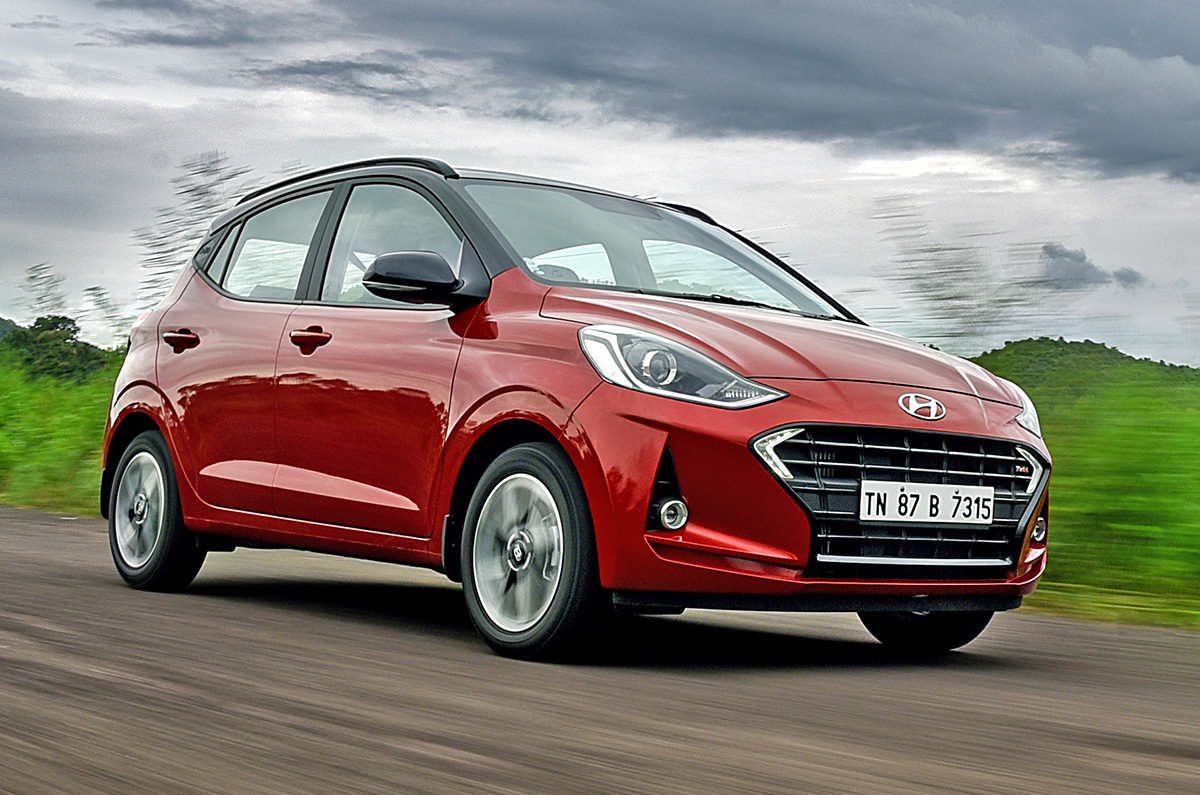
Review by jack : 2020 Hyundai Grand i10 Nios Turbo review, test drive

Think Hyundai Grand i10 Nios and you’d picture a practical, sophisticated, feature-loaded family car; sporty and exciting aren’t words that you’d associate with it. But Hyundai is working towards changing that perception withthis hot new turbocharged petrol version.

This Turbo version of the Nios is powered by a 1.0-litre, three-cylinder, turbo-petrol engine that made its debut in the Hyundai Venue, and is also available with sedans like the Verna and Aura. The Nios Turbo is based on the Sportz Dual Tone (DT) variant of the regular Nios with which it shares its features list, interiors and its exterior design; and it commands a premium of Rs 95,000-1,00,000 over the comparable 1.2-litre petrol engine. So, is the Nios Turbo exciting enough to justify that premium?

The Turbo badge is one of the few visual ques that differentiates the sportier version.

How do you distinguish the Turbo from the regular Nios?

Save for a fully blacked-out trapezoidal front grille featuring a ‘Turbo’ badge, there isn’t anything to tell this version apart from a regular dual-tone Nios. This turbo variant gets an optional two-tone paint shade with blacked-out roof and pillars (priced Rs 5,000 higher than the single tone), projector headlamps with LED DRLs, roof rails, and wide 175/60 tyres with 15-inch alloys from the top-spec Asta variant (as compared to the 165/65 R14 tyres available on the Sportz single-tone variant). The boot now wears an extra ‘Turbo’ badge, in addition to the ‘Grand i10’, ‘Nios’ and ‘Sportz’ badges.

The dual-tone finish costs Rs 5,000 more than the single-tone one.

Is the Nios Turbo’s interior much sportier?

Like the exteriors, the interiors get mere cosmetic changes, which are standard on the DT version. Red highlights around the air-vents and the rotary AC controls, as well as red stitching and piping on the seats, add a touch of sportiness to the all-black interiors. Although there aren’t any Turbo-specific changes to the interiors, the gear lever gives this one away, due to its reverse gear positioning that is besides the first gear, as opposed to being besides the fourth gear in the standard Nios. Cosmetic changes aside, the interiors are spacious and nicely put together with high-quality plastics. And this remains a practical cabin with a very user-friendly layout.

Red highlights inside mark the Nios Turbo apart.

Does the Nios Turbo get more features?

In terms of equipment, the Turbo features a leather-wrapped steering, climate control, a part-digital instrument cluster, touchscreen with Android Auto and Apple CarPlay, reverse camera, projector headlamps with LED DRLs, remote-key entry, and wireless charging. Compared to the top-spec Asta variant of the standard Nios, it misses out some convenience features like a push-button start and keyless entry, and some crucial bits like a rear wiper and washer.

The Nios Turbo Sportz misses out on keyless entry and go and a rear wiper available on the top-spec Asta variant.

What is it like to drive?

As mentioned earlier, this is the same 998cc, three-cylinder turbo-petrol engine that made its debut in the Hyundai Venue, but the only difference is that in the Nios, it makes 100hp – 20hp lesser than the compact SUV – but still produces an identical 172Nm of torque. With a sub-1-tonne kerb weight, power-to-weight and torque-to-weight ratios are better than any other affordable petrol hatchback in the market today.

This engine is smooth and refined, as far as three-cylinder motors go, but it isn’t completely vibration-free, especially at idle, when compared to its 1.2-litre four-cylinder naturally aspirated counterpart. When spun faster, this motor does get a bit thrummy, although the sound isn’t excessively loud or coarse.

The 1.0-litre turbo-petrol engine is shared with the Venue and Verna but makes 20hp less.

Those used to driving non-turbo cars will need to get accustomed to this turbo petrol engine, as on-tap responses aren’t as sharp as a larger naturally aspirated engine, and small-capacity turbo engines like this one need to be spun a bit to build the boost and bring them into their zone. You will do well by keeping the revs above 1,800rpm as that’s where the turbo starts singing, and there’s a nice second wind of power once the tachometer needle crosses 3,000rpm. Between 2,000-5,000rpm is this engine’s sweet spot, and it feels very gutsy and far more capable than the 1.2-litre petrol, especially while overtaking out on the highway. While it isn’t as free-revving as Volkswagen’s 1.0-litre TSI motor, it will spin to 6,600rpm in the first three gears, maxing out at 101kph in second gear and at 164kph in third gear, which goes to show how tall-geared this version is. Flat-out, it will even go on to hit a top speed of 183kph.

The Nios Turbo is the quickest mass market hatch to 100kph.

And while on the topic of outright performance, this is currently the fastest accelerating mass-market hatchback on sale in India. It out-accelerates the Volkswagen Polo 1.0 TSI (which was the previous fastest) to 100kph and it even reaches 160kph a full second quicker. Even through the gears, especially in the fourth, from 40-100kph, the Nios is 0.88sec quicker. Even when you consider smaller bursts of acceleration like 20-40kph in second gear, 40-60kph in third, or even 60-80kph in fourth, the Nios noses ahead when compared to the Volkswagen. The Nios’ standard 1.2-litre petrol version isn’t even in the same league in terms of performance. To put it into perspective, the Turbo accelerates 3.46sec, 0.7sec and 8.59sec faster than the naturally aspirated petrol from 0-100kph, 20-80kph in third and 40-100kph in fourth, respectively.

Hyundai Grand i10 Nios Turbo vs VW Polo 1.0 TSI vs Grand i10 Nios 1.2: Performance (as tested)
Grand i10 Nios Turbo Polo 1.0 TSI Grand i10 Nios 1.2P
0-10kph 0.52s 0.43s 0.52s
0-20kph 1.08s 1.06s 1.14s
0-30kph 1.62s 1.64s 2.16s
0-40kph 2.39s 2.28s 3.02s
0-50kph 3.29s 3.27s 4.11s
0-60kph 4.58s 4.23s 5.75s
0-70kph 5.69s 5.28s 7.20s
0-80kph 6.93s 6.51s 8.79s
0-90kph 8.23s 7.99s 10.78s
0-100kph 9.82s 9.97s 13.28s
0-110kph 12.17s 11.88s 15.89s
0-120kph 14.46s 14.14s 19.06s
0-130kph 17.12s 16.87s 23.31s
0-140kph 20.20s 20.36s 29.60s
0-150kph 23.92s 24.75s -
0-160kph 29.30s 30.36s -
20-80kph (in 3rd gear) 13.30s 12.36s 14.00s
40-100kph (in 4th gear) 13.85s 14.73s 22.44s

This motor is mated to a 5-speed manual in the Nios Turbo (as compared to the Venue’s 6-speeder). The gearbox is an absolute delight to use, with butter-smooth shifts and a light and positive action. Its clutch is light too, and so is its steering, which is effortless to twirl at city speeds. Out on the open road, however, you will be left wanting for a more consistent feel, and although the steering weighs up a bit at speeds, it doesn’t offer a very ‘connected’ feel.  And while mechanical grip is decent – with its wheels pushed to the extreme corners of the car, making it feel quite agile – road grip from the skinny tyres, however, isn’t very confidence inspiring. A set of wider tyres would improve its cornering ability to a great extent. Like the standard car, ride comfort remains excellent, and its brakes are very progressive, offering a strong initial bite.

5-speed manual is a delight to use.

Should you buy the Nios Turbo?

Despite being a spruced-up version, this car retains all the Nios’ strengths, like its sophisticated, practical interiors, an absorbent low-speed ride quality, and its easy-to-drive nature, which makes the standard car very appealing in the first place. Hyundai must be lauded for taking the plunge and introducing this performance-oriented turbo version to cater to the driving enthusiasts – the added performance has made the Nios a lot more capable and more effortless, especially out on the open road. Performance is so strong that this one is the quickest hatchback on sale in India today. But those who love to drive will be left wanting for a more engaging driving experience to match the added performance, and the Rs 95,000-1,00,000 premium that this turbo version commands over a comparable 1.2-litre petrol variant seems a bit too hard to justify. Sharper driving manners and sportier looks would have made the Nios Turbo a purer hot hatch and a more compelling proposition.

The Rs 95,000-1,00,000 premium for the Turbo over the standard 1.2 petrol is a bit hard to justify.


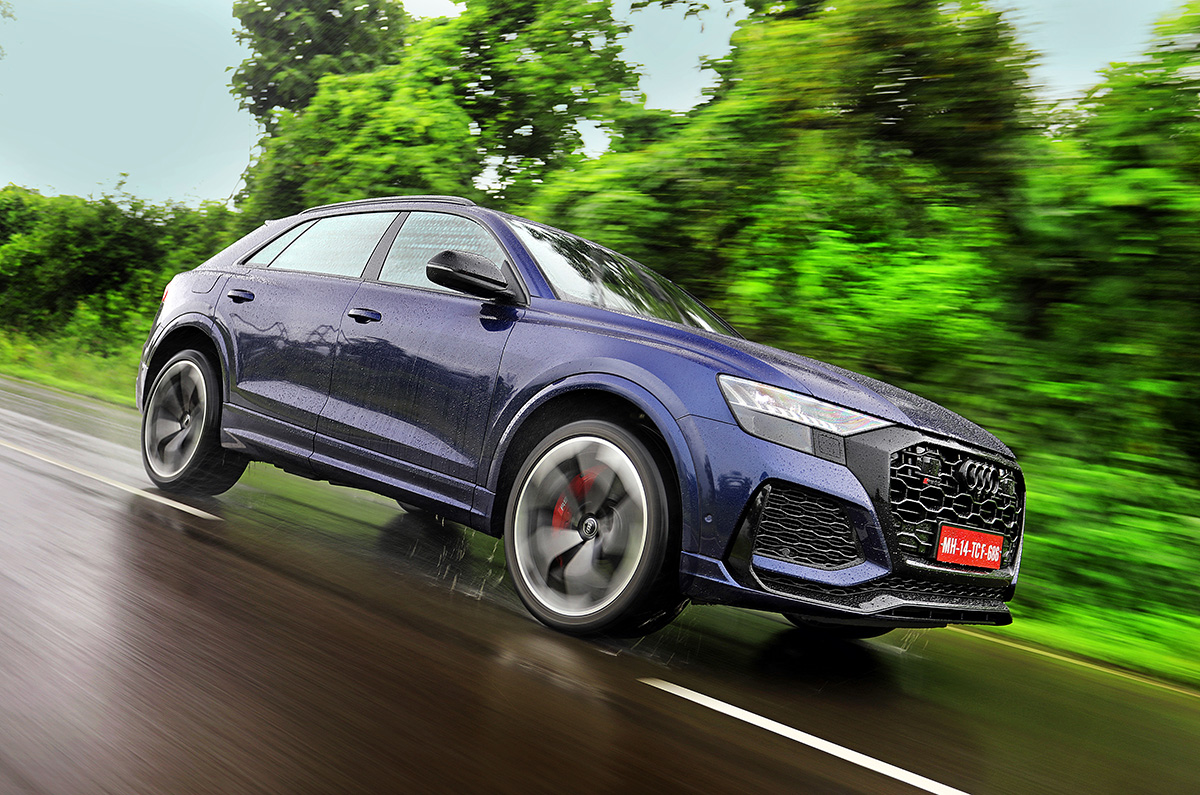
Review : Audi RS Q8 - THE SUPER SUV

What is it?

What is an Audi RS Q8 and why should you be interested? Here goes. The family tree tells you it’s the range-topping, high-performance version of the Audi Q8. A DNA test will reveal its brother from another mother as the Lamborghini Urus with which it shares it platform, engine, and tech. And its resume will be headlined “‘fastest production SUV around the Nurburgring”. How’s that for an executive briefing?

Headlining the package is a 600hp, 800Nm, 4.0-litre, twin-turbo petrol engine, while all the other mechanicals – suspension, brakes and steering – have also been fettled to make the large Audi drive in a manner you wouldn’t expect a 2.3 tonne SUV to.

What’s it like on the outside?

The broad-shouldered Audi Q8 is perhaps the best interpretation of the idea of a large SUV-coupe. The RS Q8? It’s more attractive still. Distinguishable by its larger intakes, flared wheel arches and RS trademark oval exhausts, the RS Q8 looks properly menacing. The ginormous 23-inch rims (more on them later) you see here are standard for India, but you can opt for smaller 21- and 22-inchers too. There is actually a whole menu card of options so you can spec the RS Q8 to your liking. The Black Package that brings in blacked-out details (and even logos) is an option I’d definitely tick, thank you very much.


What’s it like on the inside?

In basic look and layout, the RS Q8’s cabin is, unsurprisingly, very similar to the standard Q8’s, which is to say it’s very business-like. Quality levels are impeccable, and the twin-touchscreen infotainment system makes the cabin look cutting-edge too, even if the setup takes some getting used to. When you’re driving with gusto, however, you’ll get all the info you need on the brilliant Virtual Cockpit digital dials that also features a dedicated RS mode.


Of course, there’s much you can change inside the cabin too. From seats and steering design to colours and equipment, your wish is Audi’s command…for a cost. On a performance SUV, it’d be rude to pass on the option of carbon-fibre addenda.


The seat of power is the one behind the steering but your passengers at the back will be more than content too. There’s lots of room to stretch out and the backrest angle is also adjustable.


What’s it like to drive?

Like all fast Audis, the 600hp RS Q8 is surprisingly easy to work a rhythm with. It feels exploitable from the get-go, and even on damp roads, it’s easy to trust the SUV. The encompassing feeling is that Quattro all-wheel drive always has your back.

It’s a pity we couldn’t time the RS Q8 because it sure as hell feels as fast as Audi claims it is – 0-100kph is said to take 3.8sec! Launch control-aided starts, possible in no-holds-barred RS 2 mode, are properly dramatic. To visualise it, imagine The Big Show pulling off an Usain Bolt. There’s absolutely no let-up in thrust, should you choose to press on, and even kickdown acceleration is hilarious. The roar of the V8 and the pops and bangs on the overrun only give the proceedings a fitting soundtrack. 

As quick as the RS Q8 is, the performance isn’t even the most remarkable thing about it. Handling is. Making an SUV go fast in a straight line is one thing. Making an SUV go fast around corners requires a whole different level of sorcery. In the RS Q8’s box of tricks is standard-fit all-wheel steering and Quattro all-wheel drive that can send up to 85 percent of torque to the rear wheel. But for the full effect, you need to add in active roll stabilisation and the sport rear differential, as equipped on this test car. The combined effect of all the tech is just surreal. 


The first few corners taken at speed are disorienting because you just expect the 1.7m-tall SUV to go all Leaning Tower of Pisa on you, but it doesn’t. The RS Q8 stays so eerily flat, you’ll suspect the calibration of your internal gyroscope is off. And since weight transfer is kept in check so effectively, mechanical grip is just at another level. Pushing harder only has the large Audi dig ever deeper into its seemingly endless reserves of traction. The RS Q8 doesn’t run wide, it doesn’t slip into understeer and it doesn’t lose poise in hard braking either. It’s a 2.3-tonne SUV that thinks it’s a supercar.

What’s also remarkable is how docile the RS Q8 can become when you need it to. At its relaxed best, the RS Q8 doesn’t feel all too different to a standard Q8 out on a quiet cruise. Adding to the calm is the mild-hybrid system whose electric motor, given enough charge in the lithium-ion battery, can relieve the engine of propulsion duties altogether for up to 40 seconds at steady speeds. Who’d have thought the SUV champ of the green hell would have some green credentials too?

The other revelation is the RS Q8’s unexpectedly comfy ride. The 295/35 ZR23 tyres have enough sidewall to take the initial impact, and the air suspension only softens the blow further. Still, you can’t be reckless on bad roads. When the asphalt vanishes altogether, it’s handy to have the option to switch to Off-road mode that has the ride height increase by 3.5 inches.

Should you buy one?

Sadly, big performance costs big money. RS Q8 prices start at Rs 2.07 crore (ex-showroom) and those who can stomach the price are sure to add a few lakhs of options to the final tally. The RS Q8 is expensive, no doubt, but then its sibling from Sant Agata Bolognese, the Lamborghini Urus, starts at Rs 3.15 crore. But let’s not get lost in numbers….


The RS Q8 has all the trappings of an Audi luxury car, it’s as entertaining to drive as a supercar and by virtue of being an SUV, it also fits into the India scheme of things like few other performance models can. Drive one and you just won’t be able to forget it.

The term ‘super SUV’ sounds about right.


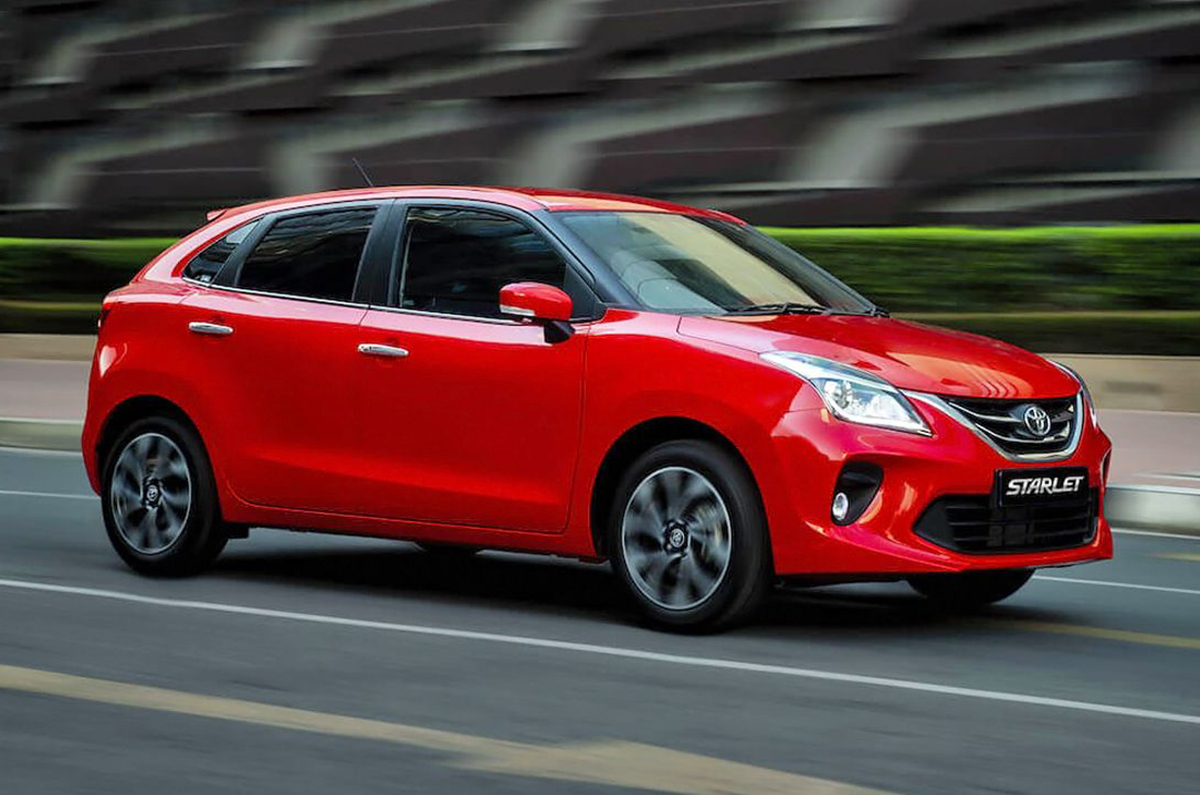
Made-in-India Baleno to be exported to South Africa as the Toyota Starlet

Toyota is all set to introduce the new Starlet hatchback in the South African market.  The model will be built and exported from India. We tell you more about it.

  • Toyota Starlet will be built in India by Maruti Suzuki
  • It will share styling with India-spec Toyota Glanza 
  • Gets same engine-gearbox options as the South African spec Baleno

What is the Toyota Starlet?

The Starlet is Toyota’s popular brand name that was used for its entry-level hatchback globally, which was then replaced by the Yaris range of cars, a few years ago. The company has now resurrected the Starlet nameplate for South African markets and is expected to see this hatchback in as many as 47 countries in the continent.

Is the Toyota Starlet the same as the Toyota Glanza offered in India? 

Essentially yes, the Starlet is the same Glanza that’s sold in India. Interestingly, the South African car will be powered by Suzuki’s 1.4 litre petrol engine that used to power the first-gen Ertiga and pre-facelift Ciaz. The Maruti Baleno and the Toyota Glanza on the other hand are offered with a 1.2 litre power plant.

Is the Baleno also sold in South Africa?

Yes, Suzuki also sells the Baleno in South Africa which is also built at the Maruti Suzuki plant in India. Thus, just like in our market, the two Japanese partners will be sharing a badge engineered version of the same car. Unlike India however, Toyota is the larger of the two and Maruti Suzuki will thus likely see a sizeable expansion in its export orders.   

What’s next from the Toyota Suzuki alliance in India? 

Toyota will introduce the Urban Cruiser SUV in India this month which is essentially an updated Maruti Suzuki Vitara Brezza. The SUV will be Toyota’s entry in the highly competitive, sub-four-meter compact SUV segment in the Indian market.  Like the Glanza-based Starlet, we expect Toyota to also sell the made-in-India Urban Cruiser in continents like Africa in future.


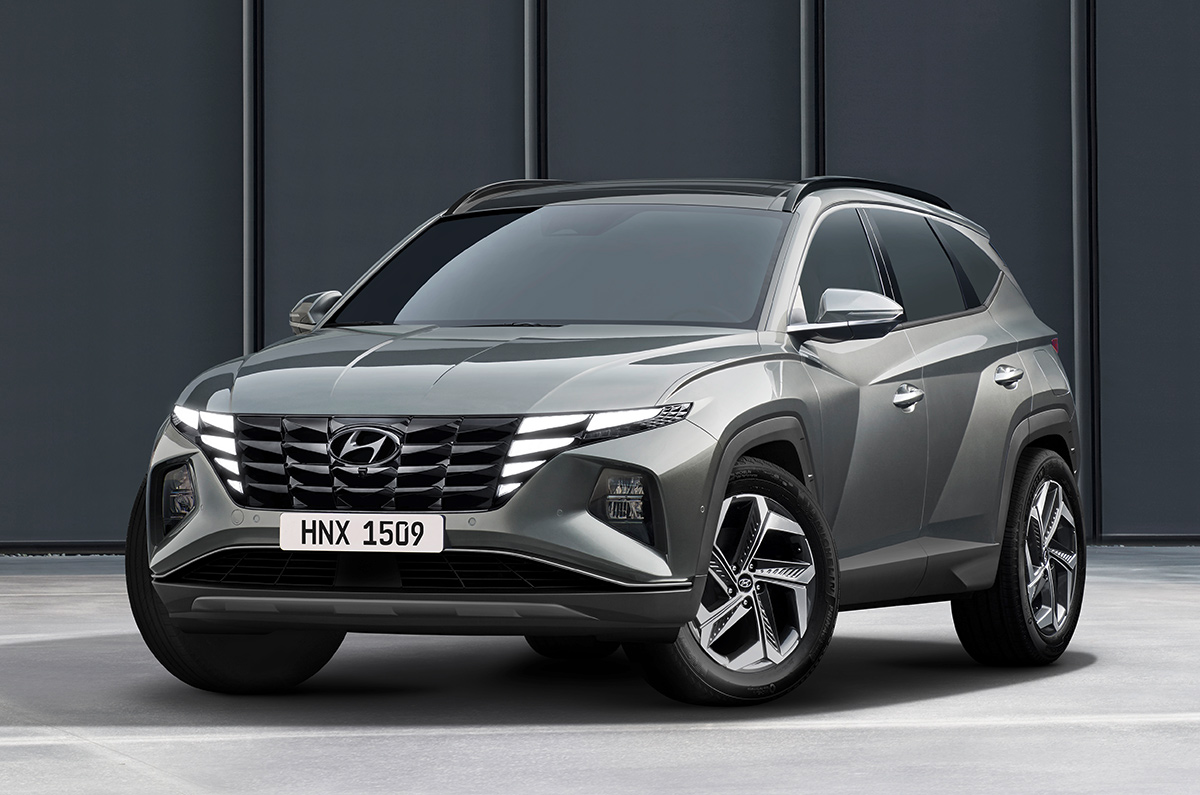
2021 Hyundai Tucson debuts with bold design

The 2021 Hyundai Tucson was previewed in a handful of stealthy shots a couple of weeks ago, and has made its world premiere today. Now in its fourth generation, the Hyundai Tucson has undergone what is possibly its most drastic evolution since the original came out in 2004, in terms of both design and technology. Let’s take a closer look at it.

  • Fourth-gen Tucson also offered in long-wheelbase form
  • Majority of physical controls replaced by touch panels
  • Gets petrol, diesel and hybrid powertrain options

What should I know about the 2021 Hyundai Tucson’s exterior?

It’s safe to say that on the outside, the 2021 Hyundai Tucson looks nothing like its predecessor. It follows Hyundai’s Sensuous Sportiness design language, but also features flourishes of what the company calls ‘parametric dynamics’, which adds jewel-like surfacing to the Tucson’s exterior. Lending an air of boldness to the new-gen Tucson’s face is a parametric grille that incorporates half-mirror type LED daytime running lights that are only visible when they’re switched on. When the Tucson isn’t running, the DRLs appear to be an extension of the grille surface, with the projector headlights mounted lower in the front bumper.

Along the sides, what stands out are the tight skinning and short overhangs, prominent character lines, flared wheel arches, a chrome strip that emerges from the base of the ORVMs and stretches all the way back to the C-pillar and the 19-inch wheels that will be available in international markets along with 17- and 18-inch options.

At the back, the T-shaped tail-lights – linked by an LED light bar that spans the width of the Tucson – also features half-hidden triangular shapes that are only visible when lit. The rear wiper is hidden neatly underneath the spoiler, the bumper sports a diamond-pattern finish, a faux diffuser and twin chrome exhaust tips. All in, the new Tucson has ditched the current-gen model’s rounded, bulky appearance for a design that’s decidedly more aggressive and in-your-face.

How different is the 2021 Hyundai Tucson in terms of dimensions?

Size-wise, the 2021 Hyundai Tucson has grown, but the bigger news is that for the first time ever, the Tucson will also be offered in long-wheelbase form. While the short-wheelbase version of the new Tucson is only 10mm longer, 15mm wider and has a 10mm longer wheelbase than the model on sale today, the Tucson long wheelbase model is a significant 150mm longer and has a 85mm longer wheelbase, which will help Hyundai carve out acres of interior space.

While the model for international markets has been revealed in 5-seat form, we’ve previously reported the new Tucson will come to India in 7-seat form only. The hugely popular second-generation Hyundai Creta will soon spawn a 7-seat model that will edge closer to current-gen Tucson territory. To make room for this new model, Hyundai has chosen to make the fourth-gen Tucson bigger and more upmarket, and will position it as a replacement for the Santa Fe, which won’t return to India.

What about the 2021 Hyundai Tucson’s interior?

On the inside, too, the 2021 Hyundai Tucson has almost nothing in common with the third-gen SUV. The new Tucson’s interior adopts a minimalist approach, and ditches most physical controls for touch panels. Standing out on the wraparound dashboard are a 10.25-inch digital driver display, a 10.25-inch touchscreen infotainment system and the functions for the automatic climate control system are accessed via a touch panel mounted below the screen. There are a few physical buttons on the centre console for seat ventilation and other functions, and there is no traditional gear lever – it has been replaced by buttons.

As before, the new Tucson continues to be a 5-seat SUV, and in terms of features, it packs wireless smartphone charging, a panoramic sunroof, air purifier, 64-colour ambient lighting, 360-degree cameras, memory function for the driver’s seat, powered controls for the rear seat passenger to adjust the front passenger’s seat, rear AC vents, a digital key (which lets owners unlock the car with their smartphone), BlueLink connected car features, voice recognition, a dash cam and a Bose sound system, to name a few.

What are the 2021 Hyundai Tucson’s powertrain options?

On the engines front, the 2021 Hyundai Tucson offers plenty in the way of choice. Depending on the market, Hyundai will offer a 1.6-litre, four-cylinder turbo-petrol (180hp, 265Nm), a 2.5-litre, four-cylinder petrol (190hp, 247Nm) and a 2.0-litre turbo-diesel (186hp, 417Nm). The hybrid model pairs the 1.6-litre T-GDI engine with an electric motor for a combined output of 230hp and 350Nm of torque. Hyundai, however, hasn’t revealed the battery capacity and the range for the Tucson plug-in hybrid.

The 1.6 T-GDI is mated to a 7-speed dual-clutch automatic, while the 2.5-litre petrol and 2.0-litre diesel are paired with an 8-speed automatic gearbox. Hyundai will also offer the Tucson with the HTRAC all-wheel-drive system (including Sand, Snow and Mud modes in addition to other drive modes).

Safety features for the new Tucson include adaptive cruise control, forward collision avoidance assist, drive attention warning, lane-keep assist and a blind spot collision-avoidance assist, to name a few.

When will the 2021 Hyundai Tucson come to India?

The first market to get the fourth-gen Hyundai Tucson will be South Korea, where the SUV will go on sale shortly. Other markets are expected to get the new Tucson early in 2021. That said, there is no word at present on when Hyundai plans to introduce the new Tucson in India, and it may be a fair amount of time away, considering the facelifted third-gen Tucson was only launched in our market a few months ago.

However, when it does arrive, expect the new Hyundai Tucson to be offered in both petrol and diesel forms, and to square off against the likes of the facelifted Jeep Compass, Tata Harrier and the Volkswagen Tiguan, which is set to return to India in facelift form.

What are your thoughts on the 2021 Hyundai Tucson? Let us know in the comments.


5 best petrol-automatic mid-size SUVs on sale in India

The mid-size SUV segment is fiercely competitive and petrol-automatic models are becoming more and more popular. There’s quite a selection of models available too in this arena today. Read on to know which petrol-automatic mid-size SUV makes it to our top 5 list and why.

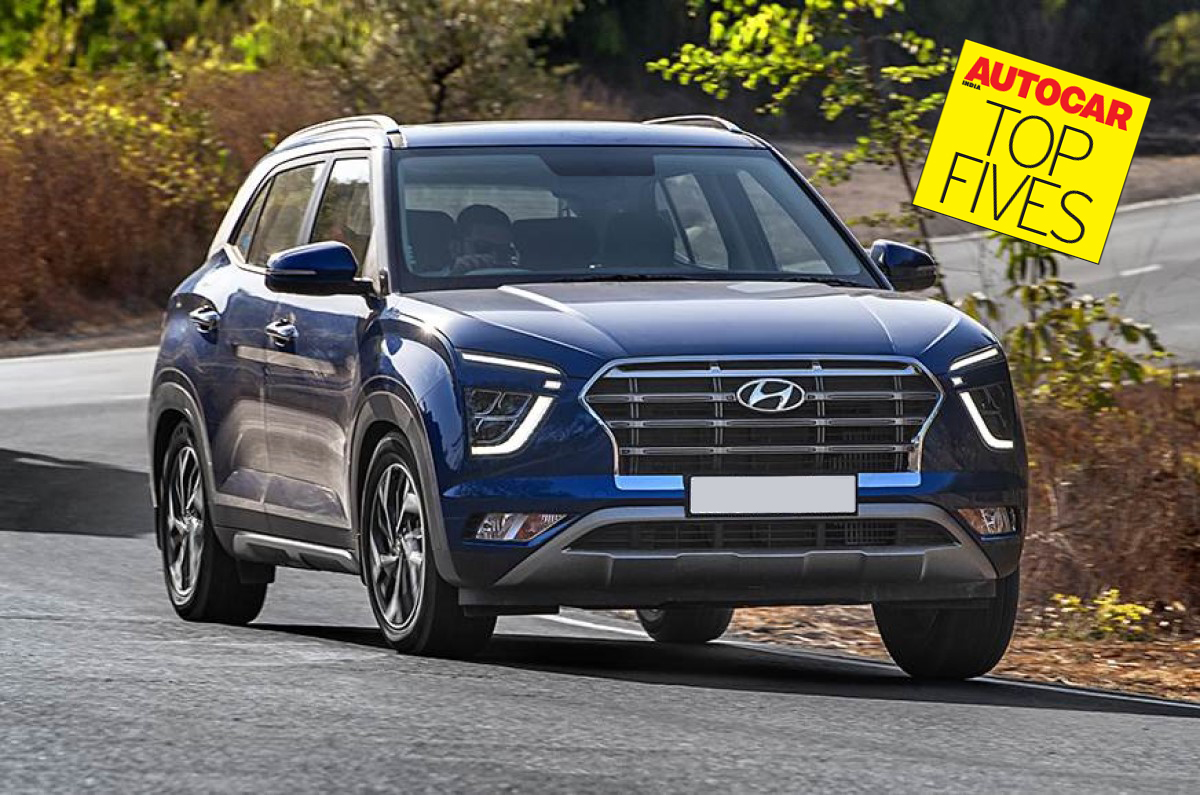
Hyundai Creta                  9/10


The second-gen Hyundai Creta builds on its predecessor’s strengths in terms of comfort, features and driveability. The 1.5 petrol-CVT option is great for the city slicker, while the Creta 1.4 turbo-petrol with the dual-clutch auto is for the more spirited. The 2020 Creta is a great all-rounder that delivers on every front.

Hyundai Creta automatic fact file
Engine 1497cc, 4 cyl, petrol 1353cc, 4 cyl, turbo-petrol
Power 115hp 140hp
Torque 144Nm 242Nm
Gearbox type CVT 7-speed dual-clutch
ARAI mileage 16.9kpl 16.8kpl
Price (ex-showroom, India) Rs 14.94-16.15 lakh Rs 16.16-17.20 lakh

Kia Seltos                         9/10      


We realised from our comparison of the Seltos and the Creta that the latter noses ahead of its cousin on a few fronts – ride quality, rear-seat comfort and a larger sunroof. However, the Kia Seltos is more fun to drive, especially when specced with the 1.4 turbo-petrol-DCT combo – our in-depth Seltos road test showed it took 9.72secs to 100kph. The Seltos 1.5 petrol-CVT is more than decent too. Kia’s mid-size SUV is a very close runner-up for the top spot.

Kia Seltos automatic fact file
Engine 1497cc, 4 cyl, petrol 1353cc, 4 cyl, turbo-petrol
Power 115hp 140hp
Torque 144Nm 242Nm
Gearbox type CVT 7-speed dual-clutch
ARAI mileage 16.8kpl 16.5kpl
Price (ex-showroom, India) Rs 14.35 lakh Rs 17.29 lakh

Renault Duster                         8/10


Its tough and rugged looks, ability to flatten the poorest road surfaces, new 156hp turbo-petrol engine, and an attractive price tag are the main reasons why the Renault Duster is a good mid-size SUV. Our Duster Turbo CVT review showed that it was quite quick too, and decent to drive in the city. It does, however, feel a bit dated in comparison to its rivals, particularly in terms of features and tech.

Renault Duster automatic fact file
Engine 1330cc, 4 cyl, turbo-petrol
Power 156hp
Torque 254Nm
Gearbox type CVT
ARAI mileage -
Price (ex-showroom, India) Rs 12.99-13.59 lakh

Nissan Kicks                            8/10


The Nissan Kicks SUV feels rugged and overcomes bad roads with aplomb. The Kicks’ new 156hp direct-injection turbo unit (which comes with a CVT auto) is shared with the Duster, and offers more than respectable performance. While it is a practical and spacious SUV with interiors that are solidly built, the Kicks does have some ergonomic issues, though.

Nissan Kicks automatic fact file
Engine 1330cc, 4 cyl, turbo-petrol
Power 156hp
Torque 254Nm
Gearbox type CVT
ARAI mileage 15.8kpl (approx)
Price (ex-showroom, India) Rs 13.45-14.15 lakh

Maruti Suzuki S-Cross                   7/10


As a value proposition, the Maruti Suzuki S-Cross rates high – you get mid-size SUV space for compact SUV money. However, its crossover looks aren’t what Indian buyers look for in an SUV. The S-Cross is the only one here with a mild-hybrid setup, which helps make it quite frugal. However, our S-Cross petrol review did reveal just how slow the 4-speed auto unit feels compared to its rivals.

Maruti SuzukiS-Cross automatic fact file
Engine 1462cc, 4 cyl, petrol
Power 105hp
Torque 138Nm
Gearbox type 4-speed torque convertor
ARAI mileage 18.43kpl
Price (ex-showroom, Delhi) Rs 10.83-12.39 lakh

Disclaimer: Above results applicable as of September 15, 2020.


Auto Marvel : Jeep - Stories begin where the roads end.


THE BIRTH OF A LEGEND

The 1940 Willys Quad was the first Jeep 4x4 ever made, but the Willys MA (‘M’ stood for ‘Military’ and model ‘A’), built in 1941, is equally iconic. Built to US Army specs just before WW-II, the MA had headlights on top of the fender, a Spicer 18 transfer case, and 3-speed manual transmission.

The go-anywhere, do-anything 1942 Jeep Willys MB was cut out for combat. It could be fitted with guns, was used for desert patrol, and also served as fire-fighting pumpers, field ambulances – and hell, fitted with appropriate wheels, it would even run on railway tracks.

When the war ended, Jeep returned to a hero’s welcome in the United States. In due course, the first Civilian Jeep (or CJ) was born. The CJ-2A, a modified version of the Willys MB, featured better shock absorbers, springs, and more comfortable seats.

The Wrangler YJ was the genesis of the Wrangler line. Launched in 1986, it came with four- and six-cylinder engines and updates to the 4x4 system such as Command-Trac and Selec-Trak.

WHAT JEEP STANDS FOR

Jeep is a thoroughbred SUV brand that was created nearly 80 years ago. It was purpose-built to help carry American armed forces safely over unforgiving terrain. Since then, with its legendary 4x4 engineering technology, Jeep has earned an iconic status because it created authentic SUV products, ushering in a new ‘4x4’ era in mobility. Jeep SUVs soon captured the imagination as they accorded a lifestyle of freedom and adventure. Over the years, Jeep has evolved into this brand that brings people together, builds communities and allows people to go anywhere and do anything. Today, Jeep is a household name, with vehicles that cater to all needs. Even as the brand has evolved, Jeep vehicles take pride in being rooted to their origin. Today, Jeep products retain their signature seven-slot grille, trapezoidal wheel arches, and unmatched and ever-improving 4x4 capability. Jeep has captured the imagination to become an inspiration and remain a beacon amongst Sports Utility Vehicles. It has the integrity of originality at its core. A quality we all value, aspiring to rise above mediocrity. We see in our choices, a reflection of who we are, or who we want to become. There is and will be only one Jeep.

— Dr Partha Datta, 

President and Managing Director, Fiat Chrysler Automobiles, India.


JEEP IN INDIA

Launched in 2019, the Jeep Compass Trailhawk isn’t fazed by anything. Steep ascents, rutted tracks, acres of mud: it’s all in a day’s work for this rugged-set version of the Compass.


The Compass marked Jeep’s foray into India. It was launched in 2017.
 
The Jeep Compass was the Car of the Year, Viewers’ Choice of the Year, and Premium SUV of the Year at the 2018 Autocar Awards. The Compass Trailhawk took home the Variant of the Year title at Autocar Awards 2020.
 
The badge says it all. This Trailhawk’s the real G.O.A.T.
 
Not impressed with the usual mode selector? Well, here, then, is a Rock mode. Go forth and conquer with the Compass Trailhawk.
 
Body-on-frame, tough as nails: With a 41.8-degree approach angle and 36.1-degree departure angle, the Jeep Wrangler really means business.
 
The Wrangler is Jeep’s flagship and the most recognised vehicle in the world, with its iconic seven-slot keystone-shape grille, round headlamps, trapezoidal wheel arches and square tail-lamps.
 

Jeep has nine Jeep Life Clubs in India with 2,800 active members who enthusiastically engage in expeditions, local trails, meet-ups and CSR drives.
 
 
Legendary Jeep Trails is a signature Jeep expedition, organised once a year for Jeep SUV owners to drive over the toughest terrains India has to offer and experience the capability of their Jeep SUV first-hand.


D'ecore your car