Showing posts with label automobile news. Show all posts

Le Mans 66 : exhilarating piece of Automobile History & thrilling rivalry.


                Ford motor company which is struggling to compete in market. As a means to boost their car sale in market Lee Iacocca (VP Ford) suggest Henry Ford II to purchase crash-trapped Ferrari to participate in ‘24hr Le Mans race’ as Ferrari has existing presence. But Scuderia Ferrari joins hands with Fiat, rejecting Fords deal also intentionally insult both Ford Motor Co. & Henry Ford II. In response Henry Ford II ordered his development division to design a race car to defeat Ferrari at Le Mans which is existing champion. And to do this nearly impossible job Ford hire  Former Le Mans champion Carroll Shellby (Owner of Shellby American) & Shellby enlist Ken Miles a hot head british racer. And that’s  how Ford vs Ferrari rivalry begins. As I mentioned nearly impossible because, It’s impossible to design a race car in time of few months, also to defeat ongoing champion in Track as well as Technology with that car.This thrilling story is been pictured it the film Ford Vs Ferrari also called Le Mans 66 in Europe.

                                “Ford versus Ferrari is exhilarating high-speed drama and this true story have enough torque to blow you away. Its based on a real-life story about the Ford Motor Company to create a car fast enough to beat the Italian car maker Ferrari who's dominated the 24-hour LeMans race he also recruits a hard-nosed driver to give his racing team the advantage to finally take down Ferrari and how they do it, well that’s what gonna blow your mind." 

                      Ford vs Ferrari (Titled Le Mans'66 in Europe) starring Matt Damon, Christian Bale, and Tracy Letts, and was directed by James Mangold. It tells the real-life story of the Ford team led by Carroll Shelby  played by Matt Damon, and driver Ken Miles  played by  Christian Bale, as they try to design and build a Ford  race car capable of beating Ferrari at the 1966 ‘24 Hours of Le Mans race’. Competitions and especially underdog stories are just so much more exciting when you don’t already know how they are gonna end. So although the events of the 1966 Le Mans have been known to people in car circles for more than 50 years, but I doubt that in our country hardly few people know about 1966 or even what's ‘Le Mans’ is . But, I will say though that that mystery alone isn’t enough to make a good racing movie or any kind of sports movie for that matter. It needs to be about more than just the climatic final race and Ford v Ferrari has that, so this is a film that will still work even if you already known the story.

                         A big factor that really contributes to movie is the quality of performances, especially from Matt Damon and Christian Bale. These characters felt so real. They felt lived in if you had a little sense of history, otherwise just google the names and you won’t regreat it. Damon as the smooth-talking legend struggling to find a middle-ground between two very different approaches to racing and Bale as the hot-headed, but  incredibly skilled mechanic and racer. But, it is when these two characters are together that they are at their best. They are so different, but complement each other extremely well and the history and friendship between the two really shines through. Having a believable set of characters to provide the  backbone of a story like this is important.

                          Well, let me tell you this movie does not disappoint. When it comes to sporting events, I really can’t think of anything that ís more magnificient than watching cars drive around in circles and the thrilling roar. Car races in movies are obviously a bit more exciting than what we see on tv, but still  there is only so much you can do with it. Seriously, if they had filmed all 24 hoursof the Le Man in this style, I would have enjoyed watching it. This movie doesn’t use the same two or three camera angles of the cars that you see in almost every other racing movie. There are shots during these racing sequences Live never seen before. More often than not, you are right in the car with them and it makes for some incredibly exciting sequences. The visuals and cinematography during the racing portions of this film are fantastic.

                       Ford v Ferrari is a period piece, so it’s got that 60s aesthetic we have come to expect from a movie like this, but it’s also full of these wonderful, but subtle shots that I think might go under people’s radar, especially when compared to the action-intensive racing scenes. Things like perfectly framed reflections in a character’s  sunglasses. “There was one shot that really stood out to me as exceptionally well done. It comes about halfway through the movie and Miles is working on a car alone at night. He is in a hangar at an airstrip and he ís surrounded by other cars  & works in progress. And as he works, he ís listening to a race on the radio. We hear the announcers and the sounds of cars speeding around a track and at that moment a plane turns out of another hangar, casting a lot of light into the hangar that Miles is working in which puts all these shadows on the wall from the cars around him. And, as it turns, it gives the illusion that these shadows are moving like the cars in the race he ís listening to are. It ís a really quick moment, but this movie is full of little things like that really help to raise this one a bit higher  than other similar movies. I was engrossed and really invested in the story.”

Scenes to notice :

1. It has definitely gotta be the racing sequences. Ford v Ferrari is distinctively different when it comes to filming and editing these racing sequences. It also has a ton of shots from within the car. This gives us unique angles of the driver and a view of everything that goes on inside during a race, but I think more importantly, it physically puts us inside the car.  

2.The performances,most notably Matt Damon and Christian Bale as Carroll Shelby and Ken Miles, respectively. These are both high-caliber actors, so we expect good performances from them. And that is what we get : good performances.They just feel like regular guys. Regular guys who built and drove cars that could go 200 miles per hour.

3. I especially liked performance of Christian Bale where he struggles with faulty door in First Lap and Trying to make lead. He acted with such a conviction as you could feel his dilemma, to which car drivers definitely gonna connect with. Also couple of scenes where he makes you feel thrill of controlling brake failed/faulty car.

     Although movie is like a blessing gives chance to live Le Man 66 thrill. Film succeeds in giving viewers their lifetime racing moment. Anyway you like the movie or not, you interested in story/ rivalry or not still the movie gives you drop of tear in corner of eyes at the end, with huge respect at bottom of heart for Miles.


Toyota win 24 Hours of Le Mans for third year running

Toyota Gazoo Racing secured their third consecutive 24 Hours of Le Mans victory, with the No. 8 car piloted by Sebastien Buemi, Brendon Hartley and Kazuki Nakajima winning the 2020 edition of the event. With this, Toyota has successfully wrapped up the LMP1 World Endurance Championship, with one round still remaining in Bahrain.

  • No. 8 Toyota of Buemi, Hartley and Nakajima win 24 Hours of Le Mans
  • United Autosports dominate in LMP2
  • Aston Martin win in GTE Pro and Am

COVID-19 forced the 24 Hours of Le Mans to be postponed this year. The event is already considered one of the most demanding tests of endurance and the September slot only made things more challenging for all the drivers, since they had to tackle more hours of night-time racing.

LMP1: Toyota’s hat-trick of wins at Le Mans

With Audi and Porsche pulling out of LMP1, Toyota was always expected to dominate this year’s event. But it wasn’t all smooth sailing for the team at Le Mans.

The No. 7 crew of Kamui Kobayashi, Mike Conway and Jose Maria Lopez – which started from pole – held on to the lead in the opening stages. With the sister No. 8 Toyota needing a brake change, the No. 7 car was leading the race by a lap. However, an issue with the exhaust manifold meant that they lost 30 minutes in the garage as the team replaced the car’s turbo. This dropped them to fourth place, while handing the No. 8 car the lead.

Buemi, Hartley and Nakajima were further helped by the fact that both the Rebellion cars suffered their own issues. With the conditions remaining dry throughout, the No. 8 Toyota comfortably crossed the line to win the 2020 24 Hours of Le Mans – a fitting send-off for the TS050 Hybrid on what was its last outing at Le Mans, before the new hypercar category replaces LMP1 next year.

The No. 1 Rebellion of Bruno Senna, Norman Nato and Gustavo Menezes finished second, five laps behind the winning Toyota. Just when it seemed like Rebellion was going to bag a double podium finish, Louis Deletraz crashed the No. 3 car and had to pit for a new front end. The incident also handed the crew a 30sec time penalty, promoting the No. 7 Toyota to third place overall.

LMP2: United Autosports secure title

United Autosports continued their dominant run, with Paul Di Resta, Phil Hanson, and Filipe Albuquerque  (driving the No. 22 Oreca) securing the team’s fourth consecutive LMP2 win. With this, the British Privateer team has secured enough points to clinch the LMP2 title.

The No. 38 JOTA Sport Oreca of Antonio Felix da Costa, Anthony Davidson and Roberto Gonzalez remained on the winning car’s tail for much of the morning. But they were knocked out of winning contention when Davidson was forced to pit for fuel with just two laps to go.

With the No. 26 G-Drive Aurus Oreca suffering suspension damage in the closing stages, the No. 31 Panis Racing Oreca of Nico Jamin, Mathieu Vaxiviere and Julien Canal finished third in the category.

GTE Pro: Aston Martin defeat Ferrari

Ferrari and Aston Martin remained locked in a tight battle in the LMGTE Pro category. But the No. 97 Aston Martin Vantage AMR of Alex Lynn, Maxime Martin and Harry Tincknell gained the upper hand and took home the winner’s trophy.

Last year’s Le Mans GTE Pro winners, Alessandro Pier Guidi, James Calado and Daniel Serra in the No. 51 AF Corse Ferrari 488 GTE Evo finished just 1 min 33 secs behind, in second place. The No. 95 Vantage of Nicki Thiim, Marco Sørensen and Richard Westbrook finished in third place, giving Aston Martin a double podium finish – handing the team it best-ever 24 Hours of Le Mans results.

GTE Am: Aston Martin triumph again

Topping off what had been a great day for Aston Martin, the marquee’s customer team TF Sport ended up winning in the LMGTE Am category.

The No.90 Vantage AMR of Salih Yoluc, Charlie Eastwood and Jonny Adam enjoyed a nearly flawless race and finished 49sec ahead of the No.77 Dempsey Proton Porsche of Christian Ried, Riccardo Pera and Matt Campbell. The No.83 AF Corse Ferrari 488 GTE EVO of Francois Perrodo, Emmanuel Collard and Nicklas Nielsen finished just 3sec behind.


2020 24 Hours of Le Mans results:

POS

CLASS

CAR

DRIVERS

LAPS

GAP

1

LMP1

#8 Toyota

Buemi, Nakajima, Hartley

387


2

LMP1

#1 Rebellion

Senna, Nato, Menezes

382

+ 5 Laps

3

LMP1

#7 Toyota

Conway, Kobayashi, Lopez

381

+ 6 Laps

4

LMP1

#3 Rebellion

Dumas, Berthon, Deletraz

381

+ 39.408s

5

LMP2

#22 Oreca

Hanson, Albuquerque, Di Resta

370

+ 17 Laps

6

LMP2

#38 Oreca

Davidson, Da Costa, Gonzalez

370

+ 32.831s

7

LMP2

#31 Oreca

Jamin, Canal, Vaxiviere

368

+ 19 Laps

8

LMP2

#36 Alpine

Negrao, Ragues, Laurent

367

+ 20 Laps

9

LMP2

#26 Aurus

Rusinov, Vergne, Jensen

367

+ 57.578s

10

LMP2

#28 Oreca

Lafargue, Chatin, Bradley

366

+ 21 Laps

11

LMP2

#42 Oreca

Lapierre, Borga, Coigny

365

+ 22 Laps

12

LMP2

#25 Oreca

Falb, Trummer, McMurry

365

+ 1m31.640s

13

LMP2

#50 Oreca

Calderon, Florsch, Visser

364

+ 23 Laps

14

LMP2

#47 Dallara

Lacorte, Belicchi, Sernagiotto

363

+ 24 Laps

15

LMP2

#17 Oreca

Pilet, Tilley, Kennard

363

+ 51.762s

16

LMP2

#27 Oreca

Hedman, Hanley, Van der Zande

361

+ 26 Laps

17

LMP2

#32 Oreca

Owen, Brundle, Van Uitert

359

+ 28 Laps

18

LMP2

#35 Ligier

Yamanaka, Foster, Merhi

351

+ 36 Laps

19

LMP2

#29 Oreca

Van Eerd, Van der Garde, De Vries

349

+ 38 Laps

20

GTE Pro

#97 Aston

Martin, Lynn, Tincknell

346

+ 41 Laps

21

GTE Pro

#51 Ferrari

Pier Guidi, Calado, Serra

346

+ 1m33.164s

22

GTE Pro

#95 Aston

Thiim, Sorensen, Westbrook

343

+ 44 Laps

23

GTE Pro

#82 Ferrari

Pla, Bourdais, Gounon

339

+ 48 Laps

24

GTE Am

#90 Aston

Yoluc, Eastwood, Adam

339

+ 1m33.407s

25

GTE Am

#77 Porsche

Ried, Pera, Campbell

339

+ 2m23.159s

26

GTE Am

#83 Ferrari

Perrodo, Collard, Nielsen

339

+ 2m26.206s

27

GTE Am

#56 Porsche

Perfetti, Ten Voorde, Cairoli

339

+ 2m34.526s

28

LMP2

#24 Oreca

Grist, Kapadia, Wells

338

+ 49 Laps

29

GTE Am

#86 Porsche

Wainwright, Barker, Watson

337

+ 50 Laps

30

GTE Am

#66 Ferrari

Heistand, Root, Magnussen

335

+ 52 Laps

31

GTE Pro

#91 Porsche

Bruni, Lietz, Makowiecki

335

+ 6.187s

32

GTE Am

#61 Ferrari

Piovanetti, Negri Jr., Ledogar

335

+ 2m49.871s

33

GTE Am

#98 Aston

Dalla Lana, Gunn, Farfus

333

+ 54 Laps

34

GTE Am

#85 Ferrari

Gostner, Frey, Gatting

332

+ 55 Laps

35

GTE Pro

#92 Porsche

Christensen, Estre, Vanthoor

331

+ 56 Laps

36

GTE Am

#99 Porsche

Inthraphuvasak, Legeret, Andlauer

331

+ 1m23.705s

37

GTE Am

#60 Ferrari

Schiavoni, Pianezzola, Ruberti

331

+ 2m58.825s

38

GTE Am

#78 Porsche

Felbermayr, Beretta, Van Splunteren

330

+ 57 Laps

39

GTE Am

#54 Ferrari

Flohr, Castellacci, Fisichella

330

+ 1m11.360s

40

GTE Am

#57 Porsche

Keating, Fraga, Bleekemolen

326

+ 61 Laps

41

LMP2

#34 Ligier

Smiechowski, Binder, Isaakyan

325

+ 62 Laps

42

GTE Am

#62 Ferrari

Grimes, Mowlem, Hollings

325

+ 24.638s

43

GTE Am

#89 Porsche

Brooks, Piguet, Laskaratos

313

+ 74 Laps

44

LMP2

#39 Oreca

Allen, Capillaire, Milesi

357

+ 30 Laps

45

GTE Pro

#71 Ferrari

Rigon, Molina, Bird

340

+ 47 Laps

46

GTE Am

#72 Ferrari

Chen, Blomqvist, Gomes

273

+ 114 Laps

47

GTE Am

#88 Porsche

Preining, Bastien, De Leener

238

+ 149 Laps

48

GTE Am

#75 Ferrari

Mastronardi, Cressoni, Piccini

211

+ 176 Laps

49

LMP2

#37 Oreca

Tung, Aubry, Stevens

141

+ 246 Laps

50

LMP2

#21 Oreca

Montoya, Buret, Rojas

192

+ 195 Laps

51

GTE Pro

#63 Ferrari

Macneil, Vilander, Segal

185

+ 202 Laps

52

GTE Am

#70 Ferrari

Kimura, Abril, Cozzolino

172

+ 215 Laps

53

LMP2

#16 Aurus

Cullen, Jarvis, Tandy

105

+ 282 Laps

54

LMP2

#30 Oreca

Hirschi, Tereschenko, Gommendy

100

+ 287 Laps

55

LMP1

#4 ENSO

Dillmann, Spengler, Webb

97

+ 290 Laps

56

LMP2

#33 Oreca

Yamashita, Patterson, Fjordbach

88

+ 299 Laps

57

GTE Am

#52 Ferrari

Ulrich, Gorig, West

80

+ 307 Laps

58

GTE Am

#55 Ferrari

Cameron, Scott, Griffin

78

+ 309 Laps

59

LMP2

#11 Ligier

Tambay, Maris, D'Ansembourg

26

+ 361 Laps


First 2020 Mahindra Thar to be auctioned for charity

The first unit of the new Mahindra Thar is set to be auctioned online for charity. While registrations for the auction opened yesterday on Mahindra’s website, the auction itself will take place from September 24-27, 2020. Mahindra announced that the auction is meant to raise funds in the fight against COVID-19 and that the brand will donate a matching amount to the charity of the customer’s choice.

  • First 2020 Thar to be sold will get unique elements
  • Winning bidder can choose from all five versions and six colour options
  • New Thar launch on October 2, 2020

What will make the 2020 Thar to be auctioned unique?

On the outside, the model that will be up for auction will get a ‘Thar #1’ badge and customised badging with the owner’s initials. The seat covers and a decorative plaque on the dashboard will also come with a serial number ‘1’.

Other than these cosmetic changes, the model will be identical mechanically and equipment-wise to the standard version. The winning bidder will be able to choose from any of the four engine-gearbox options, two trim levels – AX and LX – and all six exterior colour options.

For details on which features and powertrain options are available with each variant, check out our 2020 Mahindra Thar AX and LX variants explained report.

Which charitable organisations can the winning bidder choose?

The proceeds from the auction and Mahindra’s matching amount can be donated to one of three organisations – the Naandi Foundation, the Swades Foundation and the PM Cares Fund.

Is there anything else to know about the first 2020 Thar and the auction?

While the online auction will be conducted by Mahindra First Choice Wheels (MFCW), the bidding will be conducted by Ernst & Young. Prospective bidders will be required to put down a refundable deposit when they register.

Bookings for the second-generation off-roader will open on October 2, which is when 2020 Thar prices will also be revealed.


Skoda Rapid TSI automatic launched at Rs 9.49 lakh

The Skoda Rapid received a new lease of life earlier this year with the entry of the 1.0-litre TSI engine, and now, the Rapid lineup has grown with the addition of an automatic gearbox. The Skoda Rapid TSI automatic has been launched, with prices ranging from Rs 9.49-13.29 lakh (ex-showroom, India).

  • Skoda Rapid automatic range starts at Rs 9.49 lakh
  • Automatic variant lineup tops out at Rs 13.29 lakh
  • 6-speed torque convertor is an all-new unit
Skoda Rapid variant-wise prices (ex-showroom, pan-India)
Variant MT AT
Rapid Rider Rs 7.49 lakh -
Rapid Rider Plus Rs 7.99 lakh Rs 9.49 lakh
Rapid Ambition Rs 9.99 lakh Rs 11.29 lakh
Rapid Onyx Rs 10.19 lakh Rs 11.49 lakh
Rapid Style Rs 11.49 lakh Rs 12.99 lakh
Rapid Monte Carlo Rs 11.79 lakh Rs 13.29 lakh

Rapid automatic prices are about Rs 1.5 lakh higher than their respective manual counterparts. 

What’s the most important thing to know about the Skoda Rapid TSI automatic?

Launched earlier this year with only a 6-speed manual gearbox, the Skoda Rapid TSI now also gets the option of an all-new, 6-speed torque convertor automatic. This is the same gearbox that was first introduced in the Volkswagen Polo and Vento earlier this month, and the Rapid automatic continues to be powered by the same 1.0-litre turbo-petrol – which makes 110hp and 175Nm of torque – as the manual Rapid.

What about the Skoda Rapid TSI automatic’s fuel efficiency figure?

Skoda has previously revealed the Rapid automatic’s ARAI-rated fuel efficiency is rated at 16.24kpl; the Rapid TSI manual is rated at 18.97kpl. It’s worth noting the BS4-compliant 1.6 MPI petrol engine – paired with a 6-speed automatic – had an ARAI-certified fuel efficiency figure of 14.84kpl.  


What are the variants the Skoda Rapid TSI automatic will be available in?

The automatic range starts with the Rider Plus and includes Ambition, Onyx, Style and the range-topping Monte Carlo variants.

Equipment levels are exactly the same as the manual Rapid, so the Rider Plus gets a 6.5-inch touchscreen infotainment system as standard, while the higher-spec Style and Monte Carlo pack in cruise control, reverse camera, automatic headlights and wipers, 8.0-inch touchscreen and an auto-dimming interior rear view mirror. The Rapid Style also gets side airbags.


Suzuki Swace estate revealed

The Suzuki Swace has been revealed, an estate car based on the Toyota Corolla Touring Sports. The Swace is Suzuki’s second model to come out of the global strategic alliance with Toyota. 

  • Suzuki Swace is a rebadged Toyota Corolla Touring Sports

  • Makes use of a 1.8-litre hybrid powertrain that’s capable of electric-only running

  • European launch in the coming months

What is the Suzuki Swace?

The Suzuki Swace is essentially a rebadged but, mechanically identical version of Toyota’s Corolla Touring Sports estate. It is a product of the collaborative business agreement between the two Japanese manufacturers. The Swace estate follows the Toyota RAV4-based Suzuki Across SUV that was revealed earlier this year. 

What’s powering the Swace?

The Swace is powered by the 1.8-litre hybrid powertrain also found in the Corolla, which combines a 96hp four-cylinder petrol engine with a 71hp electric motor via a CVT automatic transmission. Total power output is unconfirmed (it's 121hp in the Corolla), although performance is quoted at 11.1sec for the 0-100kph sprint and top speed is 180kph.

Like the Corolla, the Swace features a dedicated EV mode for emissions-free driving, with the hybrid engine producing 99-115g/km of CO2 on the WLTP cycle. It's understood the Swace won't recievereceive the Corolla's more powerful 2.0-litre hybrid powertrain. 

What’s it like on the outside?

The Suzuki Swace’s exterior bears a strong resemblance to the Toyota Corolla but, features its own unique front-end design. This includes a distinctive hexagonal front grille seen on other Suzukis like the Across and a redesigned front bumper. The Swace also gets a different design for its alloy wheels. 

What’s the Swace like inside?

Inside, the Swace’s dashboard remains largely identical to the Corolla’s, save for the new ‘Suzuki’ badged steering wheel. The Corolla's 8.0-inch touchscreen infotainment system comes as standard in the Swace with support for Android Auto and Apple CarPlay, along with wireless smartphone charging. There’s also ambient lighting and heated front seats as part of the package. The Swace has a luggage capacity of 596 litres.

Will it come to India? 

No, the Suzuki Swace will not be launched in India. In our market, the Toyota-Suzuki alliance exists but, for the time being, it’s the other way around – Maruti Suzuki supplies vehicles to Toyota. The Maruti Suzuki Baleno is already being rebadged and sold as the Toyota Glanza, with the Vitara Brezza compact SUV to follow suit soon. Toyota will re-brand the Brezza as the Urban Cruiser, which will be launched on September 23. Earlier, the alliance did plan to sell Maruti-badged Toyota Corollas in India but, that plan was scrapped shortly after.

The Suzuki Swace will be built alongside the Corolla at Toyota’s UK factory and is due to go on sale in European markets in the coming months. 


Mercedes C-class, E-class and GLC prices to be hiked by up to Rs 1.5 lakh

The Mercedes Benz C-class, E-class and GLC are set to receive a price hike with effect from October 1, 2020. In an official statement, the carmaker said that the hike in pricing for select models in its line-up was due to factors such as increasing input costs and weakening currency.

  • Mercedes C-class, E-class and GLC prices to be hiked by up to 2 percent
  • Price hike to come into effect from October 2020

Commenting on the upcoming hike in pricing Martin Schwenk, Managing Director & CEO, Mercedes-Benz India said, “The weakening of the currency since the beginning of the year, combined with a sharp increase in the input costs have been a matter of concern, creating significant pressure on our bottom line. To offset these costs, we have few options but to make some nominal yet necessary price adjustments. We will be absorbing most of the impact, however passing on a portion of it up to 2%, seems inevitable.”

By how much are prices being hiked?

Mercedes in its announcement revealed that it plans to hike prices for the above mentioned models by up to 2 percent or in the region of Rs 80,000 to Rs 1.5 lakh depending on the variant and model.

As it currently stands, the C-class sedan is priced from Rs 40.90 lakh, for the base C 200 Prime and goes up to Rs 51.25 lakh for the C 300d AMG Line. Moving to the GLC, the SUV is priced at Rs 52.75 for the GLC 200 petrol and a pricier Rs 57.75 lakh for the 220d diesel. The E-class is the priciest of the trio with prices starting at Rs 59.08 lakh and running up to Rs 75.05 lakh for the E 350d.

What new models are coming from Mercedes?

 Speaking of upcoming models, Mercedes is set to launch the second-gen GLE Coupe in India on September 23. Also on the cards for India is the carmaker’s first all-electric vehicle, the EQC along with the second-gen GLA and the new Mercedes A-class limousine.

Come 2021, the carmaker is set to launch the recently revealed all-new S-class and the E-class facelift.

All prices, ex-showroom, India


Toyota Urban Cruiser launch on September 23

The Toyota Urban Cruiser is set to launch in India on September 23, 2020. Toyota’s first compact SUV, the Urban Cruiser, is based on the Maruti Suzuki Vitara Brezza and is the carmaker’s second product in India under its partnership with Maruti Suzuki.

  • Toyota Urban Cruiser will be powered by a 105hp 1.5-litre petrol engine
  • Gearbox options to include a 5-speed manual and a 4-speed automatic
  • Petrol-automatic variants get mild-hybrid technology

What do we know about the Toyota Urban Cruiser?

The Urban Cruiser is the second badge-engineered model to emerge from the Toyota-Maruti Suzuki alliance in India and is based on the Vitara Brezza. However, unlike the Baleno-Glanza effort, Toyota has chosen to give the Urban Cruiser a more distinctive look, with a revised front fascia that gets a different bumper and grille. The SUV is, otherwise, more or less unchanged from the Brezza.

Moving to the Urban Cruiser’s cabin, here too there is little to set the Toyota apart from its sister car, save for the Toyota badging and brown seat upholstery.

The Urban Cruiser will be available in a choice of three trim levels – Mid, High and Premium. As with the Glanza, Toyota has based its variant on the higher trims of the Vitara Brezza, so even the base Mid variant gets kit like LED headlamps, auto climate control, keyless entry and go, and an audio system. Read more about the Urban Cruiser’s variants here.

What are the engine and gearbox options?

As with the Vitara Brezza, the Urban Cruiser, too, is a petrol-only compact SUV. The sole engine on offer is a 105hp, 1.5-litre, naturally aspirated unit that’s paired with either a 5-speed manual or a 4-speed torque converter automatic. The automatic variants additionally benefit from Maruti’s fuel-saving mild-hybrid technology.

What are the Urban Cruiser’s rivals?

The Toyota Urban Cruiser will rival the Maruti Vitara Brezza, Tata Nexon, Ford EcoSport, Mahindra XUV300, Hyundai Venue and the Kia Sonet. Expect prices for the Toyota compact SUV to sit within the Rs 8.5-11.5 lakh (ex-showroom) price bracket. Toyota will also offer a comprehensive 3 year/1 lakh kilometre warranty on its compact SUV.


Upcoming Aprilia SXR160 teased

Aprilia’s SXR160 has been teased for the first time. The scooter follows a maxi-scooter-like design language and is expected to arrive before its smaller-capacity version, the SXR125.

  • The SXR125 and SXR160 will use 12-inch wheels

  • They feature a digital instrument cluster with smartphone connectivity

  • Teased for the first time in India

While the teaser doesn’t reveal much, it’s the first one we’ve seen for the upcoming SXR models. Diego Graffiti, MD and CEO of Piaggio India, recently said we can expect the SXR160 in November 2020. However, a teaser this early suggests that a launch may be sooner than that. The SXR125, meanwhile, is expected to arrive a few months after the 160.

To recap, both models will feature a multifunction digital instrument cluster with smartphone connectivity, LED twin-pod headlights and a vast array of accessories. The SXR125 and the SXR160 will share their engines with the revised BS6-compliant SRs, which means we can expect similar power and torque figures.


SXR160


For now, we know that the chassis and hardware elements like the suspension and brakes will be similar to that of the rest of the SR range. We also know that the steering rake angle is more relaxed, which has resulted in a longer wheelbase. What we hope to see is a more forgiving suspension set-up to offer more comfort over the SR.

The SXR125 and SXR160 will feature 12-inch wheels in comparison to the 14-inch units on the SR range.


Ferrari Roma India price revealed


The Ferrari Roma is officially available in India at a price of Rs 3.61 crore (ex-showroom, India), before options. The Roma was unveiled in late 2019 and is a front-engined, rear-wheel-drive sportscar that gets a 2+2 seating layout and Ferrari’s new design language, both, on the outside and the inside.

  • Ferrari Roma is priced at Rs 3.61 crore (ex-showroom, India) without options
  • The Roma is open for bookings at Ferrari’s Mumbai and Delhi dealerships.
  • Ferrari’s sportscar has a clean design, devoid of any large aero aids or wings

In terms of design, the Roma is certainly one of the prettiest cars to come out of Ferrari for a while, and it features a design language that Enzo Ferrari would have approved of. Devoid of any large vents or big wings to aid downforce, the new Ferrari Roma gets a long bonnet and a short, stubby boot – a very typically GT design. Ferrari claims that the Roma was inspired by the likes of the 250 GT Lusso and the GTE 2+2, but we think the likes of the 365 GTC/4 is a more appropriate muse, considering the haunches over the front wheels, the power hump on the bonnet and the way the front grille has been crafted. The Roma also gets slim LED headlamps with integrated DRLs that are in line with Ferrari’s new styling language. Around the rear, the Roma sports a quad-exhaust setup and four tail-lamps that are inset into the body, along with an electronic spoiler that is built into the tailgate.

On the inside, the Ferrari Roma is all-new too. And while Ferrari might claim a 2+2 layout, the rear seats are only suitable for younger children. The dashboard is now curved to cocoon both, the driver and the passenger and there is an 8.4-inch tablet-style touchscreen infotainment screen in the centre console. There is also a curved 16-inch instrument cluster and a new steering wheel that has touch capacitive buttons that makes the experience a lot more dynamic.

Under the hood, the Ferrari Roma gets the same 3.9-litre, twin-turbocharged V8 award-winning engine that we see in a range of vehicles from Ferrari. While the engine is capable of producing a lot more, Ferrari have given the Roma 620hp and 760Nm of torque. The Roma’s engine is also mated to the new 8-speed dual-clutch gearbox that debuted originally on the SF90 Stradale. The Roma does 0-100kph in 3.4sec and goes on to a top speed of 320kph.

While most Ferraris are sold in a shade of red, Ferrari itself has admitted that the Roma looks better in a shade other than that. The Roma was also one of the first Ferraris to be showcased at a launch event last year without the optional side shields as the designers claim that the car looks cleaner without them. In India too, several prospective customers seem to have been inquiring and opting for colours like dark blue or dark green or even whites and silvers, as compared to the brighter colours one would normally associate a Ferrari sportscar with. With more and more customers getting bolder with their exterior and interior choices in India, it will be interesting to see how these GT cars will be equipped when deliveries begin sometime next year.


Auto Marvel : Jeep - Stories begin where the roads end.


THE BIRTH OF A LEGEND

The 1940 Willys Quad was the first Jeep 4x4 ever made, but the Willys MA (‘M’ stood for ‘Military’ and model ‘A’), built in 1941, is equally iconic. Built to US Army specs just before WW-II, the MA had headlights on top of the fender, a Spicer 18 transfer case, and 3-speed manual transmission.

The go-anywhere, do-anything 1942 Jeep Willys MB was cut out for combat. It could be fitted with guns, was used for desert patrol, and also served as fire-fighting pumpers, field ambulances – and hell, fitted with appropriate wheels, it would even run on railway tracks.

When the war ended, Jeep returned to a hero’s welcome in the United States. In due course, the first Civilian Jeep (or CJ) was born. The CJ-2A, a modified version of the Willys MB, featured better shock absorbers, springs, and more comfortable seats.

The Wrangler YJ was the genesis of the Wrangler line. Launched in 1986, it came with four- and six-cylinder engines and updates to the 4x4 system such as Command-Trac and Selec-Trak.

WHAT JEEP STANDS FOR

Jeep is a thoroughbred SUV brand that was created nearly 80 years ago. It was purpose-built to help carry American armed forces safely over unforgiving terrain. Since then, with its legendary 4x4 engineering technology, Jeep has earned an iconic status because it created authentic SUV products, ushering in a new ‘4x4’ era in mobility. Jeep SUVs soon captured the imagination as they accorded a lifestyle of freedom and adventure. Over the years, Jeep has evolved into this brand that brings people together, builds communities and allows people to go anywhere and do anything. Today, Jeep is a household name, with vehicles that cater to all needs. Even as the brand has evolved, Jeep vehicles take pride in being rooted to their origin. Today, Jeep products retain their signature seven-slot grille, trapezoidal wheel arches, and unmatched and ever-improving 4x4 capability. Jeep has captured the imagination to become an inspiration and remain a beacon amongst Sports Utility Vehicles. It has the integrity of originality at its core. A quality we all value, aspiring to rise above mediocrity. We see in our choices, a reflection of who we are, or who we want to become. There is and will be only one Jeep.

— Dr Partha Datta, 

President and Managing Director, Fiat Chrysler Automobiles, India.


JEEP IN INDIA

Launched in 2019, the Jeep Compass Trailhawk isn’t fazed by anything. Steep ascents, rutted tracks, acres of mud: it’s all in a day’s work for this rugged-set version of the Compass.


The Compass marked Jeep’s foray into India. It was launched in 2017.
 
The Jeep Compass was the Car of the Year, Viewers’ Choice of the Year, and Premium SUV of the Year at the 2018 Autocar Awards. The Compass Trailhawk took home the Variant of the Year title at Autocar Awards 2020.
 
The badge says it all. This Trailhawk’s the real G.O.A.T.
 
Not impressed with the usual mode selector? Well, here, then, is a Rock mode. Go forth and conquer with the Compass Trailhawk.
 
Body-on-frame, tough as nails: With a 41.8-degree approach angle and 36.1-degree departure angle, the Jeep Wrangler really means business.
 
The Wrangler is Jeep’s flagship and the most recognised vehicle in the world, with its iconic seven-slot keystone-shape grille, round headlamps, trapezoidal wheel arches and square tail-lamps.
 

Jeep has nine Jeep Life Clubs in India with 2,800 active members who enthusiastically engage in expeditions, local trails, meet-ups and CSR drives.
 
 
Legendary Jeep Trails is a signature Jeep expedition, organised once a year for Jeep SUV owners to drive over the toughest terrains India has to offer and experience the capability of their Jeep SUV first-hand.


Hyundai increases lead in SUV segment post lockdown

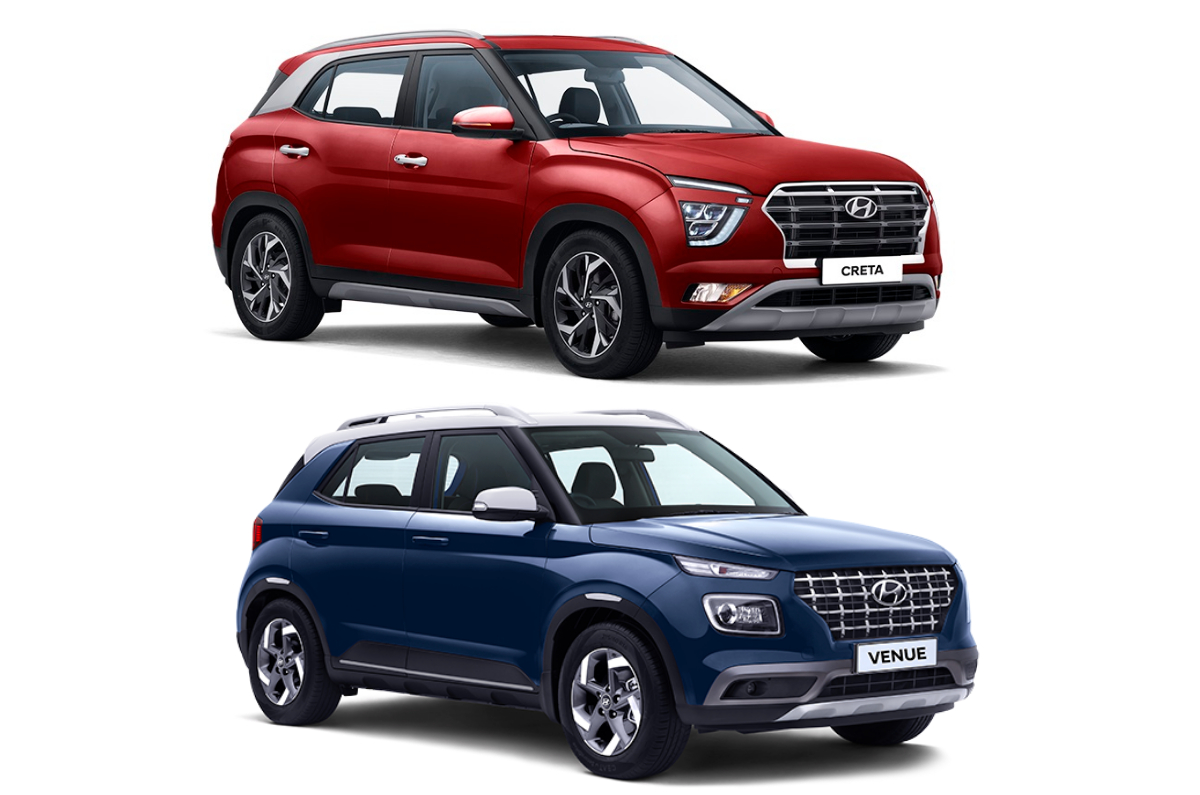
The Indian auto industry is arguably witnessing its toughest phase in recent times, with the coronavirus induced economic crisis crippling demand. While Hyundai’s sales have also been badly hit like the rest of its competitors, the Korean automaker has managed to expand its SUV market share and gain the leadership position by posting sales of 54,402 units in the SUV segment in FY2021 (till August), on the back of (relatively) strong demand for the Creta and Venue.

Let’s take a closer look at how both the models have helped Hyundai gain the upper hand in the SUV space.   

  • Hyundai Creta was the best-selling SUV in April-August 2020 
  • Hyundai Venue topped the compact SUV sales chart in April-August 2020
  • Hyundai increases SUV market share by 2.20 percent 

Hyundai Creta: The best-selling SUV in April-August 2020

The new Hyundai Creta was launched on March 16, 2020, just a week prior to the nationwide lockdown. After the Indian auto industry witnessed a month of zero sales in April, the Creta became the best-selling SUV in the country next month and it has managed to hold on to the title till now, with the latest industry figures for August 2020 putting it at the top of the SUV sales chart yet again.

In the April-August 2020 period, the Creta saw dispatches of 33,726 units – 6,076 units higher than its sibling, and closest competitor, the Kia Seltos. Moreover, the second-gen SUV’s sales have been consistently rising since May 2020 (3,212 units), with August registering the highest sales of 11,758 units. New products are known to witness a buoyed demand in the initial phase and the true test lies in the Creta being able to continue the momentum in the coming months.     

Nonetheless, the success of the 2020 Creta also shows the ability of new models to excite the market and revive demand, even during troubled times like these. Many automakers are hoping to mirror the strategy by lining up their launches for the coming months.  

Top 5 selling mid-size SUVs
Model April-August 2020 sales
Hyundai Creta 33,726
Kia Seltos 27,650
Mahindra Scorpio 9,749
MG Hector 7,294
Tata Harrier 3,493

Hyundai Venue tops compact SUV sales chart

The Hyundai Venue has also proven to be a consistent performer for the Korean automaker. The sub-four metre model registered sales of 20,372 units in the April-August 2020 period, just about enough to top the compact SUV sales chart and edge past the Maruti Suzuki Vitara Brezza which sold 19,824 units.

Hyundai has been quick on the draw with introducing minor updates to the Venue, in an effort to maintain its lead. In addition to upgrading the model to BS6 norms earlier this year, the car major has added a new ‘Sport’ trim and a clutchless manual gearbox, or intelligent manual transmission (iMT) in Hyundai speak, to the line-up.

Top 5 selling compact SUVs
Model April-August 2020 sales
Hyundai Venue 20,372
Maruti Suzuki Vitara Brezza 19,824
Tata Nexon 13,169
Mahindra XUV300 8,578
Ford EcoSport 6,738

Hyundai takes the lead in SUV segment post lockdown 

Hyundai took the lead in the SUV segment in the April-August 2020 period by registering combined sales of 54,402 units for the Creta, Venue, Tucson and Kona Electric, while Mahindra came in second with sales of 34,914 SUVs. The positions are reversed compared to the same period last year when the Korean automaker was trailing behind the segment leader Mahindra, albeit by just 654 units.

Sale of 54,402 SUVs in April-August this year has given Hyundai a market share of 30.03 percent in the SUV segment, an increase of 2.20 percent vis-à-vis the same period last year. Together with its sister company Kia, the Korean counterparts accounted for a substantial 45.29 percent, or almost half, of the SUVs sold in our market in FY2021 (till August).

SUV sales
Company April-August 2020 sales April-August 2019 sales April-August 2020 market share April-August 2019 market share Market share change
FCA (Jeep) 1,207 4,086 0.67% 1.50% -0.84%
Ford 8,479 19,182 4.68% 7.06% -2.37%
Honda 25 358 0.01% 0.13% -0.12%
Hyundai 54,402 75,680 30.03% 27.84% 2.20%
Kia 27,650 6,236 15.26% 2.29% 12.97%
Mahindra 34,914 76,334 19.28% 28.08% -8.80%
Maruti Suzuki 24,513 48,197 13.53% 17.73% -4.19%
MG 7,678 3,526 4.24% 1.30% 2.94%
Nissan 424 1,185 0.23% 0.44% -0.20%
Renault 1,083 4,573 0.60% 1.68% -1.08%
Skoda 568 446 0.31% 0.16% 0.15%
Tata 16,662 25,461 9.20% 9.36% -0.17%
Toyota 2,609 6,289 1.44% 2.31% -0.87%
Volkswagen 921 325 0.51% 0.12% 0.39%
TOTAL 1,81,135 2,71,878 100.00% 100.00% 0.00%

Leveraging the rapidly increasing consumer interest in the compact and mid-size SUV segments, Hyundai has extended its advantage in the SUV space. However, with the Seltos continuing to put up a good show and the launch of the highly anticipated Kia Sonet lined up for later this month, Hyundai could soon see that lead diminish. Nonetheless, it is evident that the two Korean automakers have together conquered the Indian SUV segment.

Also see:

Hyundai Venue iMT review, test drive

2019 Hyundai Venue review, test drive

2020 Hyundai Creta vs Kia Seltos comparison


Nissan Kicks gets discounts and benefits of up to Rs 75,000

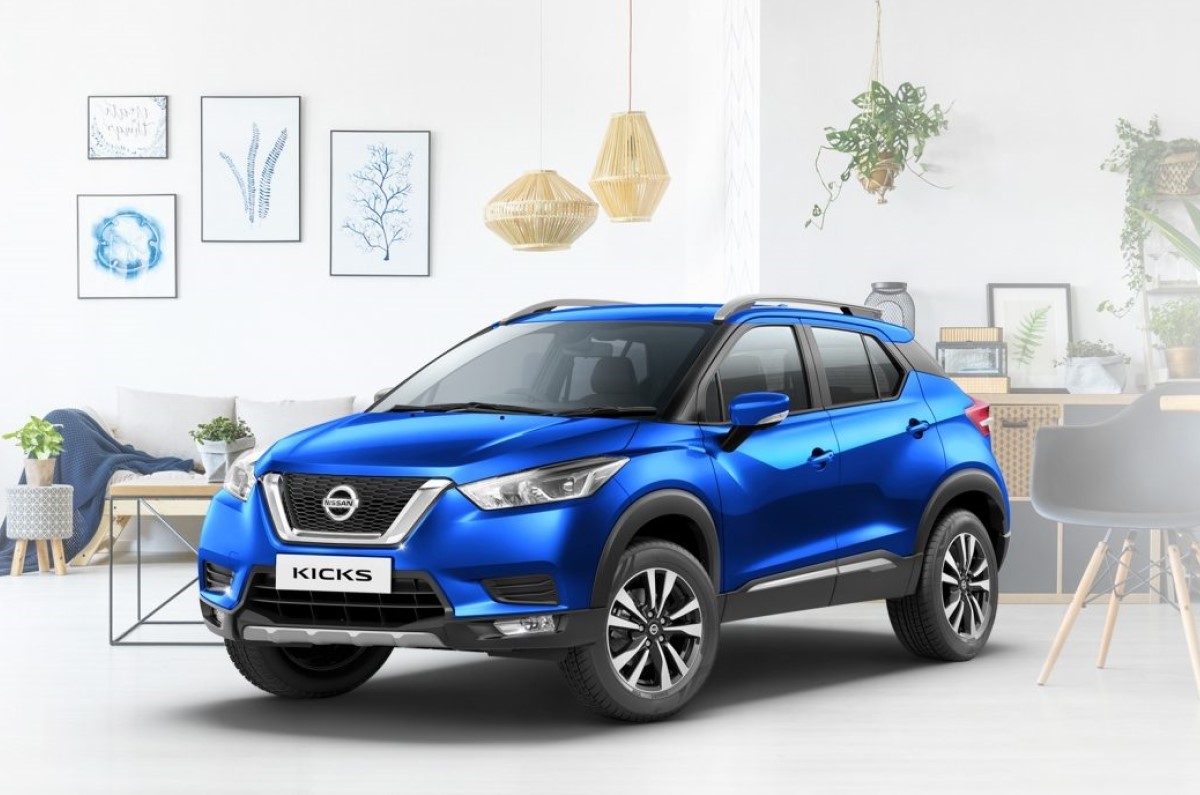
The Nissan Kicks can be bought this month with benefits and discounts worth up to Rs 75,000. The start of the festive season usually means carmakers offer deals across all dealerships to draw buyers to showrooms. For September 2020, Nissan India has rolled out discounts for its sole mainstream offering, the Kicks.

  • Up to Rs 75,000 off for select Nissan Kicks buyers
  • Valid on all variants and engine-gearbox combinations

What benefits are available with the Nissan Kicks this month?

Nissan dealerships have been authorised to offer up to Rs 45,000 in exchange benefits and a loyalty benefit of Rs 10,000. A corporate offer of up to Rs 10,000 is also available. Make a booking for your new Kicks before September 15, and avail of an additional Rs 15,000 worth of benefits.

Are benefits available with all Nissan Kicks variants this month?

All eight versions – three engine-gearbox options and four trim levels – are available with the same benefits. The Kicks now has two petrol engine options – a 106hp, 1.5-litre naturally aspirated unit and a 156hp, 1.3-litre turbo-petrol mill. The former gets a 5-speed manual gearbox as standard while the latter is available with 6-speed manual and CVT automatic options. We’ve driven the Kicks turbo in manual form and came away impressed with its low- and mid-range punch.

Nissan Kicks prices (Rs 9.50-10.00 lakh for the 1.5 petrol and Rs 11.85-14.15 lakh for the 1.3 turbo petrol) are competitive for its class, which includes rivals like the Renault Duster, Kia Seltos, Hyundai Creta and Maruti Suzuki S-Cross.

Also see:

Nissan speeds up carbon fibre reinforced plastic production process

2020 Nissan Kicks turbo-petrol video review

Nissan Magnite design centred around balanced proportions and packaging


Land Rover Defender P400e plug-in hybrid variant revealed

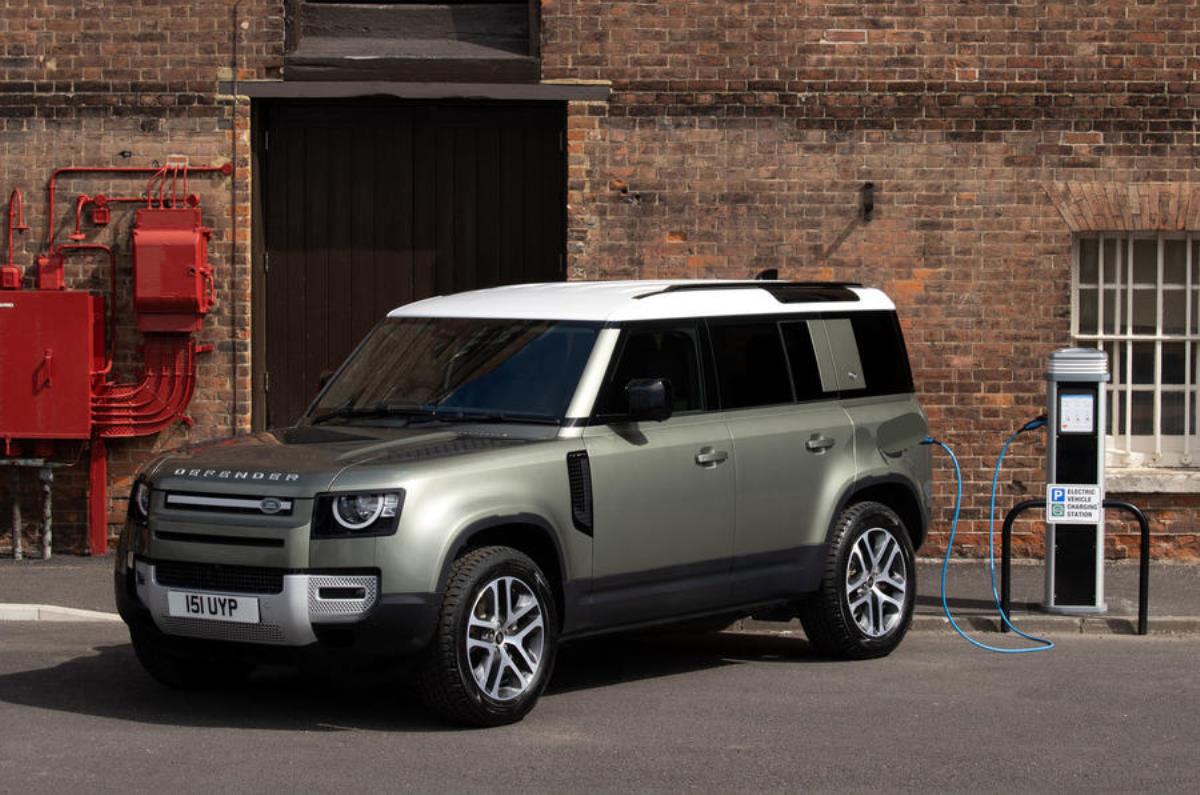
The Land Rover Defender has received a range of updates for the 2021 model year line-up, including a new plug-in hybrid petrol engine and a new diesel engine with mild-hybrid tech. Sales of the short wheelbase Defender 90 variant, which were  delayed due to the impact of Covid-19 lockdowns, have also commenced in international markets, though bookings in India are still on hold. 

  • 404hp P400e variant capable of 43km electric only range
  • New six-cylinder diesel engine available in three states of tune
  • Defender 90 global sales have begun; India bookings still on hold

2020 Land Rover Defender: New plug-in hybrid petrol engine

The first plug-in hybrid Land Rover Defender will globally go on sale next year, with a 404hp powertrain capable of 43km of electric-only running and the promise that it will be “the most capable and durable” version of the off-roader.

The new Defender P400e plug-in hybrid electric vehicle (PHEV) option will be offered only in long-wheelbase 110 form initially. It uses the same powertrain as the Range Rover and Range Rover Sport. This mates a 300hp, 2.0-litre four-cylinder petrol engine to a 143hp electric motor.

Land Rover claims the model will offer “substantial torque” that will add to the rugged machine's off-road capability. The powertrain can achieve 0-100kph in 5.6sec and a top speed of 209kph. 

The Defender P400e features 20-inch wheels and electric air suspension as standard, with its powertrain tuned to allow electric-only running in low-range mode, both on and off-road.

Charging of its 19.2kWh battery comes via a Mode 3 connection using a charging power socket on the left of the vehicle, while a Mode 2 connector is available as an option. An 80 percent charge takes around half an hour on a 50kW rapid charger. Regenerative braking is also used.

The P400e is available with either five or six seats, and includes privacy glass and climate control as standard.

2020 Land Rover Defender: Diesel engine gain mild hybrid tech

Alongside the plug-in hybrid, Land Rover has added a new 3.0-litre six-cylinder Ingenium diesel engine to the Defender line-up. Using mild-hybrid technology to increase efficiency, it will be offered in three outputs, starting with the D200 (200hp and 500Nm) and the D250 (249hp and 570Nm), replacing the 2.0-litre four-cylinder unit previously featured in the range in D200 and D240 states of tune. On the Defender 110, the new D200 achieves 0-100kph in 10.2sec, with the D250 cutting that to 8.3secs.

The new D300 variant will sit atop the Defender's diesel engine line-up, producing 300hp and 650Nm of torque, with a 0-100kph time of 6.7sec on the Defender 90.

Defender 90 goes on sale globally

After a delayed market launch of the Defender 90 due to Covid-19 related lockdowns, the short wheelbase, three-door model has now gone on sale in international markets.

It will be offered with the same petrol and diesel engines offered in the larger 110, with the P300 and P400 petrol units joined by the D200, D250 and D300 diesel units. As with the 110, all the Defender 90 models use an eight-speed automatic gearbox. Petrol versions feature all-wheel-drive, while the Ingenium diesels use the new, intelligent all-wheel-drive system.

2020 Land Rover Defender: India outlook

Land Rover India had announced pricing for the off-roader, earlier this year. The Defender is priced at Rs 69.99-86.27 lakh (ex-showroom, India) in our market and is available in both, the 3-door 90 form as well as the 5-door 110 iteration.  

Though Defender 90 sales have commenced abroad, dealer sources have confirmed that bookings for the model continue to be on hold for our market, with no word on the expected timeframe of its arrival. Deliveries of the Defender 110 will, however, begin next month. 

The Land Rover SUV has initially been launched in India with a sole 300hp, 2.0-litre four-cylinder turbo-petrol engine (P300). A diesel powertrain option is also expected down the line, though there is no official communication on the P400e PHEV variant.

We drove the new avatar of the British marque’s legendary off-roader in Namibia earlier this year. Click here for our exclusive review of the new Land Rover Defender.   

Also see:

Land Rover Defender to get range-topping V8 model

The story behind the new Land Rover Defender’s production


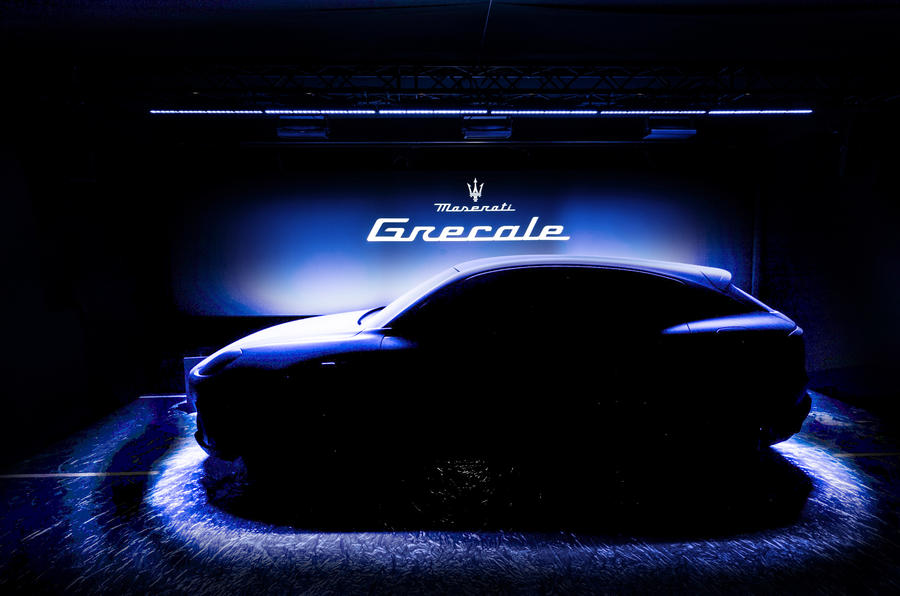
Maserati Grecale SUV to debut in 2021

The Maserati Grecale name has been confirmed for the Italian carmaker’s sub-Levante SUV that is due to arrive next year. The new SUV is part of the band’s ambitious revival plans that will see it introduce 13 new models by 2024 which includes the just unveiled supercar, the MC20.

  • All-new small SUV to share underpinnings with the Alfa Romeo Stelvio
  • Grecale to come with Maserati engines
  • SUV to be followed up by new GranTurismo, GranCabrio, Quattroporte and second-gen Levante by 2024

What do we know about the Maserati Grecale?

The brand's important second SUV, following the larger Levante, the Grecale is named after the "fierce north-east wind of the Mediterranean Sea". Destined to play "a key role in the brand's development", the Porsche Macan rival will be built on the same production line as the Alfa Romeo Stelvio in the Fiat Chrysler Automobiles (FCA) plant in Cassino, Italy.

The new SUV was first confirmed back in 2018 by former FCA boss Sergio Marchionne, as part of a total overhaul of its product line-up.

It will also share much of its underpinnings with the Stelvio, and a fully electric version is also due to arrive by 2022. However, the combustion engine models will use Maserati rather than Alfa-sourced engines.

Maserati global planning boss, Francesco Tonon, told our sister publication AutocarUK, that the Grecale will be "the most practical in its class, but it will also be luxurious". Further adding he said,  "It will feature the best in class design and features. Of course it's still a Maserati, but it will also offer best-in-class performance and handling".

Maserati is eyeing for 70 percent of its sales to account from SUVs by 2025 with sedans and sports cars amounting for the remainder.

Folgore: Maserati EV sub-brand

Come 2022, Maserati will begin the roll-out of its electric vehicle range which will comprise of the EV derivates of its entire new model line-up. The fully electric models will all be branded Folgore, meaning thunderbolt in Italian and feature a three-motor set-up, with one motor on the front axle and two on the rear. That will enable all-wheel-drive and torque vectoring, with power able to be adjusted to each axle depending on traction.

The EV system will use 800V technology enabling charging rates of up to 300kW, with silicon carbide inverters. Used in Formula 1 and Formula E powertrains, Maserati claims it will allow for more efficient running and longer range.

What models comprise Maserati’s 13 new model blitz?

As mentioned above, Maserati’s new car blitz begins with the MC20 which goes on sale in international markets in 2021. In the same year, it will be joined by the all-new Grecale SUV along with the new generation of the GranCabrio and GranTurismo with the all-electric versions of all four models expected to arrive in 2022.

By 2023, an all-new Quattroporte will arrive with combustion and full electric variants. It will be followed by the next-generation Levante SUV, again with both combustion and EV powertrains.

Maserati to open new customisation shop in Modena

Maserati also plans to expand its customisation options through a new Fuoriserie programme, which will see a new "car tailoring" shop created at its Modena headquarters. Customers will be able to hand-craft their cars from a choice of three basic collections, across the entire model range.

Will the Maserati Grecale come to India?

Given the Indian buyer’s preference for SUVs, Maserati could bring its smaller SUV to the Indian market in a bid to access new segments. The carmaker is also expected to launch its recently revealed MC20 in India. While it has also begun accepting bookings for three new variants of its current line-up, the Ghibli, Quattroporte and LevanteTrofeo.

Also see:

Maserati to expand India footprint


Review by j@ck : Kia Sonet


Kia really made a mark in the mid-size SUV space with the Seltos, and now, with its compact SUV the Sonet, it’s looking for another mega hit. Like the Seltos, the Sonet is an all-new model for Kia that made its global debut right here in India and will later be sold in other markets.

It shares a platform with the Hyundai Venue, and though you’d expect the Sonet to feel the same from behind the wheel, the two Korean firms take a very divergent approach with their platform sharing. Unlike the badge-engineered or mild-facelift alterations we’ve seen others opt for, Hyundai and Kia have made sure their shared products have little in common. The exteriors and interiors bear no similarity, and both also feel a bit different to drive, thanks to subtle changes to the tuning of the engine and suspension.


There are four engines. An 83hp, 1.2-litre petrol mated to a 5-speed manual, a 120hp, 1.0-litre turbo petrol mated to a 7-speed DCT auto or a 6-speed iMT (clutchless manual), and a 1.5-litre diesel that puts out 100hp when coupled to a 6-speed manual.

What’s the Kia Sonet diesel auto like?

Interestingly, the diesel is the same powertrain that does duty in the Seltos, putting out an identical 115hp and 250Nm. The diesel manual gets the fixed-geometry-turbo engine (instead of the variable-geometry unit on the auto) and puts out a lower 100hp and 240Nm of torque.

How about the Kia Sonet turbo-petrol?

The 1.0-litre turbo-petrol is shared with the Venue, and while Hyundai offers it with a manual, DCT or iMT, Kia only offers the Sonet with the DCT and iMT. The engine puts out the same 120hp and 172Nm as the Venue and the all-aluminium unit is nicely balanced, so you can hardly feel the typical thrum of a three-pot motor. Refinement is also very good and it’s only when you rev it to the redline that it gets a bit vocal. The punchy midrange and the ease with which it builds power makes it a fun drive, and while there are no paddle shifters like you get in the Venue, there is a sequential function via the gear lever, so enthusiasts can engage with the gearbox and this feisty engine.


What is the Kia Sonet’s performance like?

The diesel auto was the quickest. In a quick test, it did the dash to 100kph in just 11.48sec compared to the petrol DCT’s 12.25sec and 13.37sec for the iMT. The diesel was also ahead in the roll-on acceleration runs, registering 8.09sec from 40-100kph and 6.29sec from 20-80kph. The petrol DCT posted a slower 9.10sec and 7.48sec for the same 40-100kph and 20-80kph runs; being autos, of course, both times were the result of a sharp kick-down on the accelerator in full auto driving. The iMT posted 13.55secfor 40-100kph in fourth gear and 11.19sec for 20-80kph in third gear.

Kia Sonet performance (as tested)*

Sonet 1.0 Turbo iMT

Sonet 1.0 Turbo DCT

Sonet 1.5 Diesel AT

0-20kph

1.48s

1.56s

1.17s

0-40kph

3.27s

3.40s

2.51s

0-60kph

6.12s

5.78s

4.70s

0-80kph

9.38s

8.90s

7.78s

0-100kph

13.37s

12.25s

11.48s

0-120kph

19.87s

17.28s

15.76s

20-80kph

11.19s (in 3rd gear)

7.48s (in kickdown)

6.29s (in kickdown)

40-100kph

13.55s (in 4th gear)

9.10s (in kickdown)

8.09s (in kickdown)

*Performance figures not to standards

How is the Kia Sonet’s ride and handling?

In terms of handling, the diesel and petrol feel a bit different. The diesel has a slightly heavier steering and is a bit more nose heavy. The petrol felt nicer to steer and turned into corners with a bit more agility. Both cars feel nicely planted and offer a great degree of confidence at high speeds, which makes them good long-distance cruisers. Overall grip through corners is good, and body roll is well contained. The steering feel on both is pretty similar – there isn’t much feedback, but on the plus side, it is light enough in the city and has enough weight at higher speeds. The light controls, decent all-round visibility, tight turning circle and compact dimensions make the Sonet very urban-friendly and easy to slot into tight parking spots.

The drive modes do alter the steering feel, though the influence is minimal and only felt in Sport mode, with the steering firming up a bit. Unique to the segment, the Sonet also offers traction modes (Snow, Mud and Sand). We couldn’t get round to testing these, but will certainly go through them in detail in our full-blown road test.

What’s it like on the outside?

The front, of course, carries the signature Kia ‘Tiger Nose’ grille, which has a nice knurled and chrome-finished lower edge, and on the GT Line, there are some neat red accents too. The headlights are slim LED units with the signature ‘heartbeat’ DRL light design, and they sit atop a very sharply cut bumper that houses the fog lights and a faux skid plate. Topping off the front, the bonnet has a nice and subtle power bulge.

What’s the Kia Sonet’s interior like?

In terms of interior space, it’s no surprise the Sonet is similar to the Venue, and that means space is not class leading. Like with the Venue, the rear seat is relatively cramped and best for two not-too-tall passengers. The rear seat itself is quite comfy, with plush padding, though thigh support is a bit short. Up front, it’s a different story. The front seats are large, well bolstered and ventilated which, in peak summer, is a big plus.


Ventilated front seats are unique in this segment and are quite comfortable.

Where the Sonet really scores is with cabin quality. The choice of materials used gives a quality feel that’s not just better than rivals (the Venue included), but also cars of a segment above. The richly textured dashboard top, the chunky steering wheel with superbly crafted buttons, and the overall tactile feel of all the switchgear are top class. Personally, I’m not a fan of the central air-con vents’ look, but love the way they adjust with a solid and damped feel. I’m also not a fan of the digital instrument cluster and would have preferred a traditional needle to display speed, but I suppose it’s been designed for the new ‘digital’ customer.


Should you buy a Kia Sonet?

It’s beautifully styled with good proportions and lots of striking details, the interiors are very well appointed, finished to a high order and packed with features, many of which are first in class. It’s also effortless and very enjoyable to drive, and the diesel auto overshadows the turbo-petrol in almost every way; it’s absolutely brilliant. There are also other powertrain options to choose from, depending on your budget.

Expect a Rs 6.5 to 11.9 lakh (ex-showroom) price tag for the Kia Sonet.

Of course, the pricing is a key factor in the Sonet’s ultimate success, but after what we’ve seen and driven, there’s no doubt that Kia has another winner on its hands.


D'ecore your car