Showing posts with label Autocar India. Show all posts

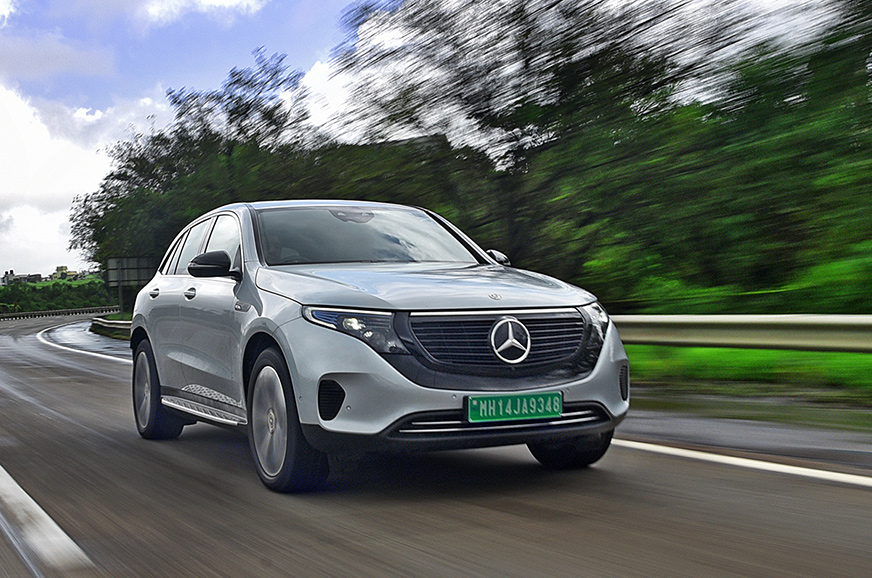
Review: Mercedes-Benz EQC India review, test drive

The Mercedes EQC, the brand’s first standalone all-electric passenger car, will soon be launched in India. It’s also the first luxury EV to go on sale here, and will be an important brand builder for Mercedes which, among other things, has done well to leapfrog its rivals. Indian market apart, however, the German luxury car maker has been late to the luxury EV party. A considerable distance behind Tesla, which has gone from zero to a million cars in a very short span of time, Mercedes has a lot of catching up to do.

Mercedes' first foray in the all-electric luxury SUV segment.

Luckily, the appetite for luxury electric cars only appears to be growing. Born of ample purchasing power, the promise of green ‘space age’ tech and the fact that most luxury-car customers can easily install home chargers, demand for luxury EVs is on the rise. But what exactly does Merc’s imported EQC bring to the table here in India? And is it worth the premium it is likely to command?   

What is it?

Based on the Mercedes GLC and not a dedicated EV platform, the EQC comes with a modern flat battery placed between the wheels, twin asynchronous or induction motors, much like you'd find on a Tesla (one for each axle), and four-wheel drive. Electricity is stored in the huge 85kWh lithium-ion battery pack. It consists of 384 cells and weighs in at a seriously heavy 652kg; that’s the kerb weight of a Maruti 800. The combined output from the twin motors stands at 408hp, and even more important is that torque is a huge 765Nm. Think twin-turbo diesel V8.

Interestingly, the front electric motor is engineered to provide higher efficiency, while cruising and the one at the rear is tuned to deliver more performance. This is why, when cruising at a steady speed, the EQC is driven almost exclusively by the front motor. But, begin to accelerate, even gently, and the rear motor quickly takes over. The EQC also gets torque vectoring to enhance traction, a choice of five driver modes (with Sport at one end and Max Range at the other), and as on other EVs, you can adjust brake regeneration via a pair of paddles on the wheel.

Total combined output from the two motors is 408hp and 765Nm of peak torque.

With signature LED lights up front that run around the headlights and grille, the EQC will certainly stand out in a crowd. Add in the piano black grille and the 20-inch wheels with their blue detailing, and EQC looks even more dramatic. The sea-smoothened look works well around the rear, the bumper juts out nicely to create a solid base and the Porsche-like linked tail-lights stand out too. But while the design is striking and gets your attention, it doesn’t shout Mercedes-Benz. In fact, cover the badge and you will struggle to identify it as a Mercedes. Anoraks (like us) will also notice there is a new font used on the badge at the rear, the coefficient of drag of this SUV stands at an impressive 0.27cd, and the battery cooling system has a cubic capacity of 6-8 litres.

What’s it like inside?

The EQC’s interior strikes a better balance between traditional Mercedes and new-age electric. Familiar Mercedes bits include the flat-panel displays (for infotainment and instrumentation) that are joined at the hip, the black and aluminum three-spoke steering wheel, and the chromed and knurled switches on the central console. Even the trackpad and the toggle switches are standard Merc fare.

New bits include bronzed, flute-shaped inserts in the vents, a more steeply raked dash, a ribbed finish on the upper door pad and the optional, new-age materials for the seats. But while the cabin clearly does look ‘techy’ and modern, Merc’s subtle touch of class has taken a bit of a back seat here.     

The interior is familiar, but decidedly modern.

Space is similar on the inside to the GLC and since the two cars are built on the same wheelbase, legroom at the rear here is sufficient and similar too. The seat is a bit low, due to the floor being raised slightly for the battery, but it is also quite comfortable with sufficient thigh support and a nicely reclined backrest. The EQC also gets the latest version of Merc’s MBUX system, which here gets a new ‘EQ’ sub menu.

While the full feature list hasn’t been announced for the EQC, and the cars that go on sale will be different from the ones we are driving, we can confirm you will get features like 7 airbags, Attention Assist, connected car tech, a sunroof and a voice assistant. Radar-based cruise control, three dimensional maps and the Heads Up Display, however, will not make it to the feature list. Buyers will get an 8-year battery ‘cover’ though.


What’s it like to drive?

Greater refinement is one of the pillars on which the Mercedes-Benz brand has been built. The E-class, the S-class, and even the C-class, for example, clearly feel more refined than their rivals. And this is true of the EQC as well. Extra insulation has been used to encapsulate the cabin, the electric motors use rubber mounts for better noise suppression and the EQC also gets double-glazed windows that further help mute sounds from outside, so the EQC feels particularly refined on the move. Tyre roar is superbly suppressed, both at medium and high speeds, there is very little wind noise and then, even on ‘textured’ surfaces, road noise isn’t too much.

Cabin insulation is superb.

In typical electric car fashion, the EQC also feels very torquey in ‘Sport’ mode. That first hit of thrust is near instant and quite strong, and if you maintain the pressure on the accelerator pedal, while the rate of acceleration plateaus, the EQC still pulls forward in one seamless surge. Wish there was a bit more in the way of drama though; the clinical performance is so cold, driving it almost feels like a non-event. And that’s despite the SUV being capable of doing 0-100kph in 5.1 seconds. The EQC is also very linear and smooth, so driving it at medium speeds is easy and relaxing.

Also, while the EQC has ample grip, the steering is a bit aloof, and the 2.4-tonne EQC rolls a bit in tighter corners. Still, Merc’s first all-electric SUV feels neat, secure and predictable. It isn’t fun to drive, per se, but you do tend to enjoy the strong performance and carrying speed effortlessly into corners feels good too.

With the heavy battery slung between the wheels, ride at certain speeds and over less-than-perfect surfaces is marginal; it doesn’t quite flatten the road successfully, there is always some pitter patter or up-and-down movement, and what’s worse is that it also feels a bit jittery over small bumps.

Underslung battery pack means you'll have to navigate speed breakers with care.

A more serious problem associated with the underslung battery is the poor ground clearance. Low enough to get the battery to ‘thunk’ onto speed breakers, this is a problem you don’t expect to encounter with an SUV. So spotting those speed breakers early is important, you have to crawl over gingerly and even some bad roads need to be driven over with caution.

Range and charging

The EQC has a claimed range of upwards of 450km. While this is clearly a bit optimistic, you can expect a real-world range of around 350-375km, when the EQC is driven in a careful manner. Mercedes will provide and install a wall-box charger at your residence, and while that functions at 7.5Kw and takes 10 hours for a full charge, you can also charge via a regular 15A plug at 3.4Kw, taking a leisurely 21 hours. Of course, you will not always charge a fully drained battery, so these times can be halved in reality. And Mercedes is also planning to set up a few 50Kw fast chargers on popular routes outside town, where a coffee stop could get you a quick ‘top-up’ for a long journey. 

A real-wrold range of about 350-370km can be expected.  

Should I buy one?

At an expected price of around Rs 1 crore, the EQC will be expensive. This is especially true if you consider that Mercedes sells its own full-size 7-seat luxury SUV, the GLS, for around the same price. Then there’s the ground clearance issue; you just can’t drive it with abandon like you would drive a regular SUV and, for a car at this price, it isn’t exactly feature-rich either.


Buying a luxury EV today, however, is more about making a statement, and here the EQC hits the ball out of the park. The combo punch of the Mercedes brand, all-electric drive and an SUV profile should find plenty of takers. And it even drives well. Smooth, silent and  extremely refined, it feels as hushed on the inside as some of Merc’s flagship cars. And then, when you put your foot down, there’s plenty of performance too. In fact, customer response is so good, Merc insiders say they have already sold a healthy number of cars. The shift to electric cars seems to have begun.

Also see:

2020 Mercedes-Benz EQC India video review

2021 Mercedes-Benz S-class revealed
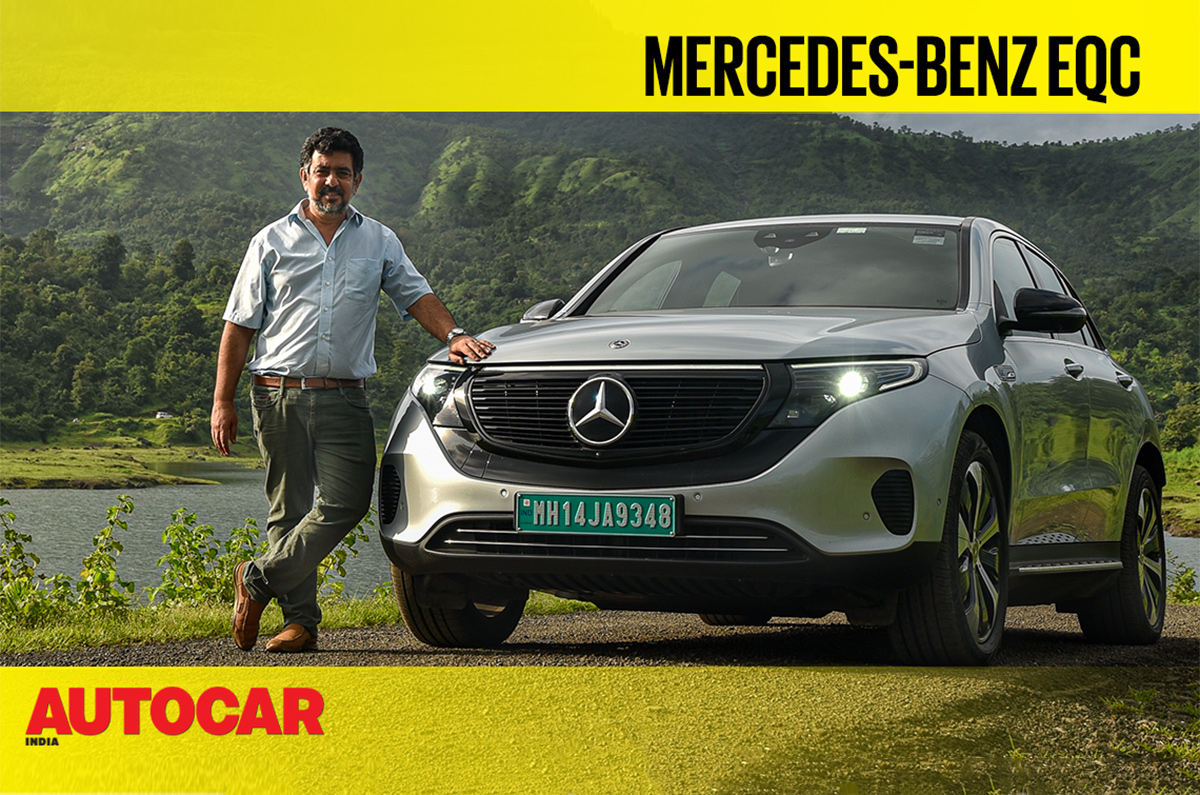


Review: 2020 Mercedes-Benz EQC India video review

TVS invests Rs 30 crore in Ultraviolette Automotive

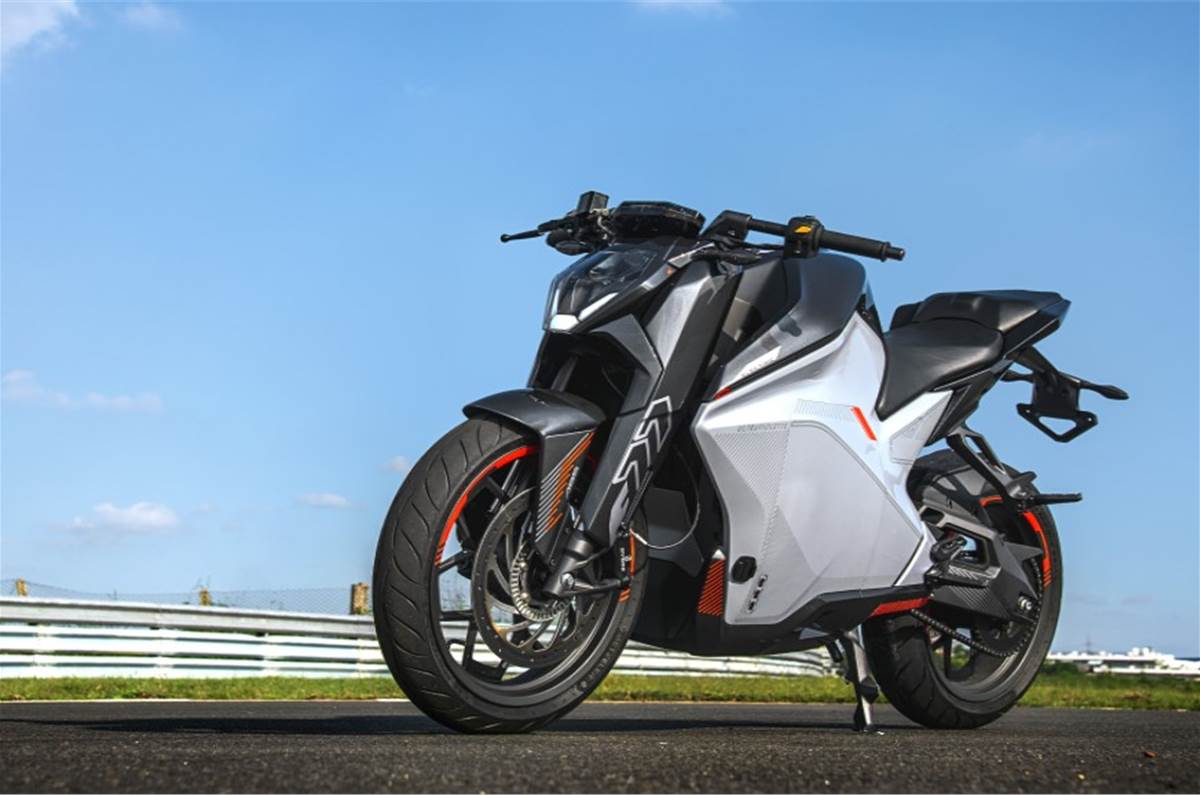
TVS Motor Company has made an additional investment of Rs 30 crore in Bengaluru-based EV startup, Ultraviolette Automotive, as part of its Series B round of funding. The startup began working on its first product, the F77, over 3 years ago, In November 2019, we got to experience a near-production ready iteration of it at the MMRT, in Chennai. You can click here to read our full review. 

What does the F77 have to offer?

The prototype that was unveiled last year was powered by an air-cooled motor that the company claimed produced a max power output of 25kW (33.5hp) at 2,250rpm and an impressive peak torque of 90Nm. Powering the motor is a battery with a maximum capacity of 4.2kWh. It uses three slim lithium-ion battery packs and the entire unit takes 5 hours to fully charge  via the standard charger, while the fast charger will do it in 1.5 hours. On a full charge, the F77 has a claimed range of 130-150km. The battery system also comprises a comprehensive list of safety, thermal and battery management features, some of which are patented technologies.

The F77 uses a steel trellis frame with an aluminium head suspended on a USD fork and preload adjustable monoshock. It also features a 320mm front disc and a 230mm rear disc with dual-channel ABS. Considering its performance-oriented intentions, it gets steel-braided brake lines and 110/70 R17 (front) and 150/60 R17(rear) tyres – a configuration that’s also seen on some other sporty ICE bikes in the segment.

Niraj Rajmohan, founder and CTO, Ultraviolette Automotive said that since the prototype was first unveiled, the company has received an “overwhelming response from the market” for the F77, and has spent the last few months making “critical enhancements both on the design and technology side” to make the F77 more efficient, responsive and powerful.

He also mentioned that the F77 will first be rolled out next year with expanding national availability planned in phases.

Also see:

Ultraviolette F77: 5 things to know


Two-wheeler sales increase in August 2020

With many states easing out of the lockdown and the demand for personal mobility growing, two-wheeler manufacturers have reported a steady rise in sales last month.  Here’s how some of the OEMs performed:

Hero MotoCorp: 5,84,456 units (12%)

Hero MotorCorp showed growth for the fourth consecutive month, selling a cumulative 5,84,456 motorcycles and scooters in August 2020. This constitutes 12 percent year-on-year growth (August 2019: 5,24,003 units). In July 2020, the company had sold 5,14,509 units; which means the August sales are indicative of steady month-on-month growth. 

The company says it is witnessing a strong retail off-take and experiencing a demand in the rural and semi-urban markets. It expects this to continue with increasing consumer confidence and continued government policy support. Hero MotoCorp’s plants are running at a nearly 100% capacity and almost all its customer touch-points are open. 

Honda Motorcycle & Scooter India: 4,43,969 units (38%)

Honda Motorcycle & Scooter India's total sales stood at 4,43,969 units, including 4,28,231 domestic sales and 15,738 exports in August 2020. This is a 38 percent increase over July 2020 which stood at 3,09,332 units. Continuing to ramp up production in a stepwise manner, Honda’s domestic sales breached the 4,00,000-units mark for the first time in FY2021 and registered 1% Y-o-Y growth. The company’s domestic sales continue to add over 1,00,000 incremental units for the third consecutive month (2,02,000unit sales in June 2020, 3,09,000 units in July 2020 and 4,28,000 units in August 2020).

Yadvinder Singh Guleria, Director – Sales & Marketing, Honda Motorcycle & Scooter India said, “In August, over 90% of our network is back to business and we are seeing some green shoots with higher customer enquiries.”

Bajaj Auto: 1,78,220 units (-1%)

Bajaj Auto’s overall two-wheeler sales dropped one percent with 3,21,058 units sold in August 2020 compared to 3,25,300 units for the same period last year. The company sold 1,78,220 units last month, which is a 17 percent increase from July 2020 where it sold around 1,52,474 units. Exports dropped by 6 percent in August 2020 where the company exported 1,42,838 units as compared to 1,52,276 units exported in August 2019.

TVS Motor Co: 2,77,226 units (0.5%)

Chennai-based TVS Motor Company reported total domestic market sales of 2,77,226 units in August 2020, which is nearly identical to the 2,75,851 it sold in August 2019. The marginal uptick is due to demand for its motorcycles, which saw sales of 1,19,878 units in August 2020 (August 2019: 1,09,393). Scooter sales comprised 87,044 units as against 1,09,272 units in August 2019. TVS’ two-wheeler exports stood at 58,888 units in August 2020. (August 2019: 56,323 units). TVS has resumed its operations from the second week of May 2020 in a graded manner across all its factories in Hosur, Mysuru, and Nalagarh. 

Royal Enfield: 50,144 units (-5%)

Royal Enfield reported sales of 50,144 motorcycles in August 2020 (August 2019: 52,904), down 5 percent but a marked improvement of 24% over July 2020’s 40,334 units.

Suzuki Motorcycle India: 57,901 units (-8%)

Suzuki Motorcycle India sold 57,901 units in August 2020 which is an 8 percent drop (August 2019: 62,785 units). Last month, managing director Koichiro Hirao said, “the company will be trying to achieve the pre-Covid levels in production and volume.”

Going ahead, the increasing preference for personal vehicles over public transport will drive two-wheeler demand across the country. Manufacturers will also be looking to increase inventory levels in view of the upcoming festive season.

Also see:

Rural market demand drives two-wheeler sales in July


BMW trademarks electric two-wheeler names

BMW Motorrad has filed trademark registrations in Germany for its upcoming line of electric motorcycles and scooters. The German manufacturer has reserved as many as 11 names for its future electric two-wheelers, classified as DC for motorcycles and CE for electric scooters. The trademark files state that these are intended for use on ‘motorcycles and parts and accessories for motorcycles’ and ‘vehicle models’. 

What do we know about the electric motorcycle range?

While there is no specific mention of  'electric motorcycles', the terms DC and CE have been used previously by BMW in the Vision DC Roadster electric motorcycle, concept and the C-Evolution concept electric scooter. This leads us to believe the new trademark name denotes the new line of electric two-wheelers from BMW Motorrad.

The names under the DC line range from DC 01 to DC 09. This could indicate different models based on the same platform, the kind we've seen in the case of BMW's petrol-powered motorcycles, like for instance, the new F900 range. 

The new electric motorcycles could be based on the Vision DC Roadster concept, that features a lightweight, aluminium tubular frame with a longitudinally oriented battery and side elements that resemble BMW's petrol-powered Boxer engines. While it is obvious that the production of electric motorcycles will look different, expect to see the Vision DC's inspiration in some areas. 

Late last year, BMW Motorrad showcased the first prototype to take inspiration from the Vision DC Roadster – the E-Power Roadster. The prototype looks little like the DC Roadster, but uses some of the engineering elements from the concept. 

What do we know about the electric scooter range?

BMW also registered the names CE 02 and CE 04, denoting the line of electric scooters. The C indicates BMW's C-series scooters and E stands for electric. While it is only an assumption, the CE electric maxi scooters are expected to be based on the Concept Link scooter, that showcased BMW's vision of future electric mobility.

Just like with all trademarks, these show no indication on when these models will see the light of day. All that can be said is that the BMW Motorrad line-up for  the future, definitely looks interesting.

Also see:

BMW introduces zero-maintenance motorcycle chain

BMW motorcycles to get active cruise control option


Jaguar Land Rover to continue producing ‘AJ’ V8 engine

Jaguar Land Rover (JLR) will take over production of the ‘AJ’ supercharged petrol V8 in Wolverhampton, England after Ford shuts its engine plant in Wales next month.

  • AJ supercharged V8 will continue for another 3-5 years at JLR
  • Production of the AJ V8 will be moved to England from Wales
  • JLR expected to move to a BMW V8 to help meet future emissions norms

Why was the future of the AJ V8 uncertain?

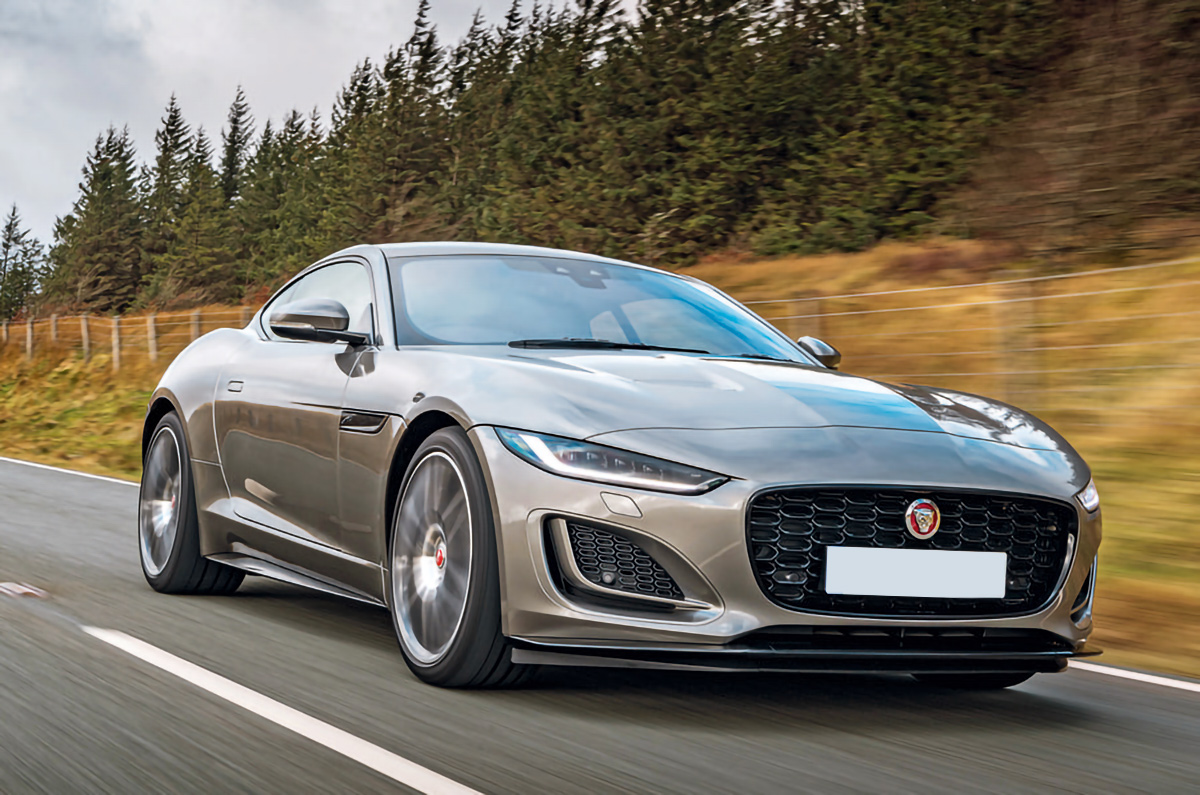
The future of the AJ-series 8-cylinder engine – which is used in everything from the Jaguar F-Type to the Range Rover (and set to be used in the new Land Rover Defender) – had been uncertain since last year, when Ford announced the closure of the facility where the engine has been built since 1996.

Where is JLR going to produce the engine?

It has now emerged that JLR will transfer the production equipment, and possibly some of the workforce, from Wales to Wolverhampton, England in a ‘lift and shift’ operation.

A statement from the firm read: “Manufacture of the JLR-designed V8 petrol engines previously made at Bridgend will move to the JLR Engine Manufacturing Centre, with further detail to be confirmed at a later date.”

What about supply while production is being moved?

Ford says production at Bridgend is now focused on work for “third parties” (JLR), with assembly of the Ford ‘Sigma’ and ‘Dragon’ engines already having been wound down. Bridgend is understood to have been building the AJ at a higher rate than required in order to build up buffer supplies while the production line is moved.

How long is the supercharged AJ V8 going to live on?

Sources suggest the AJ, now in its third generation, will continue in production for three to five years. The timing is likely to coincide with the introduction of EU7, the inevitably more stringent next step of European Union emissions regulations.

At that point, JLR is expected to adopt BMW’s V8 as part of a wide-reaching powertrain deal, as demand for the AJ V8 engine dwindles in Europe, but stays buoyant in other parts of the world.

Strong demand for the current V8 in those markets is a key motivator for JLR taking over its production and continuing to build it.

Also See:

Jaguar Land Rover aims for hydrogen SUVs by 2030

Over 15 lakh Jaguar Land Rover Ingenium engines produced

Land Rover Defender commercial model revealed


Honda 500cc range now Euro 5-compliant

Honda’s 500cc parallel-twin platform is quite popular overseas and the range has just received a Euro 5 update. This bit of news has positive implications for India. Read on to know why that is.

  • Honda CB500F, CB500R and CB500X are now all Euro 5-compliant

  • Upgrade also brings in new colour schemes

  • Emissions compliance means these bikes could be brought to India, if Honda chooses to do so

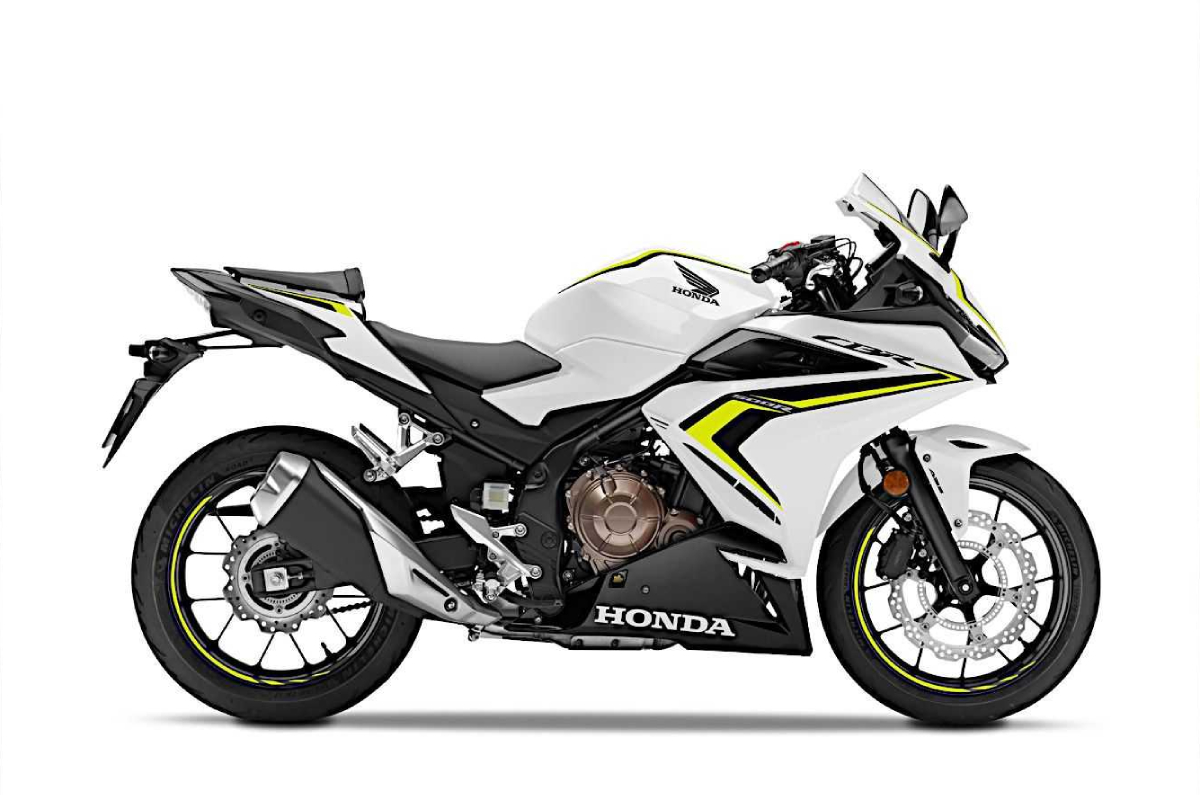
The Honda 500cc platform consists of the naked CB500F, the faired CB500R and the ADV-touring CB500X. There’s also the Rebel 500 cruiser, but that was launched as a Euro 5 model earlier this year and isn’t included in this latest announcement. The three aforementioned CB bikes received a major update in 2019 that brought design tweaks as well as revisions to the engine. The latest update is not as major. All three are now Euro 5-compliant, though the Honda CB500F and CB500X have also received new colour schemes. 

The three bikes are powered by the same 471cc parallel-twin that makes 46.5hp and 43Nm and use steel tubular frames. The CB500F and CB500R get 17-inch wheels at both ends while the CB500X runs a 19-inch front wheel. The CB500X also gets more suspension travel, but with 150mm of front travel and 135mm at the rear, this is more oriented towards effortless comfort rather than serious off-road ability. The CB500F is the lightest of the trio at 189kg; the CB500F weighs in at 192kg and the CB500X weighs 197kg.

While the 2020 update may seem minor, what’s interesting is that these bikes will now be able to meet the BS6 emission standards in India. Honda can now bring the bikes here if they decide to. Last year at EICMA, Honda announced that it had plans to expand its big bike business in India and that 5 brand new products were on their way to our market. We’ve already had the new Honda CRF1100L Africa Twin Adventure Sports go on sale, and the company recently opened bookings for its range-topping 2020 CBR1000RR-R Fireblade and Fireblade SP. While those two bikes are on the expensive side of the spectrum, the 500 family will be far more affordable and could be priced below Rs 5 lakh. If Honda can get the pricing right, these middle-weight machines will have no real rivals and could prove to be a hit in our market, particularly the CB500X. 

There is talk of Honda bringing the four-cylinder CB650R retro-naked here as well, but when and which of all these models eventually get launched in India this year is not presently clear.

Also see:

Honda to launch 5 new premium bikes in India


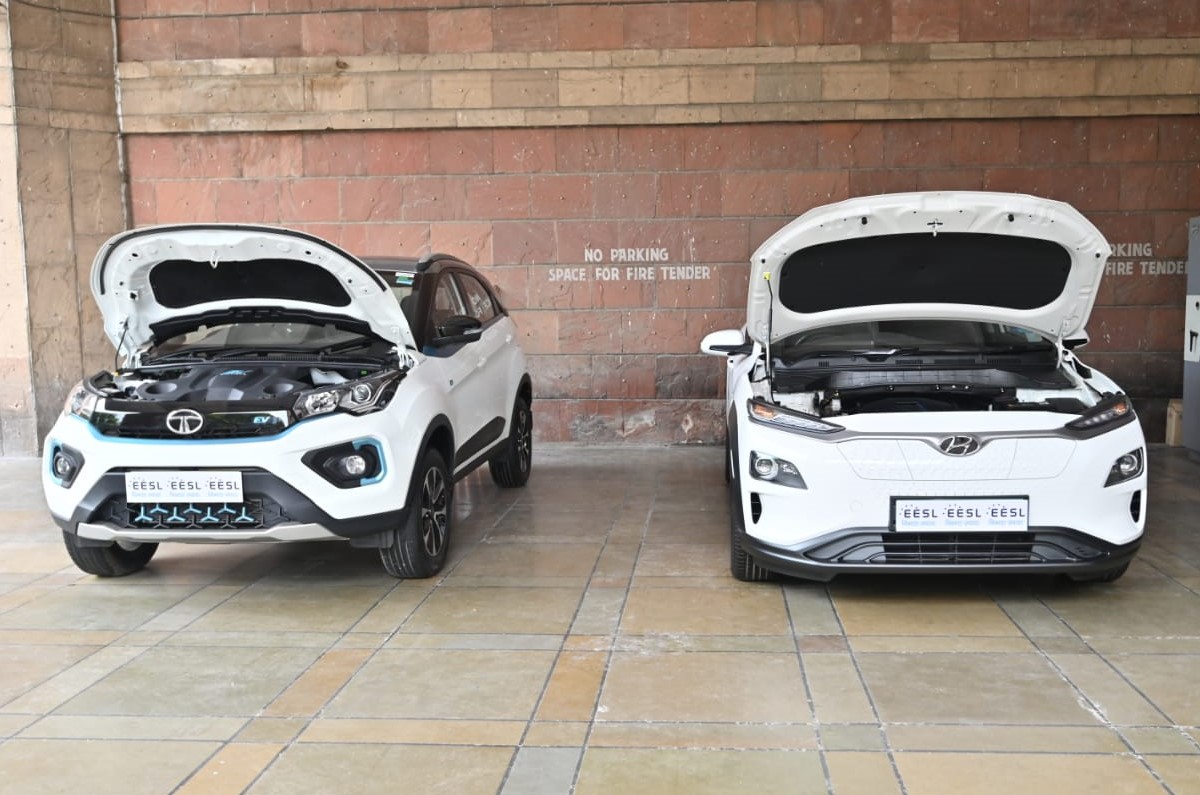
Tata Nexon EV, Hyundai Kona Electric to be supplied to EESL

Energy Efficiency Services Limited (EESL) has announced today that it will procure two new all-electric SUVs – the Tata Nexon EV and the Hyundai Kona Electric – in a bid to promote the adoption of cleaner mobility in the government. The fleet of 250 EVs will replace the replace the existing fleet of petrol and diesel vehicles of the Central and State Governments.

  • EESL to procure 150 Tata Nexon EVs and 100 Hyundai Kona Electrics
  • Both models will be bought at a subsidised rate

Hyundai has confirmed that it has received an order of 100 Kona Electric SUVs from EESL. Tata Motors, meanwhile, will supply 150 units of the Nexon EV. Hyundai also confirmed our report from October last year that the brand had already supplied 10 units of the all-electric SUV to EESL.

Both models will be procured by EESL at a subsidised rate. The Hyundai Kona EV, which is priced at Rs 23.7 lakh (ex-showroom, India) will be bought at an 11 percent  lower rate (21.36 lakh), while the Nexon EV’s price will be down by Rs 13,000 (0.87 percent) from Rs 14.99 lakh (ex-showroom, pan-India). The price tag for the all-electric Tata also tells us the mid-spec Nexon EV XZ+ is the one that will be supplied to EESL. Here are all the features you get with this variant of the all-electric compact SUV.

Both models have been bought with the standard 3-year warranty pack, though both EVs also get a separate 8-year warranty for the battery pack.

Until now, EVs that have been supplied to EESL have come from Tata Motors – the Tigor EV – and Mahindra – the eVerito. The initial response to these EVs was not as positive as EESL had hoped, with a common complaint being the low range offered. This prompted Tata Motors to launch an updated Tigor EV, which came with a bigger battery (21.5kWh versus the earlier 16.2kWh) and improved range on a single charge (213km, compared to the earlier 142km).

The Kona Electric and Nexon EV should be able to alleviate those concerns, as they come with a 452km and 312km ARAI-rated range, respectively. However, our in-depth road test of the Hyundai Kona Electric and the subsequent comparison with the MG ZS EV showed that in the real world, a range of around 250km is more likely – this would also vary based on the manner it is driven. Similarly, the Tata Nexon EV’s real-world range is also expected to be lower than the ARAI test figure.

The all-electric Hyundai comes with a 9.2kWh lithium-ion battery pack that powers an electric motor rated at 136hp and 395Nm of torque. While the claimed 0-100kph time is 9.7sec, we managed an impressive 9.09secs in our road test. Hyundai claims the Kona’s batteries will fully charge from zero in around six hours using a 7kWh wall box charger, though a standard three-pin charger takes about 19 hours.

The Korean brand recently introduced what it calls its Wonder Warranty pack for the Kona Electric, which is essentially a variable warranty option. For more details on the warranty pack, click here.

The Tata Nexon EV is powered by the brand’s Ziptron electric tech – a 30.2kWh lithium-ion battery pack powers a motor mounted on the front axle. This electric unit produces 129hp and 245Nm of torque, which helps the Nexon EV sprint from 0-100kph in a claimed 9.9sec. Tata says that a standard 15A AC charger will take about 8-9 hours to charge the battery to 100 percent. It was just two weeks ago that Tata had announced that Nexon EV production had crossed the 1,000 unit mark.

Also see:

Autocar Drag Day: Hyundai Kona Electric vs Kia Seltos Drag race video

Hyundai Kona facelift revealed

2020 Honda City vs Hyundai Verna comparison


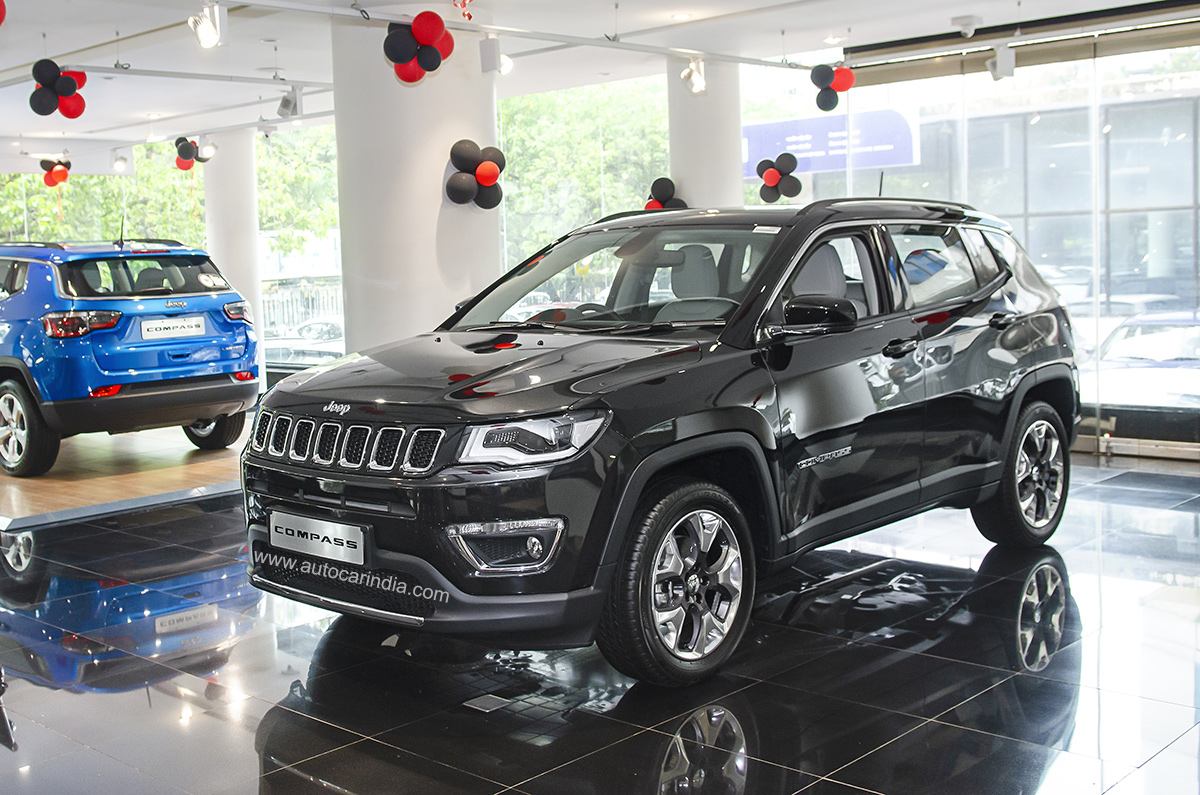
Jeep Compass available with benefits of up to Rs 2 lakh

The Jeep Compass can be had with discounts and benefits of up to Rs 2 lakh, depending on the model selected. The carmaker is also offering a range of finance and EMI schemes on its popular SUV for easier ownership.

  • Benefits up to Rs 80,000 on the standard Compass
  • Compass Trailhawk offered with benefits up to Rs 2 lakh
  • 100 percent on-road financing and a host of other EMI schemes

What are the benefits available?

The off-road-focused Compass Trailhawk is offered with the highest benefits – up to Rs 2 lakh – while the regular variants of the Compass can be had with discounts and benefits of up to Rs 80,000.

The discounts, though, could vary based on location and dealership. The carmaker is additionally offering the SUV with a variety of financing schemes for easier ownership.

Customers can avail of up to 100 percent on-road financing without the need to make an initial down payment. Additionally, there are a host of EMI schemes, including paying 50 percent less EMI for three consecutive months in a year, and a hybrid scheme that combines the benefits of two separate EMI schemes in one.

A brief recap of the Jeep Compass

Launched in 2017, the Compass is Jeep’s sole made-in-India product, and retails alongside the company’s CBU models, the Wrangler and the Grand Cherokee. The Compass was initially available with a 1.4-litre turbo-petrol engine offered with either a manual or DCT gearbox and a 2.0-litre diesel engine available solely with a manual.

In 2019, Jeep expanded the Compass line-up with the Trailhawk, which introduced a BS6-compliant diesel engine, a 9-speed automatic gearbox and enhancements to the bodywork and AWD system to help it perform better off road. The diesel-automatic combination also filtered down to the standard Compass earlier this year.

What’s to come from Jeep?

Jeep is expected to introduce a host of new models in India in the coming years, the first of which is expected to be the Compass facelift in early 2021. Also expected in 2021 is the company’s Compass-based three-row ‘D-SUV’. A sub-four metre SUV is also expected, but only in 2022.

The carmaker is also expected to bring in two additional models in 2021, one likely to be the all-new Grand Cherokee SUV.

Also see:

Jeep Compass facelift interior spied for the first time

Jeep Compass Trailhawk long term review, third report

Jeep Compass Night Eagle launched at Rs 20.14 lakh

Passenger vehicle sales up 20 percent in August 2020


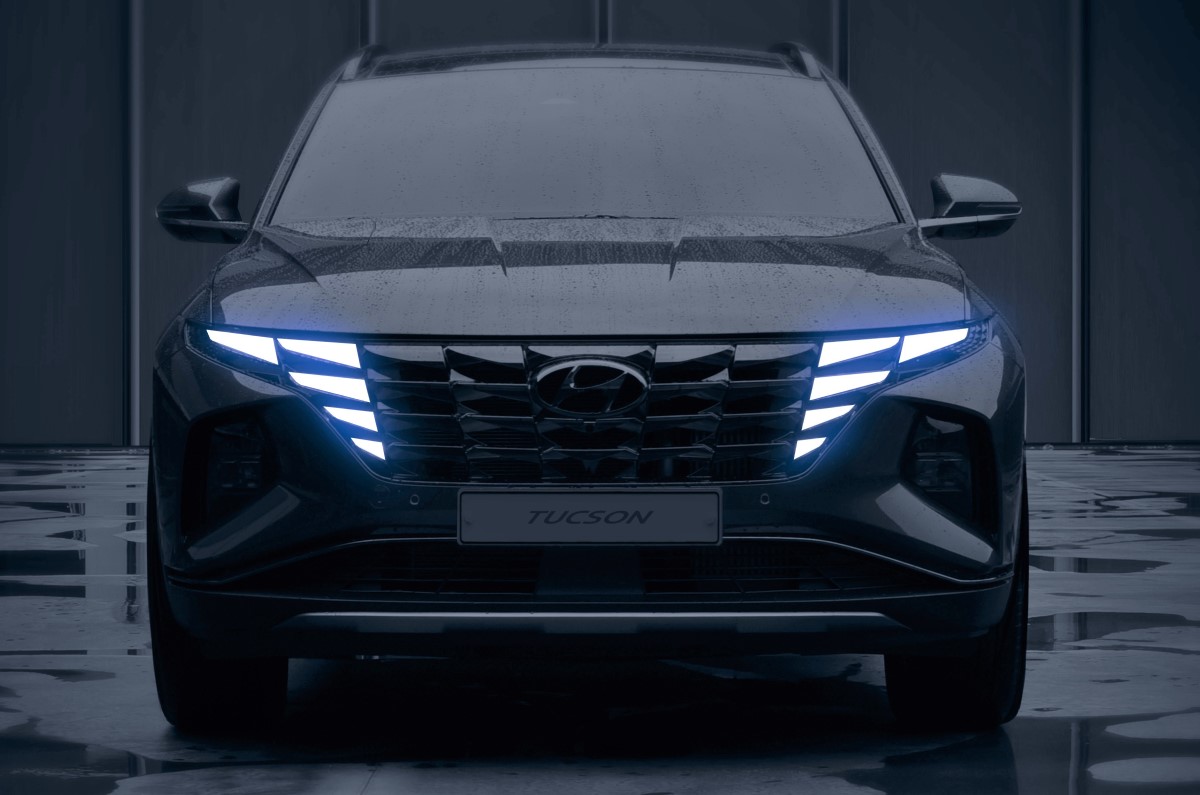
Next gen Hyundai Tucson teased before September 15 unveil

The all-new Hyundai Tucson will make its global premiere on September 15, 2020. In the run up to the unveil, Hyundai has released some teaser images that provide a good look at what the next-gen Tucson will look like.

  • 4th gen Hyundai Tucson teaser images show distinctive new design
  • There will be two wheelbase lengths to choose from
  • Interiors to get floating central console; digital instrument cluster

What will the new Tucson look like outside?

Spy photosof the fourth-gen Tucson showed that many design elements from the Vision Concept T SUV will be carried over and the new images confirm this. The flared wheel arches, rising beltline and the large V-shaped grille with the L-shaped (and prominent) LED DRLs, along with the front bumper and headlight design, can be easily traced to the concept.

The new Tucson’s overall silhouette is akin to the concept’s as well – the roofline rakes sharply at the rear, giving it an almost coupĂ©-like appearance. At the rear, an LED light bar connects the tail-lights high on the tailgate. Rear styling is as angular and sharp as the front, which lends cohesion to the overall design.


Hyundai calls this design language ‘Parametric Dynamics’ and first used it on the seventh-gen Elantra on sale in international markets.

An interesting bit about the all-new Tucson is that for the first time, the SUV will be available in two different wheelbase lengths, depending on the market. The short-wheelbase version of the Tucson is likely to be larger than the outgoing model that’s currently on sale in India while longer wheelbase version is expected to be offered in developing markets like ours.

What will new Tuscon interiors look like?

The interior layout of the next-gen Tucson is all-new, and unlike the exterior photos Hyundai has released, the inside is previewed with just a sketch. The dashboard and centre console are finished in a dual-tone black and grey theme, and Hyundai seems to have minimised the use of switches and knobs in the cabin. The large, vertically-oriented centre console has a ‘floating’ effect, and a large touchscreen infotainment system spans its width, much like in the new Creta. The AC controls and the like are housed below the screen, and spy images had also showed an electronic, button-style gear selector. Hyundai will also offer an all-digital instrument screen on the new Tucson.


Engine details for the next-gen SUV have yet to be revealed but international models are expected to the petrol, diesel and hybrid options. A sportier Tucson N-Line is also said to be in the works, and is expected to use the Hyundai Sonata N-Line’s 2.5-litre, turbo-petrol T-GDi engine, which produces 290hp and 422Nm of torque.

Is the new Tucson coming to India?

It has been less than two months since Hyundai Tucson facelift priceswere announced in India. The model currently on sale is the refreshed third-gen version. Considering this, it will be a long while before Hyundai India brings the all-new model here. However, expect it to go on sale in other global markets sometime in 2021.

Also see:

Hyundai Kona facelift revealed

2020 Honda City vs Hyundai Verna comparison

Hyundai Venue iMT review, test drive


Upcoming Royal Enfield models: What we know so far

Royal Enfield has some very interesting models in the pipeline. We’ve seen a few them being tested and since there hasn’t been an official statement from the company, it’s also led to a whole lot of speculation. Four all-new models – the new Classic, the Meteor, another new single-cylinder model and a twin-cylinder cruiser – have been spied testing. Here’s what we know about them, so far.

  • The Next-gen Royal Enfield Classic sports a new engine and frame

  • The Royal Enfield Meteor will likely be the first to launch and will be available in three variants 

  • The Twin-cylinder cruiser will likely be powered by the 650cc parallel twin from the Interceptor and Continental GT 650.

What’s new on the all-new Royal Enfield Classic?

The next-generation of the Royal Enfield Classic was one of the first upcoming models to be spied – it was first seen early in March 2019. The images revealed, both, mechanical and cosmetic changes. For starters, the disc brakes at either end of the all-new Classic are on the right-hand side, instead of the left, like the current model. This change has resulted in the chain shifting over to the left from the right, and could be the result of a revised engine and drivetrain. While most of the engine looks identical to the one on the current Classic bikes, it's likely that it comes with revised internals. For now, there is no word on whether Royal Enfield will retain the 350cc configuration, but we believe that the Classic bikes will initially be offered with the same engine displacement. The 500cc models have been discontinued recently.

Also visible in the images is the new dual-cradle frame, in place of the single-down tube one seen on the current model. Cosmetic changes include a sleeker tail-light in place of the large circular unit on the current model, a redesigned rear seat that now has rounded edges and a grab rail that appears to be raised. The test mule also appeared to be equipped with the chrome mirrors and silver bar-ends seen on the Interceptor 650.

What is the Royal Enfield Meteor 350?

Now, this is a motorcycle that there’s been a lot of speculation about. This is also likely to be the first of the new Royal Enfields coming in the near future. The Meteor 350 is very likely to be the model that replaces the Thunderbird line, and images from earlier this week have revealed that it will be available in three variants – Fireball, Stellar and Supernova. 

The Meteor 350 Fireball will feature what Royal Enfield calls Tripper Navigation, which we believe is a Bluetooth-enabled GPS system. This entry-level model will miss out on this feature, and the chrome bits available on the higher models. It’ll make do with a sticker decal instead of a 3D badge. The Stellar sits above the Fireball and its equipment list includes the Tripper Navigation system, a back rest, and a chrome-finished exhaust system and handlebar. The Supernova is expected to be the most expensive variant. It’ll come with all the aforementioned features, and add in a machined finish on the wheels, a different seat cover, chrome indicators and a windscreen. 

We do know that there will be no mechanical differences among the three variants, but exact engine details are still unknown. We also know that the Meteor 350 will sport a brand-new double-cradle chassis and that it will also run a completely new engine. Royal Enfield has worked hard to ensure this motor keeps its classic design, but we expect a more modern SOHC system for the valvetrain.

Jawa Forty Two rival

This particular Royal Enfield was spied testing back in February, and little has been seen of it since. The first set of images revealed a completely new model – its low-slung stance was unlike any other Royal Enfield motorcycle. The bike was initially suspected to be a design variant of the Meteor, but some obvious design elements laid that theory to rest. For starters, this bike features a lower stance than the Meteor. Then, there’s the use of a single-seat that is also flatter than the split-seat configuration on the Meteor. The tail-light and turn indicators on this motorcycle are positioned slightly higher, and also have a different shape. Additionally, the side panels on this bike are more in-line with the triangle-shaped ones from the company’s now-discontinued Thunderbird range, while the ones on the Meteor are slightly elongated.

More importantly, this mystery Enfield sports a stubby and upward-swept exhaust, and mid-set footpegs. Some elements, like the double-cradle frame, rear shock absorbers and swingarm, appear to be the same as that on the Classic and Meteor models. The engine, from what we can tell, is also identical to the one we’ve seen in spy images of the Meteor and the matte-black finish on the engine casing is unchanged as well. 

Unfortunately, that’s all we know about this Royal Enfield, for the moment. Given its Triumph Street Twin-like styling and speculated configuration, we expect it to rival the Jawa Forty Two. Whatever the identity of this new bike, this is an exciting new direction for a Royal Enfield single-cylinder motorcycle and we can't wait to see the final result.

Twin-cylinder cruiser

This motorcycle was first seen testing only about a week ago, and it appears to be a part of the manufacturer’s 650cc twin platform. The immediate giveaway is that it has twin-exhaust pipes – one on either side of the bike. We don’t have a clear view of the engine yet, but what we can see tell us that the cases on either side seem to be quite similar to the Royal Enfield 650 twins, although the test bike gets black cases instead of chrome-finished ones. You can also just about make out the oil-cooler mounted at the front of the frame – a feature that the soon-to-be-launched air-cooled Royal Enfield Meteor 350 doesn’t get. 

While the engine is probably the same as RE’s 650 twins, minor modifications aside, it looks like Royal Enfield is using a completely different frame for this bike. The metal tubing along the side is new and the twin rear shocks are mounted at more of an angle compared to the Interceptor 650 and Continental GT 650. Also visible, is that this bike gets a USD fork up at the front, making it a first for a Royal Enfield.

The test bike spotted seemed like it’s quite far along in the development process, and while it doesn’t look production-ready, it also doesn’t seem too far from it either. With this bike, Royal Enfield appears to be offering a more premium, cruising-oriented version of its 650cc platform. Theoretically, the bike will offer a similar riding experience to the likes of the recently launched BS6 Kawasaki Vulcan S, but will come at a far lower price. We’d expect to see this bike go on sale sometime next year.

So, there you have it. Royal Enfield is working on multiple new products (these are just the ones we have seen on test), each exciting in its own right. While there’s still no official word on when they will arrive, these new models look like they will be the start of a new chapter for Royal Enfield.


Hyundai Kona facelift revealed

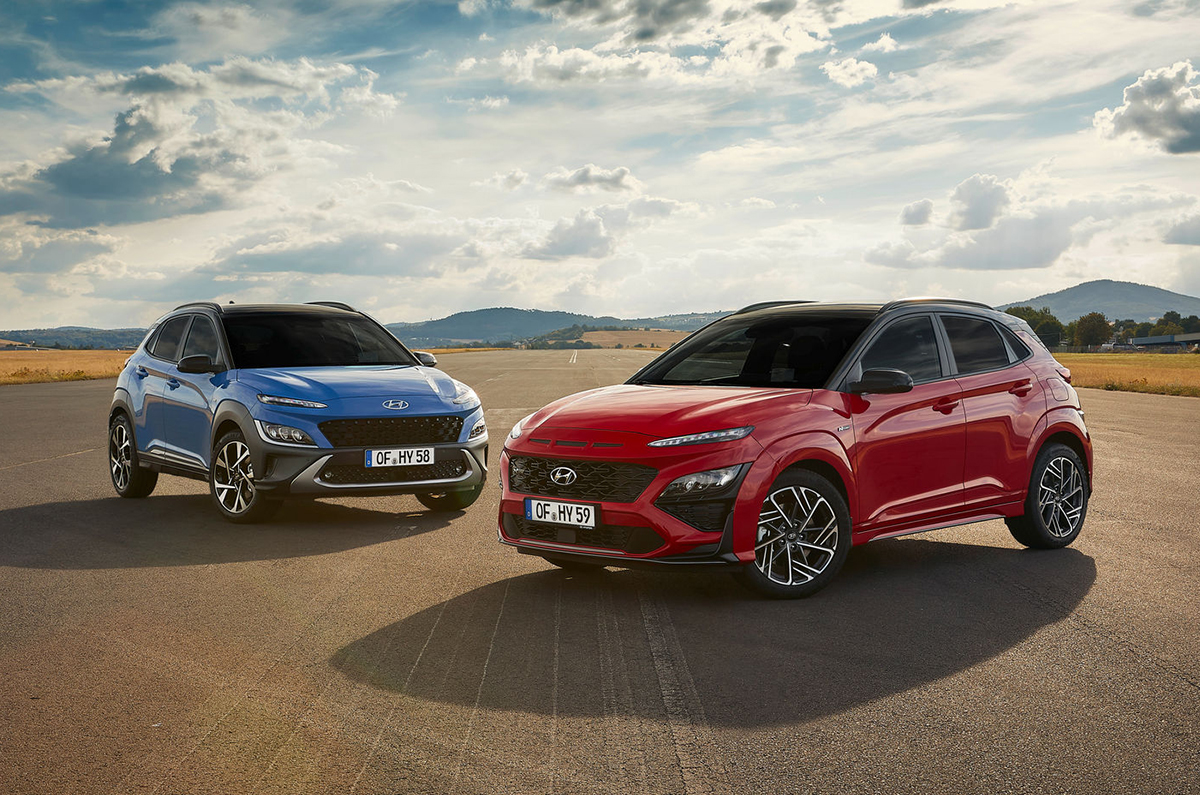
The Hyundai Kona line-up has been updated for 2021 in international markets, ushering in a new look inside and out, mild-hybrid technology and a performance-inspired N Line range-topper.

  • Kona facelift gets heavily redesigned, more aggressive front end.
  • Interiors also updated with new materials and improved tech.
  • 1.0-litre petrol and 1.6-litre diesel now offered with a 48V mild-hybrid system.

What’s new on the exterior of the Hyundai Kona facelift?

The facelifted car is told apart primarily by its heavily redesigned front end, which incorporates wider LED daytime-running lights, a three-module look for the LED headlamps, an extended bonnet, a new grille design and a contrasting silver skid plate.

The side profile is more familiar, but the rear end has been updated with new tail-light design and a contrasting lower bumper to match the front.

What is the Hyundai Kona facelift’s interior like?

On the inside, the Kona gains an electronic handbrake, ambient lighting, and a raft of new colour and material options. On higher trim levels, Hyundai also offers a larger 10.25-inch touchscreen infotainment system as well as a 10.25-inch digital instrument cluster. The interior layout on the whole, however, remains more-or-less unchanged.

What is the Hyundai Kona N-Line?

It is a new trim level inspired by the brand’s N performance offshoot. It does away with the standard car’s contrasting cladding in favour of an aerodynamics-enhancing body kit, and gains a distinctive mesh air intake design above the front grille.


As well as unique wheel designs, the N Line receives a contrasting rear diffuser and a dual-exit sports exhaust, while the predominantly black interior features contrasting red stitching, metal pedals and N logos throughout.

What engines are available on the Hyundai Kona facelift?

The Kona retains its range-topping 1.6-litre petrol engine, uprated from 177hp to 198hp and available with two- or four-wheel drive. The entry-level engine is a 1.0-litre turbo-petrol unit which can also be optionally equipped with 48V mild-hybrid technology.

There is also a 1.6-litre diesel engine which is now equipped with 48V mild-hybrid functionality as standard for enhanced efficiency.

Power for the Kona Hybrid comes from a 1.6-litre petrol engine with a front-mounted electric motor to produce a combined 141hp. The Kona Hybrid comes with a 1.56 kWh battery pack. The updated Kona Electric will be revealed “in the near future”, according to the brand.

Coming to gearbox options, both the 1.6-litre petrol and diesel engines can be had with either a 7-speed DCT gearbox or Hyundai’s new 6-speed Intelligent Manual Transmission (iMT) gearbox. The 1.0-litre petrol gets the 6-speed iMT with its mild-hybrid version, while the standard version can be had with either a 6-speed manual or a 7-speed DCT gearbox.

Are there any other mechanical changes to the Hyundai Kona facelift?

The model also promises improved ride quality and refinement over its predecessor, gaining a retuned suspension set-up, improved tyres and a recalibrated steering system.

How is the Hyundai Kona facelift relevant to India?

While we may not get the internal combustion engine (ICE) versions of the Kona in India, Hyundai does offer the all-electric, Hyundai Kona Electric in our market. It was launched in India last year, with prices currently starting from Rs 23.76 lakh (ex-showroom, Delhi) for the base variant.

As we mentioned, the facelifted version of the Kona Electric has yet to be unveiled, but expect similar updates to the ones seen here. The version we get in India comes with a 39kWh lithium-ion battery pack which powers a 136hp electric motor. The ARAI-certified range for this setup is 452km. You can read more about its performance in our road test.

Also see:

2021 Hyundai Kona facelift image gallery

2019 Hyundai Kona Electric image gallery

Hyundai Kona Electric vs MG ZS EV comparison


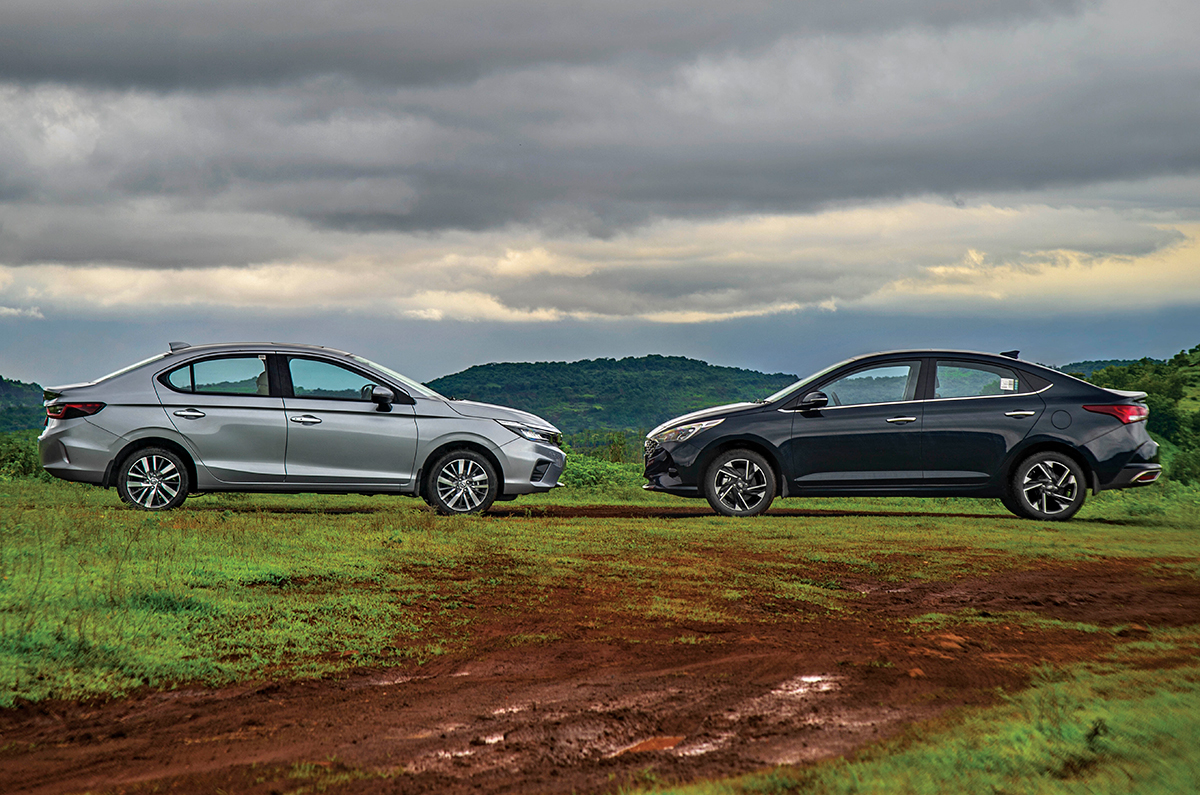
Review: 2020 Honda City vs Hyundai Verna comparison

How rapidly things have changed. At the start of the year, buyers keen on a diesel midsize sedan had five models to choose from. Today, the options are down to just two. With the larger market moving away from diesels, the business case to upgrade engines to BS6-spec simply wasn’t strong enough for Maruti, Volkswagen and Skoda, whose Ciaz, Vento and Rapid, respectively, are now petrol-only models.

Honda and Hyundai, however, see things differently. Diesel is still the fuel of choice in many pockets across India and there’s also enough of a buyer base to whom the economics of diesel still make sense, even if the price of the fuel is touching record highs. The two cars in focus here cater to these buyers.

The new, fifth-gen City is offered with Honda’s trusty 1.5-litre diesel engine, while the revamped Verna trades the old 1.6-litre unit for a new-gen 1.5. Exclusive to the Hyundai is a diesel-auto combo, but to keep things level, we’ve considered the 6-speed manual transmission versions of both sedans.

Going the distance

As diesels, these sedans had better be good on long journeys; they are, but they go about the business of covering vast distances in very different ways. The Honda comes across as the more laid back of the two. Its 1.5 i-DTEC engine has always been genteel in its build of power and that’s something you experience on the latest City too. It gets up to highways speeds effortlessly enough and makes for a pleasant cruiser. That it’s the quieter of the two sedans at 80kph (if only marginally so) also speaks volumes of Honda’s focus on enhancing refinement – something the last-gen City diesel didn’t score highly on. It’s just that the engine does little to excite you. Sure, responses are fair, even in gears five and six, but you always get the impression it’s a bit one-dimensional. There’s no urgency from the 100hp, 200Nm engine at any point in the rev range.

The City is leagues ahead of the Verna in its rear-seat experience.

The Verna, in contrast, offers a whole lot more for the keen driver. With 115hp and 250Nm, the Hyundai has the clear numbers advantage, but it’s the way that power is delivered that makes all the difference. The engine has that mid-range punch dieselheads love, and the relatively quick-revving nature makes it fun to extend the 1.5-litre unit too – the Verna revs to 4,900rpm, while the City’s engine tops out at a far more conservative 4,200rpm. Out on the highway, you’ll appreciate the Verna’s performance edge. The Hyundai is quicker from 80-100kph in fifth (5.1sec vs 5.93sec in the City) and also quicker from 80-100kph in sixth (6.62sec vs 8.03sec). If only for academic interest, you should know the Verna is also the quicker car from 0-100kph, with a time of 10.59sec to the City’s 12.41sec.

All this while edging past the City in highway fuel economy. The Verna delivered 20kpl while the City managed 19.1kpl on a relaxed highway cruise. You’ll go further in the Hyundai too, thanks to a 45-litre fuel tank; the City makes do with 40 litres. An important point to note is that both cars feature Lean NOx traps for emission control, and hence don’t require AdBlue top-ups like cars with SCR (selective catalytic reduction) systems would.

Punchy Verna diesel is easily the more fun car from behind the wheel.

On winding roads too, it’s the Verna you’d want to be behind the wheel of. Diesel Vernas have historically been better set up than their petrol counterparts, and the latest one feels particularly well sorted. There’s good enough weight at the steering, turn in is smooth and you can work out a good rhythm with the car. On the same roads, the City feels benign rather than engaging. The steering is agreeable and there’s more grip than the 185-section tyres might lead you to believe, but sporty the City diesel is not.

Specification and Performance
Honda City Diesel ZX MT Hyundai Verna 1.5 CRDi SX(O) MT
Engine 4-cyl, 1498cc, turbo-diesel 4-cyl, 1493cc, turbo-diesel
Power 100hp at 3600rpm 115hp at 4000rpm
Torque 200Nm at 1750rpm 250Nm at 1500-2750rpm
Gearbox 6-speed manual 6-speed manual
Fuel Economy (kpl)
City/ Highway 16.2/19.1 kpl 15.2/20 kpl
Performance
0-20kph 1.12sec 1.12sec
0-40kph 2.85sec 2.51sec
0-60kph 5.21sec 4.42sec
0-80kph 8.44sec 7.2sec
0-100kph 12.41sec 10.59sec
0-120kph 17.38sec 15.43sec
0-140kph 25.11sec 22.28sec
0-160kph 40.06sec 32.04sec
Performance in Gear
20-80 (in third) 12.66sec 11.71sec
40-100 (in fourth) 15.04sec 14.08sec
Noise Levels (dB)
Idle 43.8dB 44.1dB
Full revs 69.3dB (at 4400rpm) 73.3dB (at 4900rpm)
50kph (in fourth gear) 63.1dB 64.1dB
80kph (in sixth gear) 68.2dB 69.2dB

Back to back

The City claws back a whole lot of points when we put the spotlight on the rear seat experience. Legroom at the back, for one, is up there with some larger sedans. The class-leading cabin width is also something you’ll note, particularly so in these times of social distancing. Even when you need to travel five-up, it’s the City that offers more space and comfort for the middle passenger. Commendably, the middle seat also gets a dedicated headrest and a three-point seatbelt.

City can rival larger sedans on space. Rear-seat comfort is excellent.

Then there’s the seat itself. Superbly cushioned, it’s one you’d happily sink into over a long journey. Smaller details like the phone holders built into the front-seat backrests and rear AC vents that direct air at your face rather than your knees also aid the experience. However, while the upward slope of the floor under the front seats serves as a natural footrest, taller occupants might find this hampering their seating position.

While cabin space is a City highlight, it’s a Verna weakness. In fact, there are compact sedans roomier than the Hyundai. And this despite the Verna and City’s wheelbases measuring an identical 2,600mm. Rear legroom in the Verna is just about adequate, headroom is tight for six-footers and seating three abreast isn’t particularly comfy. The upward sloping window line also hampers the feeling of space to an extent. There is enough space under the front seats to tuck your feet comfortably into and the seat is supportive as well, but all in all, the rear section of the Verna’s cabin is not where you’d want to spend long hours.

Average space limits the Verna’s appeal. Seat is comfy enough though.

There isn’t much between the two sedans in terms of high-speed ride quality. Both stay composed at triple-digit speeds, though it’s the Verna that drives flatter. An unusual quirk in the City is a hollow noise that seemingly emanates from the trunk area.

On out-of-town trips, you’ll be content with how much luggage you can fit into both sedans’ boots. The City has a 506-litre boot, while the Verna isn’t too far behind, with 480 litres of luggage space.

Dimensions
Honda City Diesel ZX MT Hyundai Verna 1.5 CRDi SX(O) MT
Length 4549mm 4440mm
Width 1748mm 1729mm
Height 1489mm 1475mm
Wheelbase 2600mm 2600mm
Tyre size 185/55 R16 195/55 R16

Torque of the town

What are the two sedans like in the everyday grind of city life? Again, both are likeable but for different reasons. Tractability is what the City impresses for most, in, well, the city. There’s ready power from 1,500rpm on, and this means you can get by at low speeds in a higher gear. Just as well, because the City’s clutch can be tricky to modulate, thanks to a high bite point. The City engine’s flexibility reflects in quick responses, say from 20-40kph in third gear or 40-60kph in fourth gear. Power delivery is linear and user friendly but also a bit plain vanilla.

The City diesel is a good long-distance car but also an unexciting one.

Where the City gives its best under 2,000rpm, the Verna is in its element post 2,000rpm. While not as effortless as the City, the Verna too picks up speed smartly from low revs. It’s from 1,800rpm onwards that there’s a step up in power in the Verna, which is accompanied by a small push in the back, should you keep the accelerator pressed. This feeling of boost adds so much to the driving experience and also helps the Verna deliver overall faster timings through the 20-80kph and 40-100kph, third- and fourth-gear slogs. A more progressive clutch and smoother gearbox are other Verna elements drivers will appreciate.

Who’d have thought the Verna would be the more engaging car in corners?

City or Verna, you certainly won’t have an issue with fuel economy. On lightly trafficked city roads, the Honda delivered 16.2kpl while the Hyundai returned 15.2kpl. Of the other things, it’s the Verna’s steering that requires slightly less effort to twirl, while both cars are evenly matched on low-speed ride quality, dismissing potholes with a good degree of comfort.

The cockpit

You now know how the City and Verna drive and also know what they’re like to be driven in, but what of the general look and feel of things inside the cabin? This is an easy win for the Honda. Sumptuous front seats, a chunky steering, the leather-lined dash and door pads, and light colours lend the City’s airy cabin an upmarket ambience. Sure, the dashboard doesn’t break new ground for design, but it’s smart in look and has a low cowl that equals great frontal visibility. Thankfully, Honda has also heeded feedback, reverting to rotary knobs for the air-con controls with this City. The dials turn with a satisfying click and also feature surrounds that glow red or blue when you raise or lower the temperature. Another cool bit on the City is the digital display screen alongside the analogue speedometer. You can toggle between a tachometer, trip details and even a G-meter.

Leather lining adds class to simply-styled City dashboard. True to Honda, the driving position is spot on.

Interestingly enough, a new part-digital instrument readout is also one of the talking points on the updated Verna. The arrangement is new-age BMW-like, but that’s not necessarily a good thing. The bar-like LEDs for the tachometer and speedometer aren’t easy to read on the move, and instead, your eyes will lock on to the digital speed and RPM readouts. The Verna’s dashboard and centre console have been mildly redone to incorporate the larger touchscreen, but in other aspects, the Hyundai feels the same as before. Quality is good, despite the absence of soft-touch materials, and in general, it’s a user-friendly environment.

Larger 8.0-inch touchscreen is the most prominent change to familiar Verna dash. Overall quality is good.

We’ve considered the top-spec versions of both models and they each offer loads of goodies. The two are at par with one another in terms of safety and convenience features (see table), but there are ertain differences. For instance, the Verna uniquely gets ventilated front seats (a boon on hot days), wireless charging (the bay can’t hold the largest of phones) and a hands-free boot release. One-touch operation for all four windows and a lane watch camera (it shows a feed of the left-side blind spot on the centre screen) are features exclusive to the City.

8.0-inch touchscreens with connected tech are the norm, but it’s the Verna’s system that’s easier to use. The City’s touchscreen looks dim and the low-res rear-view camera is another bugbear.

Equipment
Honda City Diesel ZX MT Hyundai Verna 1.5 CRDi SX(O) MT
Airbags 6 6
ESC Available Available
Leatherette seats Available Available
One-touch windows All Driver’s only
Auto headlights/wipers Available/ NA Available/ NA
Ventilated seats NA Front
Wireless phone charging NA Available
Touchscreen 8.0-inch 8.0-inch
Connected-car tech Available Available
Camera Rear/Blind view Rear
Rear AC vents Available Available
Hands-free boot release NA Available

Diesel duel

Before we present our verdict, a word on the way these cars look. The City is larger and looks it too, but the weedy tyres do take away from the stance. Styling is evolutionary, though the superbly detailed LED headlights and chrome-heavy face do help identify this as the latest City. The Verna sports the more extroverted look. The swoopy shape is unchanged from before, but the large new grille gives the Hyundai proper flash value.


So, which one should it be? If it’s the more entertaining car you’re interested in, it’s easily the Verna for you. A punchy engine, nice dynamics and loads of features will keep keen drivers satisfied for long. A lower Rs 13.95 lakh (ex-showroom, Delhi) price tag only helps the Hyundai’s case.

Thing is, the Verna loses out badly in a very crucial area. Its limited rear seat space works against it as a family car, and more so when talking of the diesel version that will likely be used often for travel by road. And that’s where the City diesel comes across as a more level-headed choice. It’s not one for enthusiasts but it’s pleasant enough to drive and, thanks to its roomier, more premium cabin and comfier rear seat, makes for the more complete car. You will have to shell out Rs 70,000 more over a Verna, but think of it as the price to pay for more real estate.

Space or pace? With your clan or without? That’s what will decide it for you.

Verdict
Honda City Diesel ZX MT Hyundai Verna 1.5 CRDi SX(O) MT
Price (ex-showroom, Delhi) Rs 14.65 lakh Rs 13.95 lakh
Rating 8/10 8/10
Verdict Upmarket and roomy, it’s the more suitable pick for family buyers. Characterful Verna diesel is the choice for keen drivers.

Also see:

2020 Honda City vs Hyundai Verna diesel comparison video


PhotoGallery: 2021 Mercedes-Benz S-class image gallery


2021 Mercedes-Benz S-class revealed
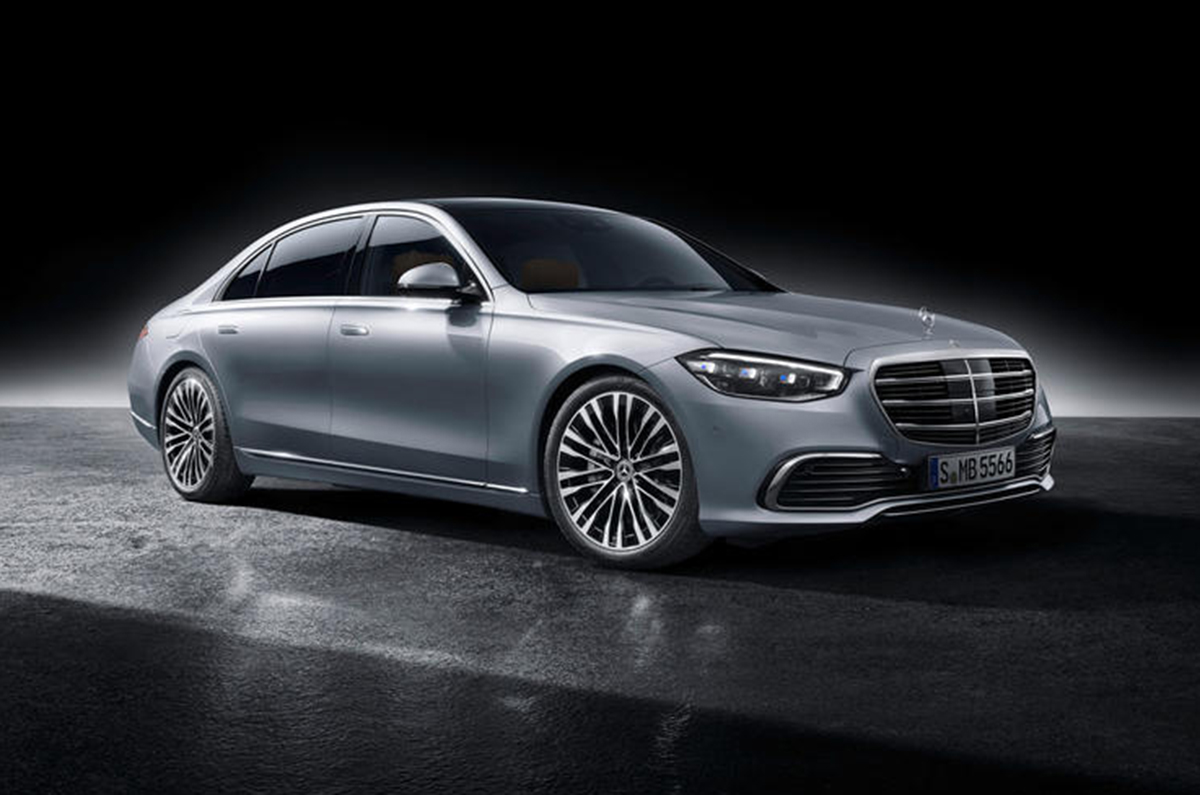
The new Mercedes-Benz S-class’ has made its long-awaited debut, with the new-gen model making its world premiere today. Internally known as the W223 (V223 in long-wheelbase form), the new S-class has – unsurprisingly – taken giant strides on the technology, comfort and safety fronts.

  • New Mercedes S-class features second-gen MBUX system
  • Rear-wheel steering, rear-seat airbag are optional extras
  • Long wheelbase version to be launched in India in 2021

What are the fundamental changes with the 2021 Mercedes-Benz S-class on the outside?

It’s clear the design of the new Mercedes-Benz S-class has echoes of the facelifted E-class revealed last year. The LED headlights feature the ‘Digital Light’ system, which employs a module with three powerful LEDs that can project symbols and guidelines onto the road surface. Other prominent design highlights include a chrome-heavy grille with three horizontal blades, a new front bumper with larger air intakes, flush-fitting door handles and wraparound LED tail-lights, which are positioned beneath a thick bar of chrome that runs from one end to the other, accentuating the width of the car. Twin chrome-finished exhaust tips add a touch of sportiness to the tail of the new S-class, and buyers will be able to choose from 18- to 21-inch wheels.


It’s the long-wheelbase S-class that has always come to India, and the new version has grown 34mm in length, 22mm in width and 12mm in height. The wheelbase, too, has been increased by 51mm, which has helped free up 24mm of legroom for rear-seat passengers. Boot capacity has increased by 20 litres to 550 litres. Mercedes-Benz also claims the new S-class is one of the most aerodynamically efficient cars in the world, with a drag co-efficient of 0.22cd.


How different is the 2021 Mercedes-Benz S-class’ interior?

The big talking point inside the new Mercedes-Benz S-class is its second-generation MBUX infotainment system. The cabin itself takes a minimalistic approach, and taking pride of place on the dash are a 12.8-inch tablet-style OLED infotainment screen, a 12.3-inch 3D digital instrument display and up to three screens – two mounted on the front seat backs, and one armrest-mounted tablet – for rear-seat passengers. All in all, the new S-class has 27 fewer buttons and switches compared to the outgoing S-class, with an increased emphasis on voice control meaning the MBUX system can now understand voice commands in 27 languages, and even from rear-seat passengers. Mercedes believes using voice control for in-car functions is the way forward.


Responding to a query by Autocar India, Britta Seeger, member of the board of management of Mercedes-Benz AG Marketing & Sales, said, “I think the key for the future is the language interaction with our MBUX. And everyone experienced this maybe a decade ago how difficult it was to interact with the car via language. If you sit now and interact with our new-generation MBUX, it becomes so much more seamless, so much more easy, that if even not touching a screen or not touching a hard button, it becomes so natural to talk to your car and the car is doing what you want. So this is what we perceive for the future – the easy and seamless interaction with the car, and the strongest and best interactive what we offer and where we truly do believe, is language.”

The new S-class also features fingerprint, face and voice recognition to authenticate the driver and automatically adjust settings inside the car (or authenticate digital payments), as well as gesture controls for operating the sunroof and other functions. Plus, there's greater connectivity for each seat – any passenger can share a media file with another passenger using a drag-and-drop function, and calls can be transferred to a person in a specific seat.


There’s also an active ambient lighting system, which employs 263 LEDs, a head-up display with augmented reality, along with an Interior Assist function, which uses cameras to track movements of the car’s occupants and proactively trigger certain functions. For example, the system will switch on the rear cabin lights if the driver is reaching for an item on the rear seat in the dark. Also on the equipment list is a 31-speaker Burmester 4D surround-sound system and a centre airbag to prevent the driver and front passenger’s heads colliding in case of an accident. Mercedes-Benz also says the new S-class can receive over-the-air software updates over the course of its lifecycle for updates to the infotainment system, lighting and driving assistance systems.

What will the 2021 Mercedes-Benz S-class’ powertrain options be?

For the new S-class, Mercedes-Benz will offer 3.0-litre, six-cylinder petrol and diesel engine options in different states of tune. The petrol engine makes 367hp and 500Nm in the S 450, and 435hp and 520Nm in the S 500. Assisting it is a 48-volt ‘EQ Boost’ mild-hybrid system that can provide as much as 22hp and 250Nm of torque in short bursts.

The 3.0-litre diesel produces 286hp and 600Nm in the S 350d, and 330hp and 700Nm in the S 400d. All models except the S 350 get 4MATIC all-wheel-drive as standard, and a 9-speed automatic gearbox is standard for all versions. A petrol V8 with a 48-volt mild-hybrid system is expected to follow, along with a plug-in hybrid version with an electric-only range of 100km.

Another highlight with the new S is its rear-axle steering system, which turns the rear wheels by up to 10 degrees in the opposite direction of the front axle when parking, and by up to 4.5 degrees in the same direction as the front axle at speeds of over 60kph. It also helps give the new S a tighter turning circle (under 11 metres). Part of the safety kit are a world-first frontal airbag for the rear-seat passenger as well as the Pre-Safe Impulse side function (part of the E-Active Body Control suspension), which lifts the car up by 80mm when it detects an impending side-on crash. Both these features are – along with the rear-wheel-steering system – optional extras.

Another trick up the new S-class’ sleeve is its autonomous driving ability. It gets Level 3 autonomous driving capabilities, and by the second half of 2021, Mercedes says the new S-class will be able to drive entirely on its own on certain stretches with dense traffic – at speeds of up to 60kph – in Germany. As with all Level 3 autonomous-certified vehicles, the S-class will require the driver to be alert at all times and ready to take to the controls again should the situation demand it.

During the media interaction, Seeger confirmed that while there will be no coupéor cabriolet iterations of the new-generation S-class, a hotter AMG version is in the works, and a Maybach model based on the new S-class is also set to be revealed this year.

The new S-class will be manufactured at Mercedes-Benz’s brand-new Factory 56 in Sindelfingen, alongside the all-electric EQS, which is also set to be revealed in the coming months. However, Seeger clarified the while the EQS will derive some features from the S-class, it will have its own USPs.

“The S-class and EQS will not cannibalise each other. The S-class stands for the core of Mercedes-Benz; it’s the traditions and the heart of the brand Mercedes-Benz. The EQS – the full electric sibling of the S-class – will have S-class-specific and typical innovations, comfort features and luxurious approach, but we do see that customers expect, as well, things in addition if they are buying a full electric car, so the new EQS will provide new and additional features over the S-class.”

When will the 2021 Mercedes-Benz S-class be launched in India?

During the interaction, Seeger confirmed the 2021 Mercedes-Benz S-class will be launched in India in the second half of 2021, in long-wheelbase form.

What do you think of the 2021 Mercedes-Benz S-class? Let us know in the comments.

Also see:

Next-gen Mercedes-Benz SL previewed in pre-production guise

Mercedes-Benz India strengthens market share in weak luxury car market


PhotoGallery: 2021 Skoda Envaq iV image gallery


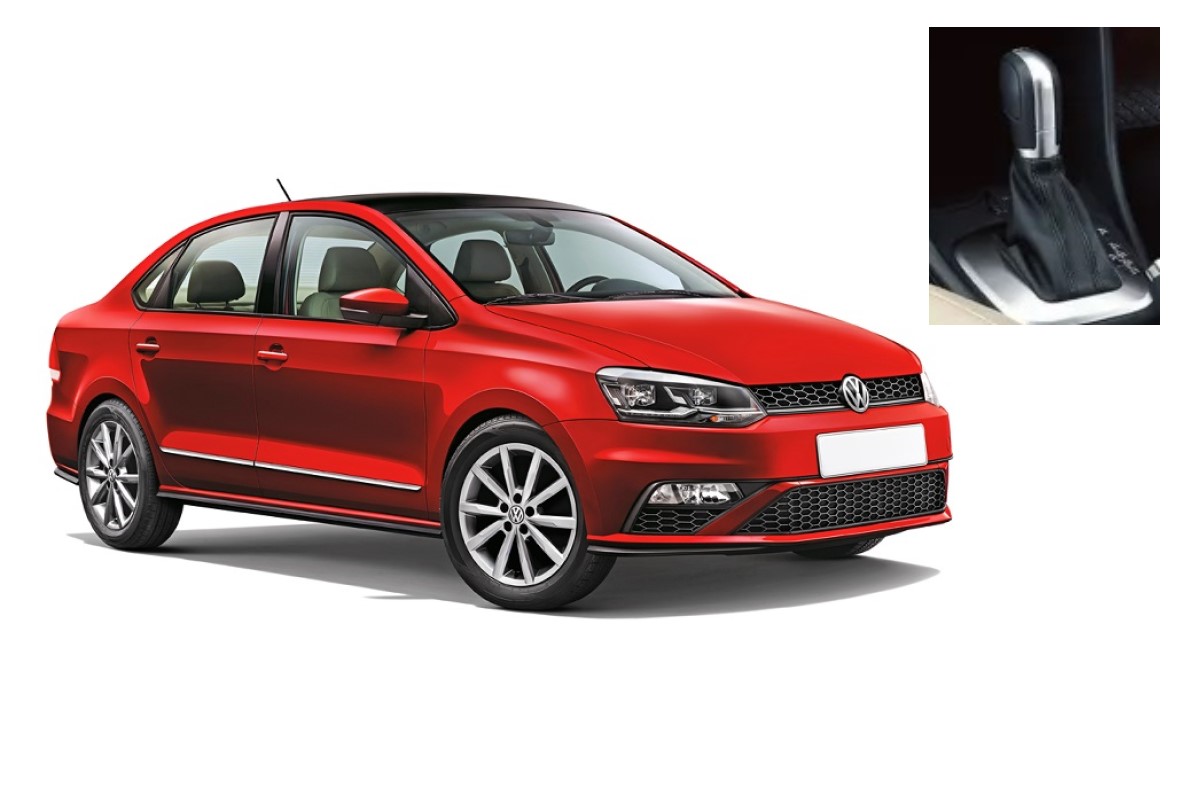
Volkswagen Polo, Vento automatic prices revised

The Volkswagen Vento AT and Polo GT TSI have been given updated introductory prices. The VW Polo GT TSI is priced at Rs 9.67 lakh while the VW Vento Highline Plus AT costs Rs 12.99 lakh (ex-showroom, pan-India), and these are the only variants the automatic gearbox is available in for each model. Both are available to book at the brand’s dealerships and via Volkswagen’s online portal.

  • Volkswagen Polo GT TSI AT priced at Rs 9.67 lakh
  • Volkswagen Vento Highline Plus AT priced at Rs 12.99 lakh
  • Polo AT prices up by Rs 8,000 while Vento AT prices lower by Rs 30,000
  • Deliveries set to begin from September 15, 2020

Why has Volkswagen announced new prices for the Polo and Vento automatic?

While VW India had announced prices for these models back in March,the COVID-19 pandemic resulted in deliveries getting severely delayed. Now, the brand promises deliveries will commence on September 15.

Interestingly, when prices for the BS6 Vento and Polo had been revealed earlier this year, the prices for the automatic variants were different. The Polo GT TSI is Rs 8,000 dearer (it was priced at Rs 9.59 lakh) while Vento Highline Plus AT prices are Rs 30,000 lower. In addition, the automatic gearbox was said to be available in with the Polo Highline Plus and the Vento Highline variants as well, though that no longer seems to be the case.

Compared to its manual counterpart, the Vento Highline Plus AT costs Rs 1 lakh more; the Polo GT TSI doesn’t have an equivalent manual variant though the closest in terms of features is the Polo Highline Plus.

Volkswagen Polo prices (as on September 2, 2020)
Variant Price (ex-showroom, India)
Polo 1.0 MPI Trendline - Non Metallic Rs 5.83 lakh
Polo 1.0 MPI Trendline - Metallic Rs 5.93 lakh
Polo 1.0 MPI Comfortline Plus - Non Metallic Rs 6.77 lakh
Polo 1.0 MPI Comfortline Plus - Metallic Rs 6.87 lakh
Polo 1.0 TSI Highline Plus Rs 8.02 lakh
Polo GT TSI AT Rs 9.67 lakh
Volkswagen Vento prices (as on September 2, 2020)
Variant Price (ex-showroom, India)
Vento 1.0 TSI Trendline - Non Metallic Rs 8.87 lakh
Vento 1.0 TSI Trendline - Metallic Rs 8.97 lakh
Vento 1.0 TSI Comfortline Plus Rs 9.99 lakh
Vento 1.0 TSI Highline Rs 9.99 lakh
Vento 1.0 TSI Highline Plus MT Rs 11.99 lakh
Vento 1.0 TSI Highline Plus AT Rs 12.99 lakh

There are no other changes to either of the cars. Both utilise VW’s new 1.0-litre turbo-petrol engine that produces 110hp and 175Nm of torque, although the Polo is also available with a lesser, naturally aspirated 1.0 MPI engine which does not get an auto gearbox. When specced with the 6-speed automatic, the Polo TSI has an ARAI-rated 16.47kpl mileage while the Vento posts a 16.35kpl fuel-efficiency figure. Both these figures are lower than most of their rivals.

The features list and safety kit are also unchanged. For the list of all the features available with Polo 1.0 TSI variants, click here.

How do the Polo AT and Vento AT prices compare with rivals?

For the sake of lower costs and a competitive price tag, among other reasons, VW has opted to use a 6-speed torque-converter automatic gearbox instead of the dual-clutch DSG unit that was available with the BS4-compliant Vento and Polo. While this strategy seems to pay off for the Vento when compared to petrol-automatic versions of the Honda City (Rs 12.20-14.45 lakh*), Hyundai Verna (Rs 11.95-13.99 lakh) and Toyota Yaris (Rs 9.56-14.30 lakh*), the Polo automatic is significantly more expensive than like-sized rivals like the Hyundai Grand i10 Nios AMT (Rs 6.45-7.69 lakh*) and Maruti Suzuki Swift AMT (Rs 6.66-8.02 lakh*).

*Prices, ex-showroom, Delhi

Also see:

2020 Volkswagen Polo 1.0 TSI review, test drive

2020 Volkswagen Vento 1.0 TSI review, test drive

All-electric Volkswagen ID.4 SUV production commences


D'ecore your car